Every Person Doing Right In Her Eyes

Should we determine for ourselves what is right and wrong, or should we ask society to do it for us? Most of us probably would immediately vote for the former. We highly value our autonomy and personal freedom and do not want others making these important decisions for us. And yet, without laws that embody a sense of right and wrong, we would have chaos and anarchy. How are we to balance the needs of the society with the rights of the individual?

Abilities Are Stronger Than Disabilities

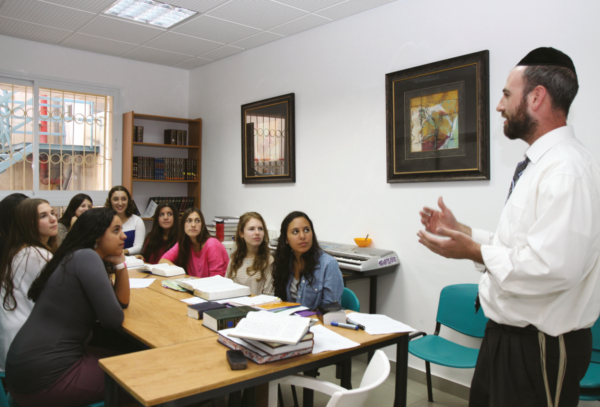
By the end of the school year, not many high school students have the desire to sit and study in a classroom while the sun is shining outside, but the six young men learning about the Israeli economy in a bright classroom at Yeshivat AMIT Kfar Ganim in Petach Tikva were fully focused on their teacher just three weeks before the start of summer vacation.

A Tree Grows In A Jewish Soul

This year, on Shabbat Parshat Beshalach, we celebrated Tu b’Shvat, which the first Mishnah in Masechet Rosh Hashana calls the “New Year for Trees.” While the holiday of Tu b’Shvat might be agricultural in nature, our Rabbis have always connected trees to spiritual growth. One such example is found in Parshat Beshalach where we find a tree playing a critical role.

AMIT A Guiding Light (Camera And Actions) In Or Akiva

ETTI LAREDO, THE PRINCIPAL OF AMIT ATIDIM JUNIOR and Senior High School in Or Akiva, was wearing a proud grin. In her office was Dana Maman, a student who only three years earlier rarely attended school. “I would sleep all day and I just didn’t care about school. When I did come, the kids would give me a standing ovation,” Dana said, biting her lip in embarrassment. Dana, now 18, is about to join the army. A film she co-produced with two other students while enrolled in the exceptional film studies program at AMIT Atidim, was chosen to compete in the International Film Festival in Hollywood.

Charleston, South Carolina: America’s Land Of Milk And Honey

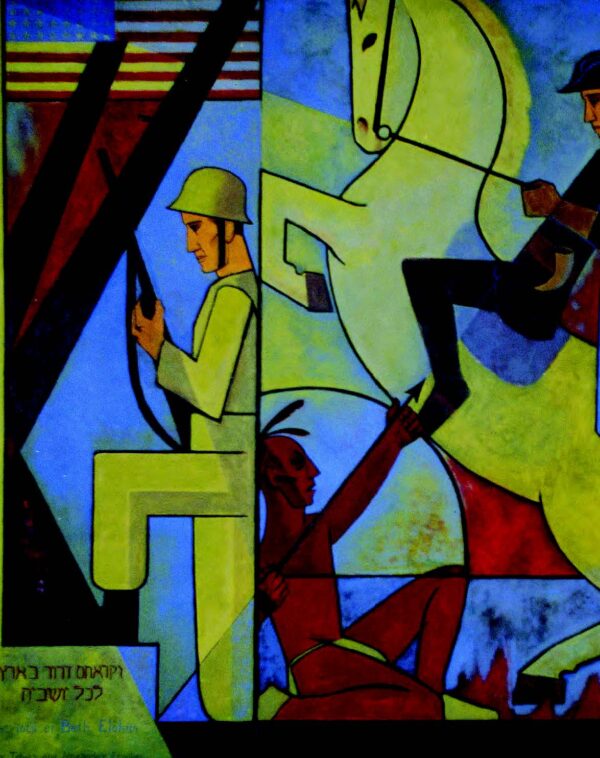
When Abraham Moise was a young man, he sailed from France to the West Indies, where he became a trader and a merchant. There, he met a beautiful woman 26 years his junior, a native who lived in an affluent Jewish community. They married and established themselves on a small plantation in San Domingo in what is now Haiti. Soon, the slaves in San Domingo began to revolt, and violence broke out against the French aristocrats. The colony began to collapse, and the Moise family was forced to leave their possessions and sail to America. Abraham and Sarah Moise arrived in Charleston in 1791 – one of the oldest Jewish communities in America. Charleston was a natural port, and its location attracted merchants and traders from all over the world. At the time, there were 53 families in the congregation at Kahal Kadosh Beth Elohim, and the sizable Jewish community convinced Moise to stay. The family lived in a house on Queen Street, in the heart of the peninsular city, and sold cloth and tea from their home.

AMIT Future Physicians

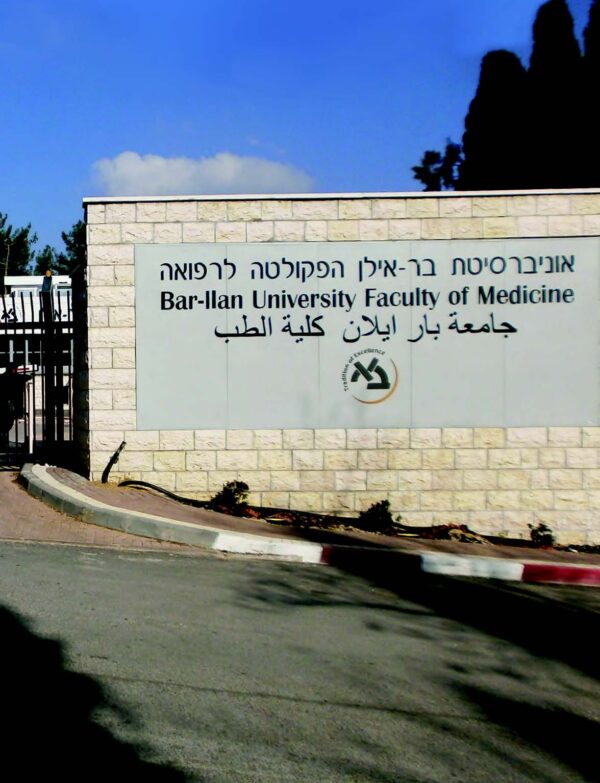
Every week 10th and 11th-grade students from AMIT’s two high schools in Tzfat make their way to the city’s new Bar-Ilan University Faculty of Medicine in the Galil. There they hear lectures on anatomy, cardiology, physiology and nutrition, learn modern techniques of examining the human body and even observe operations. They are part of an innovative three-year youth medical program entitled Pirhei Tzfat LeRefouah – literally “Tzfat Buds of Medicine.” The program was launched in 2011 in conjunction with the much-awaited opening of Israel’s newest medical school.

Is Rosh Hashana The Start Of The Jewish Year?

That Rosh Hashanah is the beginning of the Jewish year should be a truism. Its very name translates as the head of the year. Yet the Bible never directly connects Rosh Hashanah to the start of the year. In Vayikra (23;24) when it is first mentioned, the Torah describes a nameless holiday on the first of the seventh month that contains a mitzvah to listen to the sounds of the shofar. In contrast to the three festivals of Pesach, Shavuot and Sukkot, which are related to both specific Jewish experiences during the beginning of our national existence and the agricultural cycle of the year, this holiday does not have a particular context.

AMIT Top Tech Initiative

AMIT is a leading catalyst and collaborator for dynamic, innovative change in education in Israel and is committed to provide opportunities to all its students, regardless of background or income level. This year AMIT has embarked on a new initiative which aims to prepare students to graduate from high school equipped with the skills and knowledge necessary for success in post-secondary education and in the 21st century global economy.

Early Zionist Education

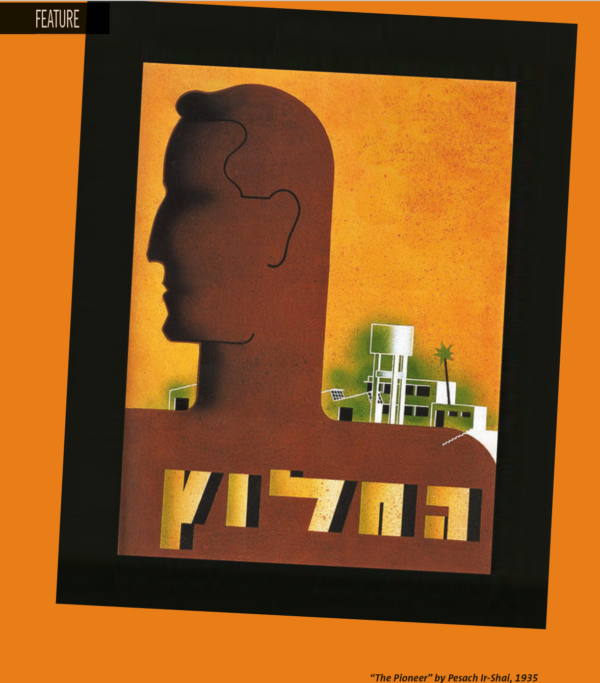
Berl Katznelson, who arrived in Eretz Yisrael at the age of twenty-two was typical of the many young halutzim (pioneers) who worked on the fledgling Jewish farms in the Galil. Like many of them, Katznelson was inspired by the venerated philosopher/farmer Aharon David Gordon. Gordon initiated the development of a unique Zionist ethos of mentoring and youth education. Katznelson took up the challenge: “a world of virtue must be created within our spirit,” and emerged from among the halutzim to become the cherished theoretical and moral guide to Labor Zionism. Like the educators who followed in his footsteps Katznelson instilled the national character of the reborn State of Israel in countless young men and women. That national character would come from a blending of religious tradition with modernity, a philosophy that integrated personal self-realization with community responsibility.