

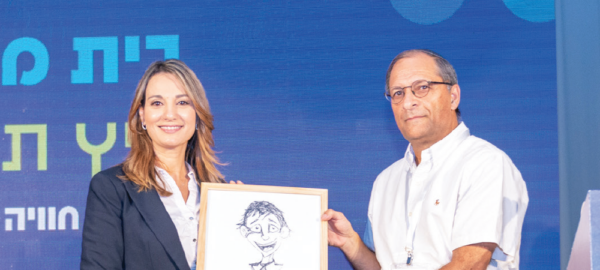
How the AMIT Network Thrived During COVID
A Conversation with Amnon Eldar, PhD, AMIT Director General
A Conversation with Amnon Eldar, PhD, AMIT Director General

Leah Gene Avuno has an abiding motto: “I don’t have everything, but I have all I need.” The 22-year-old graduate of AMIT Kiryat Malachi found all that she needed in her AMIT education.

The AMIT network has successfully helped two generations of immigrants from Ethiopia and the countries of the former Soviet Union overcome linguistic, cultural, socioeconomic, and academic hurdles on the path to becoming fully contributing members of Israeli society.

Israel’s Ofaimme Farm for Sustainable Agriculture brings the “Land of Milk and Honey” to life with fresh organic goat milk, honey from their beehives, and a variety of crops and animals grown by Hedai Offaim, his family, and a dedicated group of farmers and volunteers.

The advent of AMIT Sharks coalesced in a meeting in July 2020 between Galia Kedmi Fragman, head of entrepreneurship at AMIT and co-founder of the Entrepreneurship Academy and Incubation.

Max Plotnik immigrated to Israel from Russia and spoke little Hebrew, lived with his grandmother and was burdened with a difficult background. Roee Epstein, a native Israeli from a religious family, had emotional issues and severely struggled in his former school.

Did Theodor Herzl, the spiritual father of the Jewish state and modern political Zionism, envision that one day the reality of a thriving Israel and its right to exist would be digitally discussed and promoted around the globe, and heard in far-flung places? Safe to say, perhaps not.
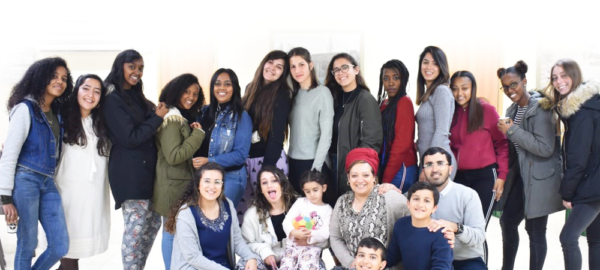
AMIT Kfar Blatt is no ordinary school. Rather, it is a unique and multi-dimensional environment, a youth village for at-risk teens from Petach Tikva. It includes residences called mishpachtonim—from the Hebrew word for family—for students who live with surrogate families.

Marcelle Machluf shares a background much like the majority of AMIT students. She grew up in Ashdod facing a trio of challenges—sexism and the economic and cultural challenges—of being from an immigrant family and living in the periphery.
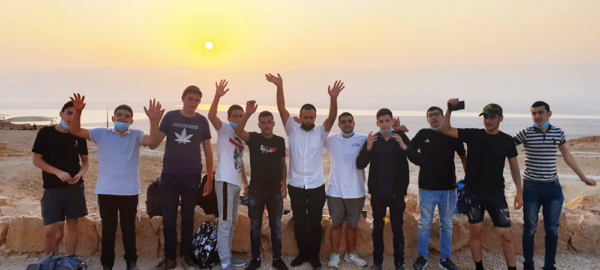
Empowering its students is a key element to AMIT Nordlicht’s success in helping at-risk youth find their strengths and turn their lives around. The students at AMIT Nordlicht Religious Technological High School come to this school after dropping out of more mainstream schools—or being thrown out.