

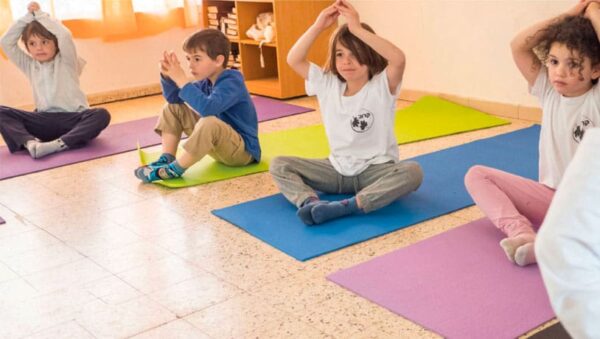
AMIT Karov Elementary School
At AMIT Karov tolerance and acceptance are key words. From a very young age, the children are taught to accept the other.
At AMIT Karov tolerance and acceptance are key words. From a very young age, the children are taught to accept the other.

Always on the lookout for innovative and fun ways to engage her students at Yeshivat AMIT Amichai in Rehovot, Michal Jacob, the head of high school pedagogy, jumped at the chance to be one of only three schools chosen to participate in an educational
“space” program.
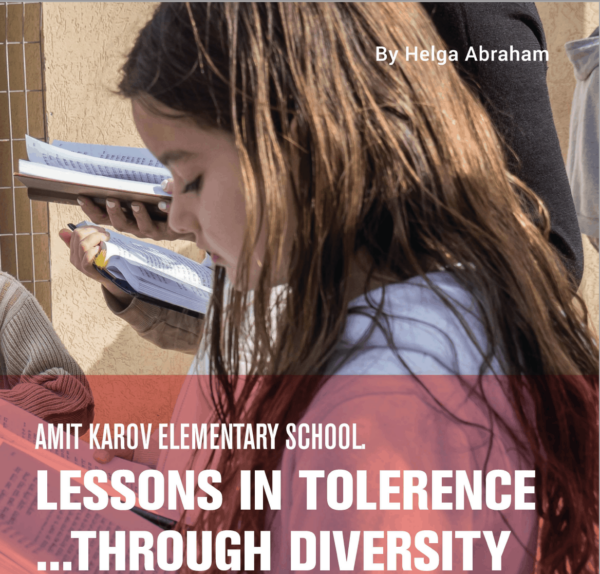
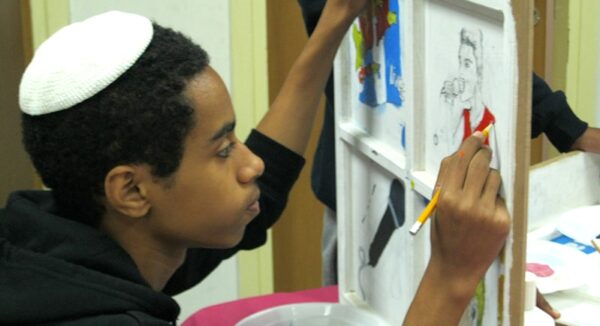
Watching students come and go between the small bungalows that serve as their classrooms-some girls dressed in skirts, others in pants, some boys wearing kippot, others bareheaded-one marvels at the scene and at the relaxed, happy atmosphere. The religious/secular divide is so acute in Israel, particularly in educational institutions, which are completely separate, that it is rare to see children from diverse sectors mix together, learn together, play together and be the best of friends. But at AMIT Karov “tolerance and acceptance” are keywords. From a very young age, the children are taught to accept the other.

A few years ago I found myself in a dispute with a friend. I had just given a sermon in which I told what – to me – was an inspiring story that took place during the Holocaust.
My friend, who was a Holocaust survivor, said to me afterwards, “Nothing about the Holocaust was good. Don’t make it sound so positive.”
eit Shemesh, located about 20 miles west of Jerusalem, still reflects its roots as a development town founded in the early 1950s to accommodate the thousands of Jews who flooded into the newborn state of Israel from Romania, Bulgaria, North Africa, Iran and various Arab lands. Since the 1990s, the population in Beit Shemesh, which now tops 105,000, also includes Russian-speaking Jews and a high proportion of Jews with roots in Ethiopia.
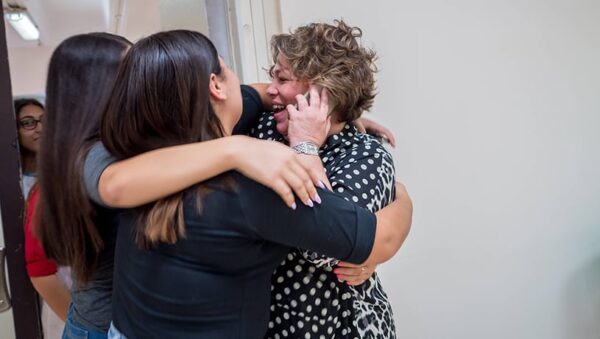
“When I first came here,” recounts Eti Zabary, the bubbly 54-year-old principal of AMIT Kennedy junior and senior high school in Acco, “I found broken chairs and tables, black-stained floors, rooms with no windows and pools of rain in classrooms and corridors.” This was in 2013. Within a couple of years, Zabary succeeded in transforming the run-down premises into an attractive educational institution that is fast gaining recognition in the Western Galilee. As she shows me round the school, she is clearly proud of her achievements, pointing to a former garbage dump now transformed into a pretty courtyard with plants and decorative pots, brightly painted classrooms, curvy green tables that can be used individually or joined together for group work, and attractive work-stands equipped with computers. There is also new flooring, air conditioning, and a large wall-to-wall carpeted music room.

Raised in AMIT boarding schools from the age of 7-19, Moshe Uziel hoped to one day be able to give back to the AMIT community that nurtured him and his sister Miri through childhood, adolescence and beyond.
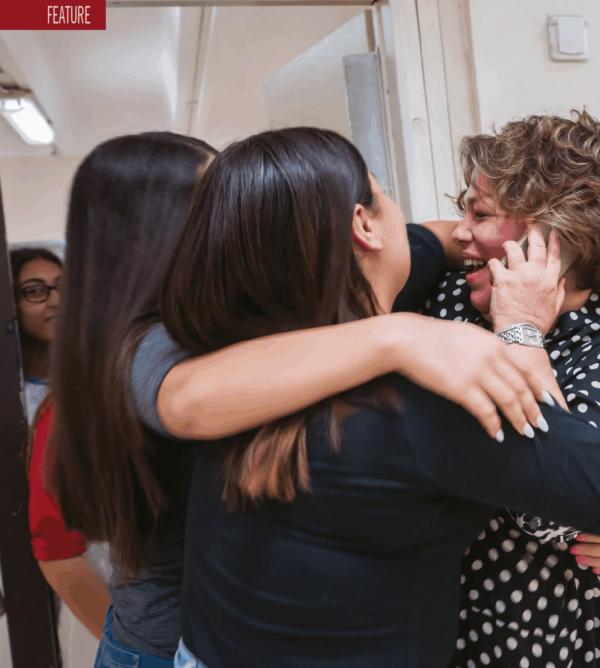
Whatever she touches turns to gold. “When I first came here,” recounts Eti Zabary, the bubbly 54-year old principal of AMIT Kennedy Junior and Senior High School in Acco, “I found broken chairs and tables, black-stained floors, rooms with no windows and pools of rain in classrooms and corridors.” This was in 2013. Within a couple of years, Zabary succeeded in transforming the run-down premises into an attractive educational institution that is fast gaining recognition in the Western Galilee. As she shows me around the school, she is clearly proud of her achievements, pointing to a former garbage dump now transformed into a pretty courtyard with plants and decorative pots, brightly painted classrooms, curvy green tables that can be used individually or joined together for group work, and attractive work-stands equipped with computers. There is also new flooring, air conditioning, and a large wall-to-wall carpeted music room.

Sicily is one of the most conquered places in history. Greeks, Romans, Vandals, and Ostrogoths helped sway, followed by the Byzantine empire, Muslims, Vikings, and Normans, the German Hohenstaufen and Capetian Angevin dynasties, and the kings of Aragon and Spain. And Jews have lived under all of them.
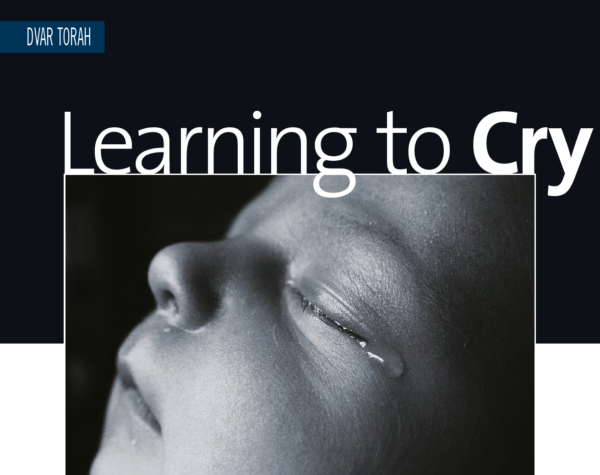
When we were babies, no one taught us to cry. It was our primal instinct to scream out when in pain or discomfort. Crying is a sign of life, and when we were infants, crying was our primary mode of communication. But as we grew older, many of us learned how not to cry; we hardened ourselves to insults and offenses. As we tried to stand tall in the face of adversity, we heard “hold the drama” or “man up” or some other dismissive phrase that suggested implicitly that it was time to outgrow tears.