Engineer To Educator

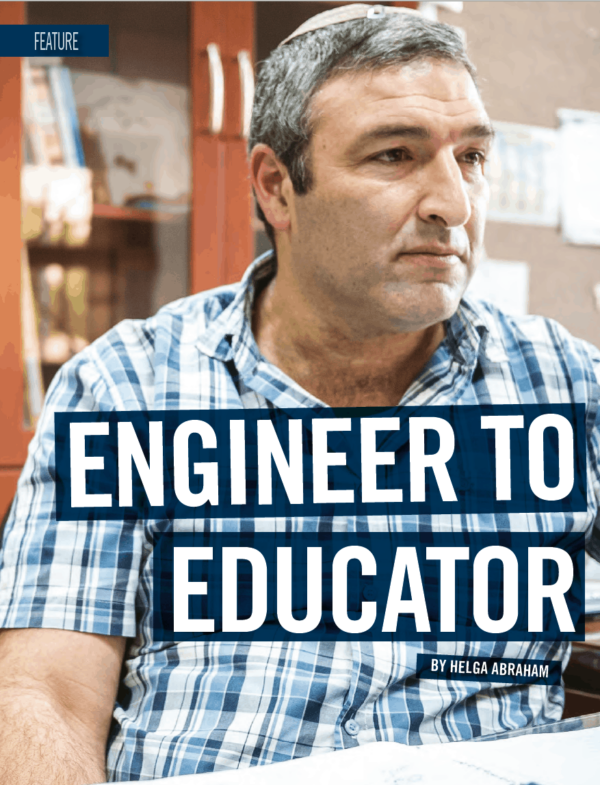
It is not every day that a high flyer from the world of start-ups and the armaments industry gives up everything to take over the helm of a small high school in a distant development town. But this is exactly what 46-year-old Guy Dekel did last year, when he resigned his position as team director at Israel’s prestigious Rafael Advanced Defense Systems in order to become the new principal of AMIT Karmiel, a co-ed high school of just 256 students. After having led the team that developed Israel’s first marine USVs (unmanned service vehicles), which are now patrolling the shores of the country from north to south, Dekel is busy dealing with class schedules, curricula, teachers and students—and, on the day I met him, ordering parquet flooring for a new hip-hop room he plans to create at the school.
Training For A Lifetime

According to a 2014 report by the Institute for the Study of War, Israel’s Air Force is the best in the world.

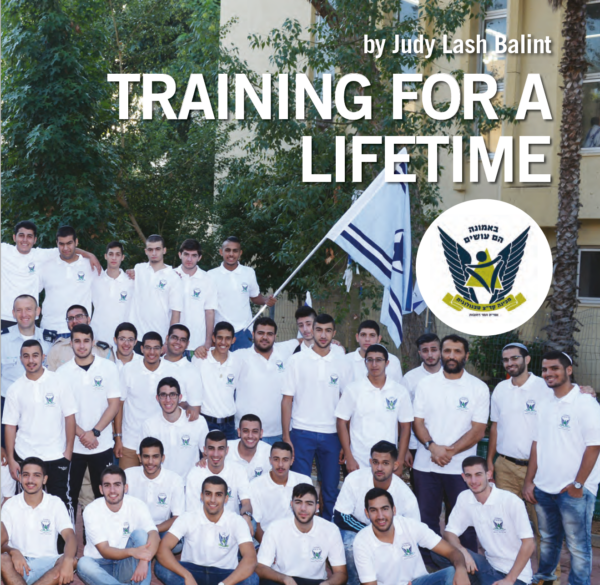
“Israel has space assets, advanced fighter jets, hi-tech armed drones, and nuclear weapons. Its air force has incredibly high entry and training standards,” the study noted. So who are the young people being trained to keep the Air Force up and running at such high international standards? Observe AMIT Hammer Rehovot Pre-Army Junior College, which opened its doors in September 2014 to a class of 24 eager students, and now has sixty young men enrolled in an intensive and unique training program that combines technology, Torah and preparation for life.

Waves Of Struggle And Blessing

There is no doubt that a promise from God will be fulfilled. His blessings come to fruition at the right time, no earlier and no later. Often in the Torah we read of a promise that Hashem makes either to an individual or a nation; usually, a significant amount of time elapses before His blessing is materialized. This lack of immediacy implies that there must be a catalyst that triggers the manifestation of a blessing besides God’s promise that it will happen—the timing must be dependent on another factor.

AMIT and the Definition Of simcha

THE DECLARATION OF INDEPENDENCE DESCRIBES “the pursuit of happiness” as an “inalienable right”. Our Torah, however, describes the experience of happiness as an obligation:“V’samachta b’chagecha…v’hayita ach sameach” — “And you shall rejoice on your holiday, and you should only be happy.” Devarim 16:14,15. The formulation of this mitzvah is unusual, since Jewish law typically legislates concrete deeds and behaviors: what we eat, how we speak, how we do business. All these are definable actions, and in order to fulfill our obligations, we simply do, or refrain from doing, the act that is described: I only eat food that is kosher, I don’t gossip, I pay all of my taxes. With the requirement to be happy, however, Halacha is legislating an emotion, which by definition is subjective and unpredictable. Ask a dozen people what makes them happy and chances are you will get a dozen different answers. How are we supposed to fulfill this obligation to rejoice when it is such a personal experience? Does the philosophy of Judaism define for us what it means to be happy? How we can concretize the fulfillment of this mitzvah?

Ancient Jewish Education

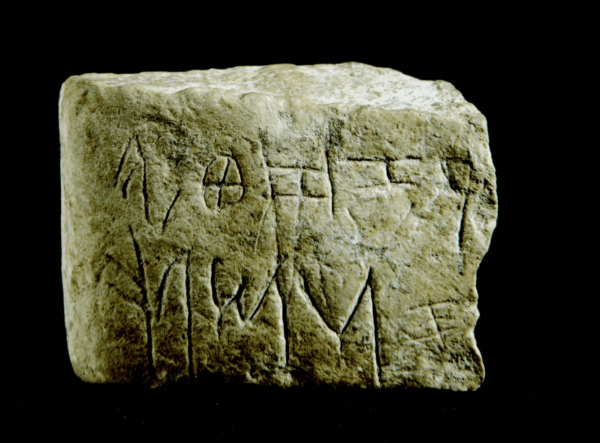
Jewish teaching and learning have been essential components of Jewish tradition since the earliest times. The command to “teach your children” first appeared in D’varim (Deuteronomy) as part of what later became the Shema – the most central of Jewish prayers. Rabbinic literature is filled with references to schools and schooling and to teaching and learning taking place at all levels, and for all ages from the youngest children through adulthood. According to the midrash on Bereshit, the first thing that Beit Yakov did on leaving Canaan was to establish schools. It is no accident that Jews are often known as “The People of the Book.” Jewish life is lived according to texts, commentary, and interpretation of those texts. The varied methods of teaching them include instructive, experiential, argument, and discussion. And that methodology continues to this day.

Inspiration Collaboration Innovation

Ordinarily, June 23 would not be the optimal time to hold a full-day teachers’ workshop, what with final grades to input and end-of-the year activities, but for the dozens of AMIT network teachers who have spent the past year in a new, groundbreaking program called GOGYA, skipping the workshop never crossed their minds.

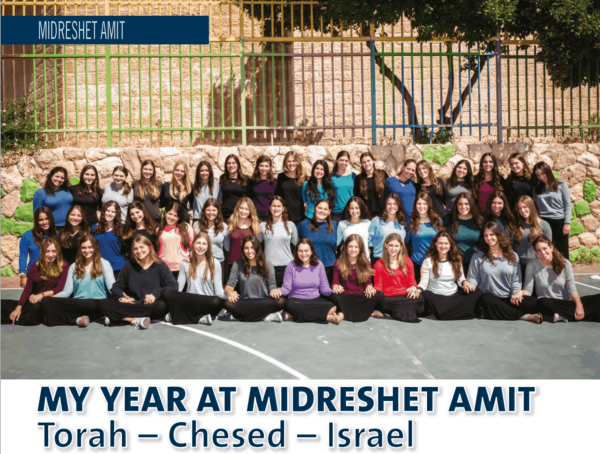
My Year At Midreshet AMIT Torah – Chesed – Israel

On the second week after arriving to spend the year at Midreshet AMIT, I walked outside to familiarize myself with the grounds and noticed a ten-year-old boy alone on the playground. I went over and started speaking to him, and he told me his name was Eliran. We spoke about his school, played some games and tried to name as many animals as we could in English and Hebrew. Eliran was my introduction to the children at Beit Hayeled and from that moment, I knew that this was going to be an incredible year.

Look Back But Don’t Stare

Nostalgia is a powerful force in our religious lives. While we may perform rituals with a sense of Halachic obligation and spiritual uplift, the manner in which we perform them often reveals a more personal side to the mitzvot. How many of us can hear the haunting melodies of Kol Nidrei on Yom Kippur or taste the matzo ball soup at the Seder without longing to connect with our own past and to be transported to an earlier time in our lives? There is probably no time of year when this longing is felt more keenly than Tisha B’Av, and nowhere is this sentiment expressed so clearly as in the penultimate verse of Megillat Eicha, which is repeated at the conclusion of the reading of that book: Hashiveinu Hashem eilecha venashuva, chadeish yameinu kekedem: Bring us back to You, O Lord, and we will return, renew our days as of old. This pasuk is invoked in our liturgy throughout the year. When the Torah is returned to the ark on Shabbat and holidays (and for that matter on any other day on which the Torah is read), and at a climactic moment in the Selichot penitential service, we repeat those stirring words.

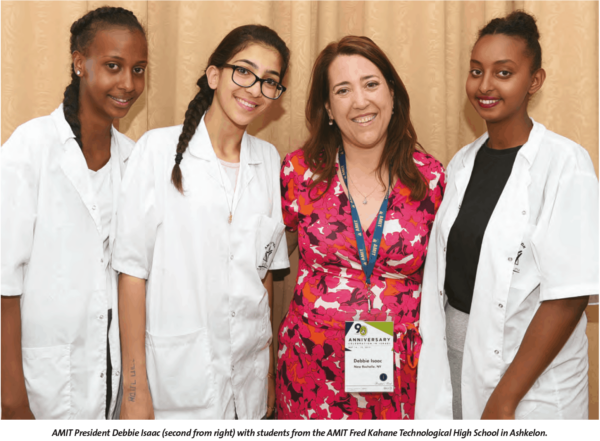
AMIT Schools Celebrate 90 Years of Education

This year, the AMIT school system, consisting of 110 schools teaching 30,000 students across the country, celebrates 90 years of educational.

Celebrations included a visit to the President’s residence Tuesday morning and a birthday party at the Jerusalem International Convention Center with guest of honor, newly sworn-in Education Minister Naftali Bennett, and interactive booths run by students of the AMIT schools in the afternoon.