
Lessons In Tolerance …Through History

Watching students come and go between the small bungalows that serve as their classrooms-some girls dressed in skirts, others in pants, some boys wearing kippot, others bareheaded-one marvels at the scene and at the relaxed, happy atmosphere. The religious/secular divide is so acute in Israel, particularly in educational institutions, which are completely separate, that it is rare to see children from diverse sectors mix together, learn together, play together and be the best of friends. But at AMIT Karov “tolerance and acceptance” are keywords. From a very young age, the children are taught to accept the other.

A Principal With A Magic Wand

Whatever she touches turns to gold. “When I first came here,” recounts Eti Zabary, the bubbly 54-year old principal of AMIT Kennedy Junior and Senior High School in Acco, “I found broken chairs and tables, black-stained floors, rooms with no windows and pools of rain in classrooms and corridors.” This was in 2013. Within a couple of years, Zabary succeeded in transforming the run-down premises into an attractive educational institution that is fast gaining recognition in the Western Galilee. As she shows me around the school, she is clearly proud of her achievements, pointing to a former garbage dump now transformed into a pretty courtyard with plants and decorative pots, brightly painted classrooms, curvy green tables that can be used individually or joined together for group work, and attractive work-stands equipped with computers. There is also new flooring, air conditioning, and a large wall-to-wall carpeted music room.

The Sicilian Connection

Sicily is one of the most conquered places in history. Greeks, Romans, Vandals, and Ostrogoths helped sway, followed by the Byzantine empire, Muslims, Vikings, and Normans, the German Hohenstaufen and Capetian Angevin dynasties, and the kings of Aragon and Spain. And Jews have lived under all of them.

Learning To Cry

When we were babies, no one taught us to cry. It was our primal instinct to scream out when in pain or discomfort. Crying is a sign of life, and when we were infants, crying was our primary mode of communication. But as we grew older, many of us learned how not to cry; we hardened ourselves to insults and offenses. As we tried to stand tall in the face of adversity, we heard “hold the drama” or “man up” or some other dismissive phrase that suggested implicitly that it was time to outgrow tears.

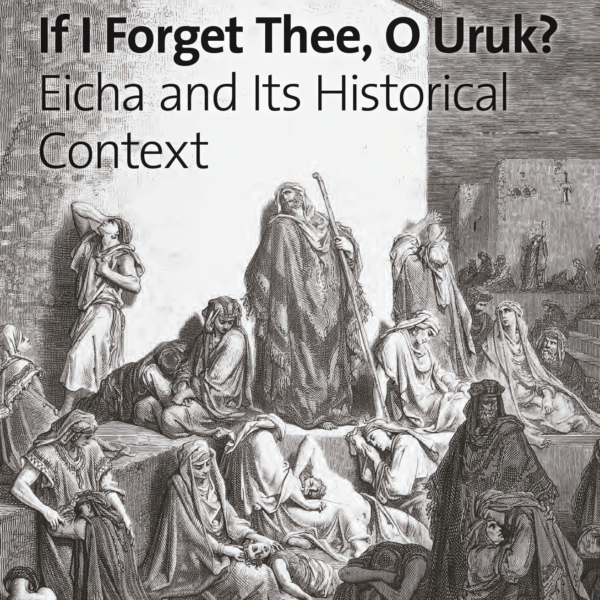
If I Forget Thee, O Uruk? Eicha and Its Historical Context

The ritual and theological nadir of the Jewish year comes, surprisingly, in what is often the happiest time for most, the summer. Every year, when the sun shines brightest and masses of people are spending time at the local beach, Jews withdraw for three weeks from leisure activities to prepare for the ultimate day of Jewish mourning. Tisha B’Av is the time we mourn the destruction of the first and second Temples in Jerusalem and take an introspective look, both on the personal and national level, at our efforts to merit its rebuilding.

Reflecting On Our Past

“How was the AMIT trip to Poland?” I have been asked this question many times since I returned a few days ago. Each time, before answering, I have an instant flashback of some moment that affected me in a way I don’t think I’ll ever forget—a moment that is difficult to find the words to describe. And I find I can answer in a positive way or a negative way.

Dottie, Edna, and Bea

The famed and fabled Algonquin Round Table sparkled throughout the 1920s as the height of New York sophistication, a colorful cast of playwrights, authors, critics, and columnists. And in the mostly male company, that included the likes of Alexander Woollcott, Robert Sherwood, Robert Benchley, Heywood Broun, Harold Ross, George S. Kaufman, and Franklin Pierce Adams, three Jewish women sat as equals, matching wits and talent: Dorothy Parker, at the time a Vanity Fair staffer and freelance poet; Edna Ferber, novelist, and short fiction dynamo; and Beatrice Kaufman, editor, playwright, fiction writer, and wife of George S.

Meet Me in St. Louis

By Helga Abraham A group of feisty girls from AMIT Kamah Junior and Senior High School have put the town of Yerucham on the map by winning the FTC (First Tech Challenge) National Robotics Competition and representing Israel at the world championship in St. Louis, Missouri. As the girls entered their second year of robotics…

Je Suis AMIT

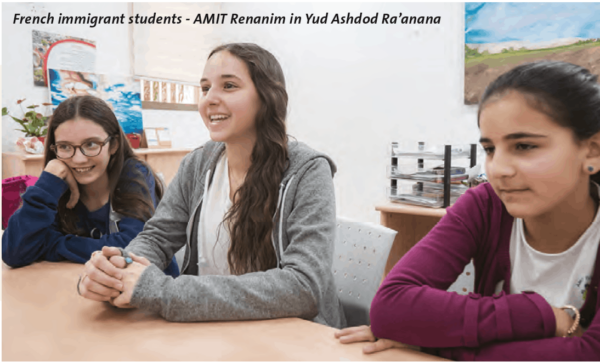
When Joseline Rotstein, a new immigrant from France, was contemplating her family’s move to Israel, her top priority was finding a community where her teens would flourish.

“We decided to move to Ra’anana because of the good schools,” Rotstein said, referring to the quiet suburb of Tel Aviv her family has called home for almost a year. “Everyone said AMIT Renanim Junior and Senior Science and Technology High School for Girls was the place for new immigrants, so that’s where I enrolled my daughter Yona.”