
By Gloria Averbuch
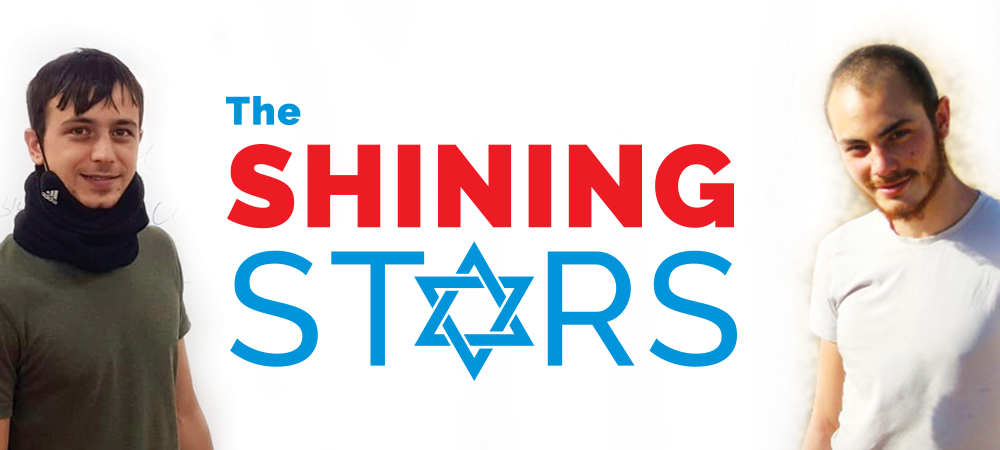
Maxim (Max) Plotnik immigrated to Israel from Russia and spoke little Hebrew, lived with his grandmother and was burdened with a difficult background. Roee Epstein, a native Israeli from a religious family, had emotional issues and severely struggled in his former school.
Ostensibly, these two have little in common. But what they do share is successful careers that were built with the education, nurturing and support they received at AMIT State Technological High School in Jerusalem.
The School Philosophy
AMIT State Technological is not your average educational institution. Students aren’t typical teenagers, and the staff doesn’t have the luxury of working within a traditional system. They have had to create, and work, “outside the box.”
Consequently, despite the fact that the students are from significant economic and socially difficult backgrounds, many have had success and built promising futures. Some have risen to extraordinary levels of achievement. And it’s because of the strong focus, philosophy and deep commitment of the school’s staff.
Eti Itzaki, the principal of the school and an educator since 1993, says that Max and Roee come from a background typical of the school’s population. She does not understate the challenge of educating the students at AMIT Technological.
“This is a school for those who were not able to reach their potential elsewhere. These kids call themselves ‘the forgotten,’” she explains. “They come from so many different places—such as Ethiopia, Russia—from the periphery—and from the underserved neighborhoods in Jerusalem. Our school is located in one of these neighborhoods.”
That’s why she concludes that above all, “It’s important that the students know we see them, that they have a place.” AMIT Technological is truly that place.
“This is very tough work to do, but we are resolved in our work, and in the fact that we never give up,” she says. “We teach the students how to be winners. This can be very challenging with this group of youth. In addition to their scholastic achievements as a test for success, we teach them to believe in themselves. We have to help them feel that they are capable—that they can set goals and believe that their every dream can come true.”
She attributes the school’s success to three major factors: constant training and dialogue forming and following a clear vision and commitment from both staff and students; the school’s therapy center, which supports that vision through, for instance, art or dance therapy; and a supportive staff-to-student ratio (45 staff for 122 students).
Two Shining Stars
AMIT State Technological graduates Plotnik and Epstein are standouts. They are also currently AMIT teachers. Itzaki calls them both “exceptional teachers who bring a high level of empathy.” She adds, “They are perfect role models. As former students, they managed to overcome difficult odds to succeed. Through their example, our students see that this is possible. What the two have as teachers is rare and what they provide most uniquely—special guidance and understanding—is even greater.”
Maxim Plotnik
Max graduated from AMIT State Technological in 2013. Overcoming challenges during his high school years, he graduated with a bagrut and a diploma in practical electrical engineering. He went on to complete junior college in this field. Certified as a practical electrical engineer, he currently works in his own business. He has also taken physics classes at the Open University. His army service included being a commander in the AMIT State Technological School’s cadet program, per his request to give back to the school. The 25-year-old from the Kiryat Yovel Jerusalem neighborhood is currently teaching at the school as a substitute replacement during COVID-19.
Roee Epstein
Roee came to AMIT Technological in the 11th grade from a religious school, where he struggled with emotional issues. With the skilled support of AMIT staff, his intelligence shone, and in his three years he consistently finished in the top of his classes. The almost 22-year-old resident of Moshav Kfar Adumim graduated with a diploma in Auto Technology, then attended the AMIT Chamudot Junior College in Jerusalem, and was subsequently drafted into the IDF. He currently serves as a commander in the School’s cadet program. Max had been Roee’s teacher at AMIT. When Roee began teaching, Max told him, “I knew you could do it..”
Why did you end up at AMIT Technological High School?
Max: I was in a religious school up to 9th grade, but I was not a good student in religion. That made my grades worse. A social worker told me about AMIT, where you can learn a profession. I always knew I wanted to be an electrical engineer, and I wanted to start my career as soon as possible. I’ve since brought four of my friends to study at AMIT. They are all very happy and have thanked me for bringing them. It’s a very, very special school.
Roee: I had anger issues because of all the encounters with teachers at my old school. I wasn’t a good student, and I had a hard time with the specific system. I had a friend who had studied at AMIT, and he told me that at the school they really speak to the heart; they are there when you need them, even outside of school. That type of personal relationship convinced me to check it out. When I got to AMIT, because of the good relationships and support of the staff, I wanted to invest in my studies, and my grades went up to the top rank.
How did the school help you?
Max: I was in a class of eight, and we each had the special attention we needed. I have a lot of needs; that was my problem in my previous school. I have a lot of interests and questions. Not all the students at AMIT come from good places, but everyone on the staff does their best to give individual attention. They don’t give up. I feel how special AMIT is even more now as a teacher there myself. They are really there for the students. They consult each other; they are there for the cause. They have what we call in Hebrew an “achva” (brotherhood).
Roee: AMIT staff really helped me to control my anger, put it aside. They spoke to me, concerned, and asked me when I needed help. This gave me the motivation to stay and learn, and the power to go on to higher education after high school. One of the things I especially liked about the school is that the teachers really cared about how I did outside of just studies, such as with the mental, physical and economic conditions. That gives me a warm feeling. It doesn’t matter how long ago I graduated; the teachers will always be my friends. I see how all the teachers relate to the graduates before me when they come to visit, how they remember their names and treat each one like they are the most important person. It really gives the whole place a sense of family.
What is your hope for the future?
Max: As the saying goes, “Man plans, G-d laughs.” But actually, I think the message from G-d is that I came to this school to teach. I have an opportunity to do that now, so maybe getting my teaching license will progress from that.
Roee: I’m trying to repay the school by helping students from my position as a teacher, from studies to everything else. I am really close to the students and can relate to their feelings. I help them, listen to them. They can contact me when they need to about troubles at home. In the future, I hope to be a life coach.
What would you tell the supporters of AMIT?
Max: Really, none of this would be possible if it weren’t for you. Even as a kid I was not foolish enough to think that no one pays. That it just drops from the sky, no one paying. I am very grateful on behalf of the kids. It’s so inspiring that we have such people as you in this world.
Roee: First of all, I really want to say thank you. You are responsible for the help I got. You are responsible for the teachers, the staff, the school building, funding trips—making it possible for all of us to benefit.