
By Ellen Avraham
Empowering its students is a key element to AMIT Nordlicht’s success in helping at-risk youth find their strengths and turn their lives around. The students at AMIT Nordlicht Religious Technological High School in Jerusalem come to this school after dropping out of more mainstream schools—or being thrown out—and many spend time on the streets before they arrive. They have serious academic gaps, learning disabilities and behavioral problems. Most lack a belief in their abilities, which isn’t surprising since school has never been a place where they encountered anything particularly positive.
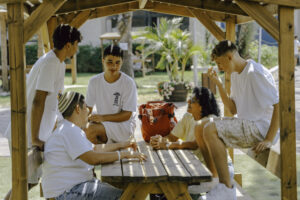
The new Mechina L’chaim—Preparation for Life—program began at AMIT Nordlicht last year when the 11th-grade boys, who usually run a Purim carnival for the entire school, decided that they wanted to do something more meaningful. One of the boys has a sister with cerebral palsy, and he suggested holding the carnival for youngsters with physical disabilities. The principal, always happy for the students to take initiative, was supportive of the idea with the condition that the students themselves do all the work needed to make it happen.
And make it happen they did. The students got to work right after the Hanukkah vacation and planned the event from A to Z. They reached out to schools for children with special needs and secured their participation, raised money to buy food and supplies, and solicited various professionals—a clown, a magician—to volunteer. They also secured donated candy and treats, advertised the event on Facebook, designed t-shirts, and ran booths with games and activities. It was a tremendous success.
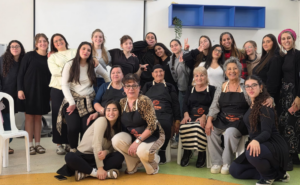
Afterward, the school created the Mechina L’chaim leadership program to build on the experience and give the students another avenue to gain valuable life skills. Open to any 11th and 12th grader who is willing to commit the necessary time and effort, Mechina L’chaim teaches financial responsibility, emotional resilience, preparation for military service, making smart decisions, and tools for successful partnerships and family life.
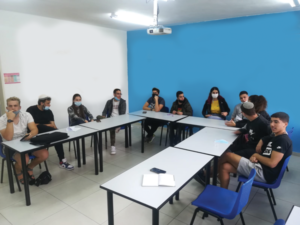
They spend part of their weekly meetings focused on what they want to achieve for their entire grade, the activities they are planning and who has what responsibilities to make them happen. The other part is devoted to group dynamics and each participant’s personal goals. Led by two university students, Mechina L’chaim guides the students in a process of learning how to set goals and work toward achieving them while dealing with conflict, difficulties, frustrations and setbacks.
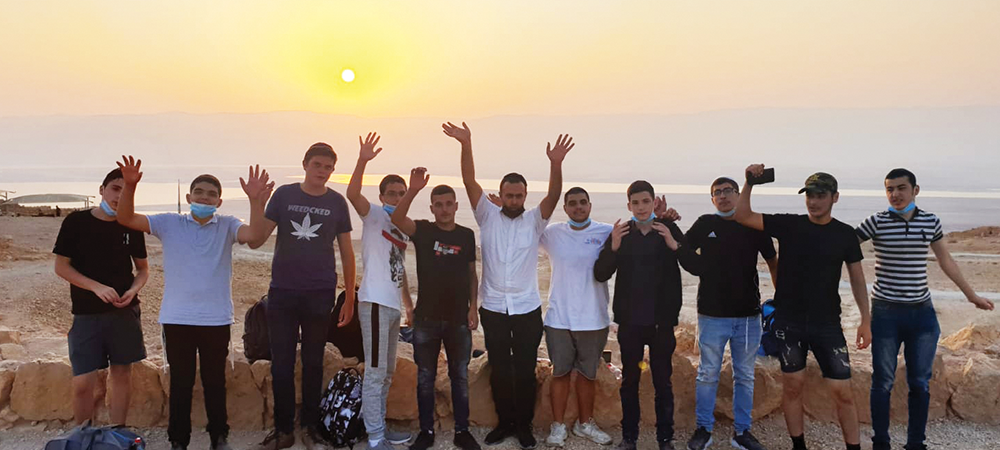
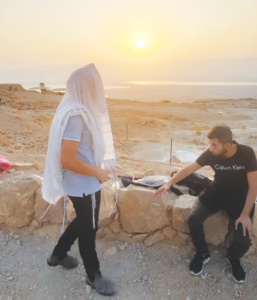
The group has planned several events so far this year despite the limitations of the pandemic and the need to hold some of their meetings remotely. Traditionally, the school holds a community-wide erev Slichot prior to Rosh Hashanah, with the participation of well-known cantors who lead moving piyutim (liturgical poems recited prior to, and on, the High Holidays). Since large gatherings were not possible this year, the leadership group decided to combine a smaller recitation of piyutim led by the school’s rabbi with a nighttime hike up Masada and a sunrise prayer service atop the historic mountain.
The students were given a budget to work with and had to make decisions about the best way to plan a program that would be fun, educational and meaningful for their classmates. Their original idea was to kick the event off with a barbecue. They then realized that would leave them short of funds for the bus and the post-hike breakfast they wanted to serve on top of Masada, so they revised accordingly. Working together, they defined the tasks and created committees to tackle them.
The result was an event that many are calling a highlight of their high school experience. As per tradition, the erev Slichot began at midnight. Nearly all the students in 11th and 12th grades chose to attend, thanks to the publicity committee’s efforts. They started with a light soup supper in the school, followed by a shiur and piyutim with the Rav. Afterward, they traveled down to the Judean Desert for their hike up Masada in the darkness. The hike was broken up by three activity stations designed and run by the leadership group to encourage their classmates to contemplate and discuss their connections to Jewish tradition, to G-d, and to their own sense of self. It was both fun and meaningful, enjoyed by all the participants, while the students in the leadership group learned a great deal through the process of planning and implementing the event.
The 12th graders in Mechina L’chaim are currently busy planning their grade’s year-end class trip. As in all AMIT schools, at AMIT Nordlicht the annual class trip is elevated into a “significant journey” that combines educational elements with nature, Jewish values, love of the land and Zionism. The leadership group has been given a budgetary framework and now has a free hand to select all the other aspects of the journey—including where they will go, what they will do each day and how they will incorporate encounters with Jewish values and a religious/spiritual element. They need to create a program that will appeal to their classmates while taking care of all the logistics and planning.
 “The skills our students learn in Mechina L’chaim are the same skills that they will need in order to create meaningful, fulfilling lives in the future,” explains Moriah Bloch, the 12th-grade coordinator who helped create the program. “School is a microcosm of the world. Our students need to be prepared to deal with all sorts of challenges in their lives: on the personal level, in the army and with bosses. They need to know how to dream large and also how to fail. They come up with ideas and need to convince their peers. They learn how to speak up for their opinions, state their case and also how to compromise. These are all valuable skills for life.”
One of the students in Mechina L’chaim is an 11th grader. His parents have a hard time getting by in life and don’t have a lot of extra time or energy for raising Yossi and his siblings. They also don’t see much point in Yossi putting effort into getting good grades or striving to have a significant army service. Since he’s been at AMIT Nordlicht, Yossi has been a good student but quiet and withdrawn most of the time. Block suggested that he try the leadership program, and he surprised himself by how much he likes it. Suddenly, he’s speaking up in meetings, suggesting ideas and taking an active part in running activities.
“The program gives me space to express myself,” he says. “I feel more confident and I can see how important believing in myself is.” Yossi has decided that he wants to aim for an officer track position when he joins the IDF, and he is looking forward to contributing. “I’ve learned that I have good ideas and I like how it feels to work together as part of a team and accomplish something big.”
Shmuel, in 12th grade, also has learned a great deal in the program. “Mechina L’chaim has made me understand how important leadership is,” says Shmuel “We learn how to come up with ideas and implement them, how to convince others and cooperate. We have real power to run things in the school, and that’s a great feeling.”