

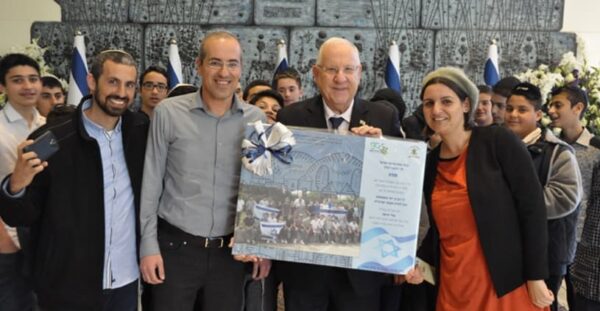
AMIT Netanya Students Meet President of Israel
A delegation of new immigrant students from AMIT Bar Ilan High School for Boys, Netanya, met recently with Israel’s President Reuven Rivlin at his residence in Jerusalem.
A delegation of new immigrant students from AMIT Bar Ilan High School for Boys, Netanya, met recently with Israel’s President Reuven Rivlin at his residence in Jerusalem.
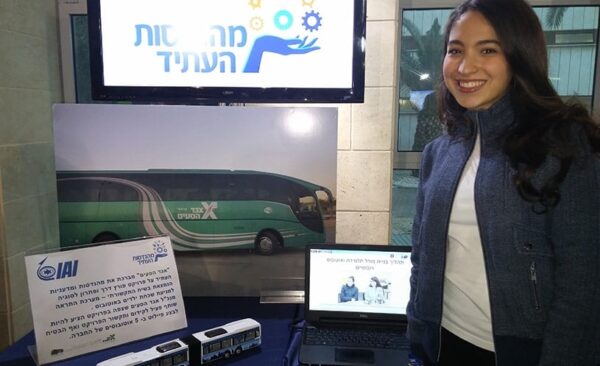
Doreen Cohen, an 11th grader at Ulpanat AMIT Anna Teich Haifa, will represent the Future Female Engineers project at an Israeli Embassy conference to be held next month at the United Nations.
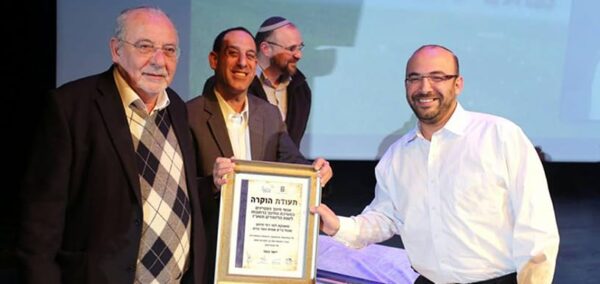
Rabbi Rafi Maimon, principal of AMIT Hammer Rehovot High School for Boys, was recently recognized by the City of Rehovot as the outstanding principal of the year.
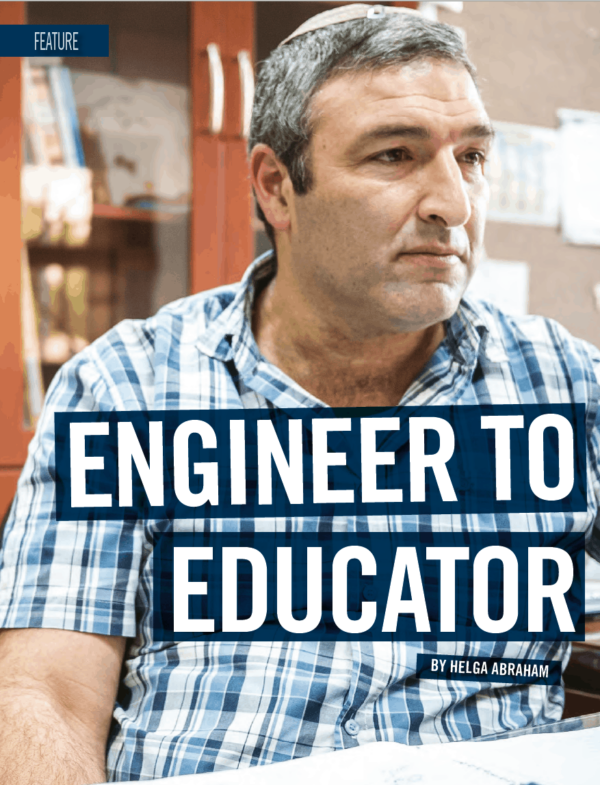
It is not every day that a high flyer from the world of start-ups and the armaments industry gives up everything to take over the helm of a small high school in a distant development town. But this is exactly what 46-year-old Guy Dekel did last year, when he resigned his position as team director at Israel’s prestigious Rafael Advanced Defense Systems in order to become the new principal of AMIT Karmiel, a co-ed high school of just 256 students. After having led the team that developed Israel’s first marine USVs (unmanned service vehicles), which are now patrolling the shores of the country from north to south, Dekel is busy dealing with class schedules, curricula, teachers and students—and, on the day I met him, ordering parquet flooring for a new hip-hop room he plans to create at the school.
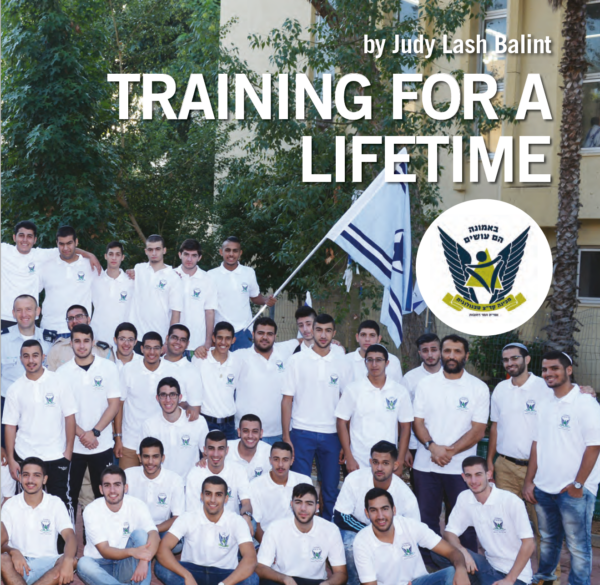
According to a 2014 report by the Institute for the Study of War, Israel’s Air Force is the best in the world.
“Israel has space assets, advanced fighter jets, hi-tech armed drones, and nuclear weapons. Its air force has incredibly high entry and training standards,” the study noted. So who are the young people being trained to keep the Air Force up and running at such high international standards? Observe AMIT Hammer Rehovot Pre-Army Junior College, which opened its doors in September 2014 to a class of 24 eager students, and now has sixty young men enrolled in an intensive and unique training program that combines technology, Torah and preparation for life.

There is no doubt that a promise from God will be fulfilled. His blessings come to fruition at the right time, no earlier and no later. Often in the Torah we read of a promise that Hashem makes either to an individual or a nation; usually, a significant amount of time elapses before His blessing is materialized. This lack of immediacy implies that there must be a catalyst that triggers the manifestation of a blessing besides God’s promise that it will happen—the timing must be dependent on another factor.
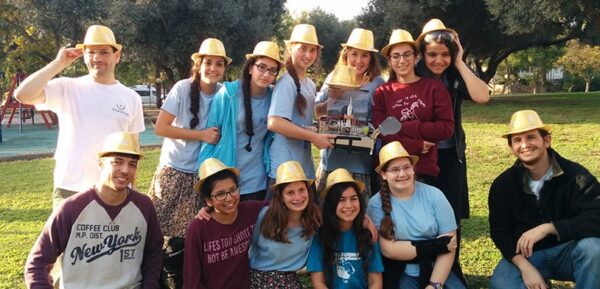
The AMIT Kamah Yerucham robotics team won first place at the FIRST Tech Challenge preliminary national competition.
Since the beginning of the school year, students have been developing a website called GREAT (Give, Receive, Eat) aimed at linking businesses that sell food, including function halls, restaurants, and hotels, with food rescue organizations in order to channel surplus food to the needy instead of throwing it away.
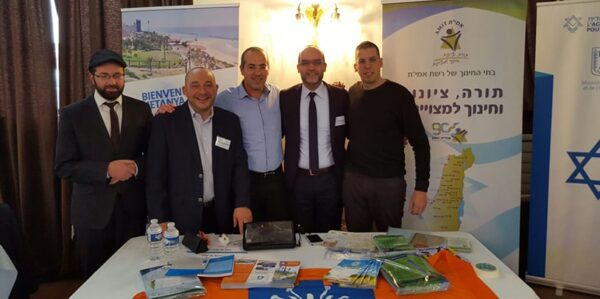
Two principals representing the AMIT Network traveled to Paris recently to visit Jewish schools and participate in an Aliyah Fair sponsored by the Jewish Agency.
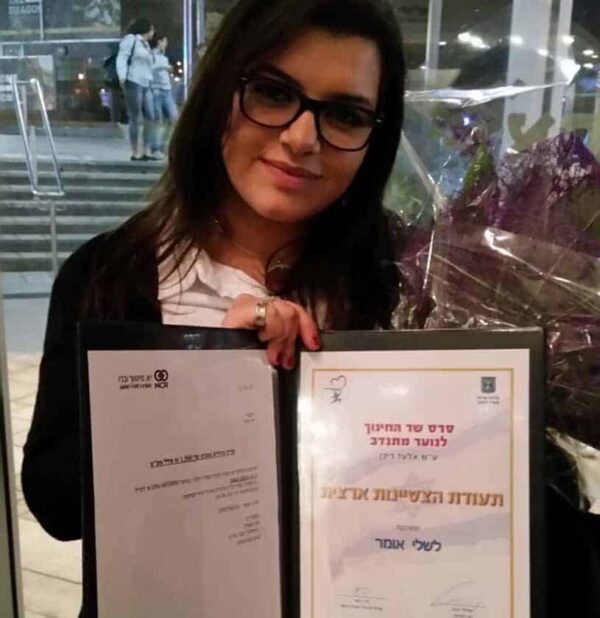
Shelly Omer, a student at AMIT Wasserman Ma’ale Adumim High School for Girls, was one of 11 students recognized nationally for leadership and community involvement.