
At the beginning of January, the global consulting firm BDO completed its first-ever comprehensive survey of food waste in Israel. The survey showed that the Jewish state wasted 1.3 million tons of edible food in 2015 alone. This number translates to NIS 18 billion ($4.5 billion), or 1.6 percent of the national GDP. The report, commissioned by the non-profit Leket, Israel’s largest food bank and food rescue network, estimated that Israelis waste 85 kilograms, or 187 pounds, on average per household each year.
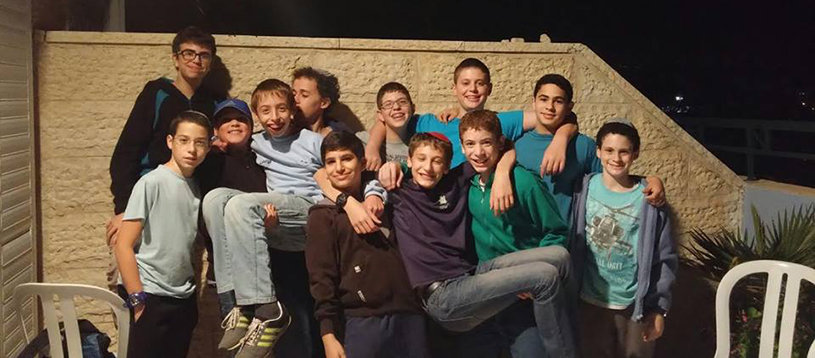
Students at AMIT Sutker Modi’in Jr. and Sr. High School for Boys did not wait for the publication of the report to begin rescuing food. Since the beginning of the school year, students have been developing a website called GREAT (Give, Receive, Eat) aimed at linking businesses that sell food, including function halls, restaurants, and hotels, with food rescue organizations in order to channel surplus food to the needy instead of throwing it away. Food that can no longer be eaten is used for compost to enrich the soil and help the environment. This project was initiated by the school’s junior high school robotics team, as part of this year’s FIRST LEGO League TRASH Challenge. The Challenge calls for teams to develop a solution to a trash-related problem they have identified.
Robotics team members first met with experts to learn how to create a website, as well as with organizations that distribute food to the needy in Modi’in and Deputy Mayor of Modi’in Ilan Ben Saadoun who chairs the Social Services Committee in the city. Team members presented their idea to the Deputy Mayor and discussed ways in which the site could contribute to the city’s distribution of food packages, general welfare and reduction of food waste. The team then planned the site to attain their goals of food rescue, and, finally, launched and started operating the site for the benefit of local residents. The site provides options for those who want to donate surplus food as well as for those who would like to receive food. The donation request is automatic and therefore protects the privacy of the recipients. Team members hope that the site will contribute to the significant economic and social impact of food rescue and promote a cleaner, greener world.