
by Judy Lash Balint
According to a 2014 report by the Institute for the Study of War, Israel’s Air Force is the best in the world.
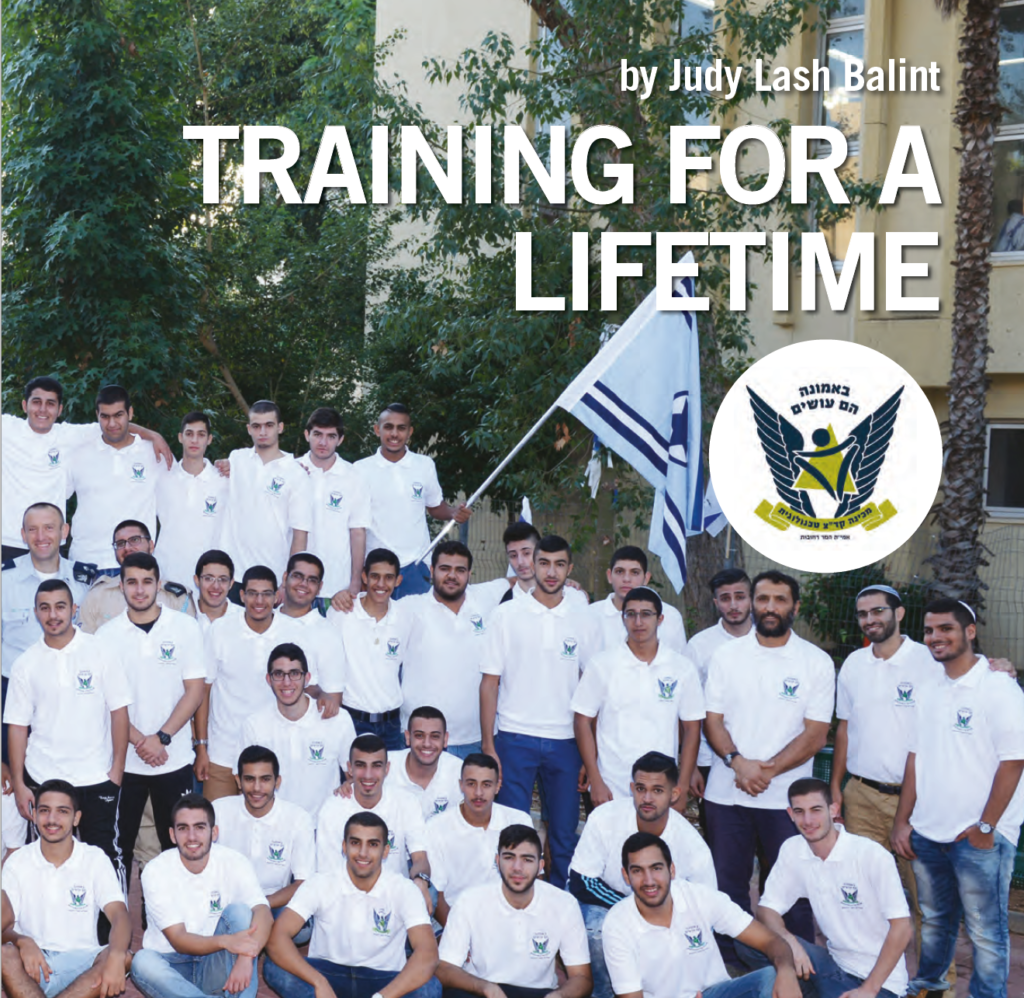
“Israel has space assets, advanced fighter jets, hi-tech armed drones, and nuclear weapons. Its air force has incredibly high entry and training standards,” the study noted. So who are the young people being trained to keep the Air Force up and running at such high international standards? Observe AMIT Hammer Rehovot Pre-Army Junior College, which opened its doors in September 2014 to a class of 24 eager students, and now has sixty young men enrolled in an intensive and unique training program that combines technology, Torah and preparation for life.
The idea was the brainchild of Rabbi Rafi Maimon, who took over as Principal of AMIT Rehovot Boys High School in 2011. At the time, the high school had a reputation as the worst school in Rehovot with a very high dropout rate, recalls Rabbi Tzuri Levy, Director of the Junior College. “Rabbi Maimon made a revolution,” according to Rabbi Levy. Rabbi Maimon recognized that his students deserved to be given the opportunity to become valued members of Israeli society, enjoying both a good profession and a life imbued with Torah values.
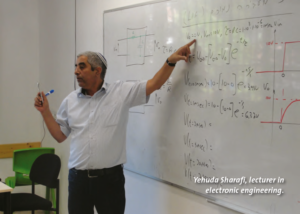 Together with Rabbi Levy, a veteran educator, who was then teaching at the high school, they wrote a proposal to enable students from three target populations to continue for a further two years of study in either electronics or electrical engineering, to be followed by acceptance into the IAF (Israel Air Force) to work in their chosen field. The program was designed for graduates of religious high schools in and around Rehovot including Ashkelon, Kiryat Malachi, Ashdod, and Beit Shemesh, as well as new immigrants and those from disadvantaged neighborhoods and students who graduated high school with a technology certificate.
Rabbi Maimon explains that many boys at the AMIT Hammer Rehovot Boys High School meet one or more of those criteria and are not served by the traditional post-high school options for national religious youth. “In our community, it’s common for boys to attend a preparatory program, or be part of a header yeshiva (combining army service with yeshiva studies)” notes Rabbi Maimon. “But most of my students are from families where that’s generally not an option that parents support. The boys need to go out to work to help support the family. These are not guys who see themselves sitting in a yeshiva, or who have the luxury of extending their army service to become officers. They are looking to learn a trade that will set them up for life.” Through a partnership with Israel’s Ministry of Education and the Israel Air Force, the AMIT Hammer Junior College is designed to provide a comprehensive training program in electronics and electrical engineering that enables graduates to be accepted into the IAF as technicians or junior engineers. After their mandatory service, the young men are well equipped to further their careers either as permanent employees of the IAF or in Israel’s burgeoning aviation industry. Those with the ability to further their academic studies have the opportunity to study for a degree at the Jerusalem College of Technology’s Machon Lev, another partner of the AMIT Junior College. The College is also supported by the city of Rehovot, which is known for its emphasis on technology development.
There are other technical training programs in Israel, but what is unique to the AMIT Junior College is the added emphasis on integrating a Torah lifestyle with state-of-the-art technical studies. Both Rabbi Maimon and Rabbi Levy relate that before they created the Junior College, they were disturbed by the hemorrhaging of AMIT High School graduates to non-religious training programs in the area. “It didn’t take long for those boys to take off their kippot and adopt a secular lifestyle,” notes Rabbi Maimon.
Emblazoned on the wall of the Beit Midrash of the Junior College is the visionary mission statement that sets the atmosphere for students and teachers alike. It states, “The college envisions its graduates to become family men with a profession, dedicated to the traditions of the Jewish people, connected to his people and his land, possessing the ability to contribute on a meaningful level, and demonstrating caring and concern for society and the community around him.”
It’s a message that’s taken to heart by the students. Yochanan, a graduate of AMIT’s Bet Ashdod High School, learned about the Junior College from a teacher, and explains, “It’s very important to me to be in a religious environment. I know observant guys who went to the IDF without this kind of framework and without knowing what they were going to do there, and they ended up losing their religious identity.”
That’s exactly what Rabbi Levy strives to prevent. He stresses that his goal is “not to turn out rabbis, but professionals who love Torah and will lead a traditional lifestyle.”
One way to accomplish that, according to Rabbi Levy, is “to emphasize attention to the individual needs of every student, because we’re not just providing them with the technical education and religious values. We are also focusing on teaching life skills—things like how to make a successful family budget, how to build a successful marital relationship, strengthening self-confidence,” he said. The main aim of the College is to empower students with the skills necessary to provide them with the personal drive and fortitude to deal with the challenges of life and to be upstanding members of Israeli society.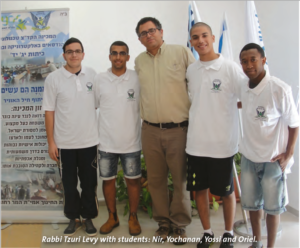
For most students at the College, it’s a struggle to meet the demands of the program as well as to deal with the realities of their sometimes difficult home backgrounds. “It makes for a long and demanding day,” says Oriel, a freshman at the college, with a bit of a smile. After morning prayers and breakfast, he relates, the day’s schedule is packed with lectures in basic academic subjects, instruction in computer studies, lab time in electronics, at least two study periods in the Beit Midrash, and individual personal counseling several times per week.
But it’s not all hard slog in the classroom. A key element of the two-year program, according to Rabbi Levy, is the field trips that take students to different parts of the country. Informal education plays an important role in a program where students may be struggling with economic or social difficulties at home. Several times during the school year, students get to spend two or three days on a field seminar, together with a rabbi and a counselor who are on hand to help foster personal relationships and team-building. Another type of field trip takes the students to IAF bases, where they are introduced to the environment they’ll be working in after graduation.
Because of difficult home circumstances or distance from home, almost a third of the Junior College students are housed in the nearby Yeshiva Moreshet Yaakov. Room and board is free, but almost all the boys in the Junior College program have outside after-school jobs to help their families. Dr. Amnon Eldar, Director General of the AMIT Network, says that when the Junior College first opened, AMIT got feedback from parents who were concerned that the length of the program was keeping their sons from earning a living for too long. “Once they understood the long-term value of the education their boys would be gaining, it was a different story.” Dr. Eldar adds that maintaining the College as an integral part of the AMIT Rehovot Boys High School campus is an important component of the program for AMIT. “It’s good for the College students to see the younger kids look up to them, and for the younger ones to see that they too can aspire to post-high school studies and the prospect of a good job.” The idea of combining vocational training with religious studies and values education is a key part of AMIT’s philosophy, says Dr. Eldar.
As the head of the Junior College, Rabbi Tzuri Levy is a role model for his students, as is obvious from the way he interacts with the boys in the halls as well as in the Beit Midrash. A native of Bat Yam, Rabbi Levy has a Masters degree in Talmud and taught for 14 years at the AMIT Yavneh High School before joining the staff at Rehovot. As a captain in the Home Front Command, he served for 50 days during the 2014 Gaza War, arriving home the day after the first day of the school year. Nir, a second-year College student, says he appreciates the values and principles he’s learning from Rabbi Levy and the Jewish Studies team and adds, “My family is really happy I’m here—they see a change in me; they can see, and so can I, that I’ve grown in my attitude toward study.”
On the technical side, students are required to complete a final project in order to graduate from the Junior College program and gain their certificates in engineering. A select group of outstanding Junior College students (four out of the 23 senior students) is permitted to actually implement their projects within the framework of the IAF and work off-campus under the supervision of an IAF captain. Rabbi Levy notes that some of the students are involved in classified projects already. Others will be working on operating and maintaining the critical Iron Dome defense system that saved many lives in the 2014 Gaza War.
“Our graduates will be the backbone of the IAF,” Rabbi Levy proudly explains. “Pilots have to take off with complete confidence that their planes are fully operational, without a shred of doubt about the work of the technicians and engineers who serviced them,” he says. In the four labs of the Junior College, groups of students learn how to work with the complex equipment used by the IAF. Downstairs, in the modest but modern Beit Midrash, another group is immersed in a lively discussion about the halachic precept to pay workers on time. Both fit into the motto of the AMIT Pre-Army Junior College Program that comes from a verse in Kings 2, Chapter 12, that describes those who worked on the repairs of the Temple: “They dealt faithfully. There were faithful workmen and faithful overseers of the work.”
Judy Lash Balint is a Jerusalem based award-winning freelance writer. She is author of Jerusalem Diaries: In Tense Times and blogs at jerusalemdiaries.blogspot.com. Find her on Twitter @judyinjerusalem.