

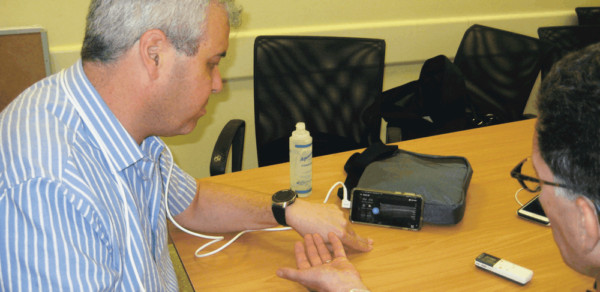
Lifesaving Medical Technology In A Cell Phone
Growing up, Ron Berant saw how long and hard his physician father worked. “Being a doctor was the last thing I wanted to do,” he concluded.
Growing up, Ron Berant saw how long and hard his physician father worked. “Being a doctor was the last thing I wanted to do,” he concluded.
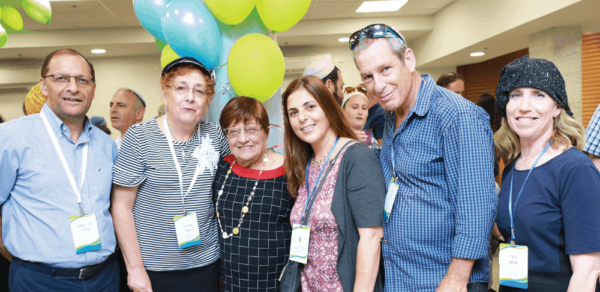
In today’s social network-centered world, most people keep in touch with far-flung friends from high school and university via Facebook or Instagram, as in-person reunions happen less frequently. AMIT is working to reverse that trend by undertaking three large-scale reunions of graduates around the country this summer and establishing alumni communities at several of its schools.
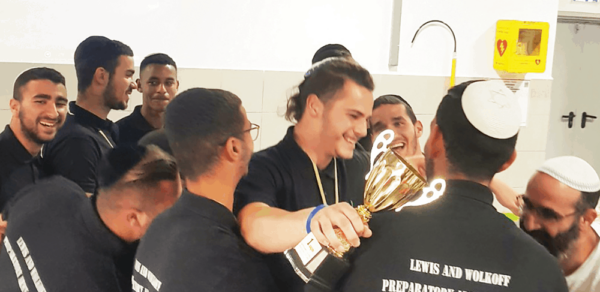
Shalom D. admits that 9th grade wasn’t his most successful year. He was enrolled at an all-boys’ school in Jerusalem and was told he would have to redo the year if he wanted to stay at that school. With the help of a guidance counselor, he decided to look into other nearby schools, but none of them seemed to be the right fit.
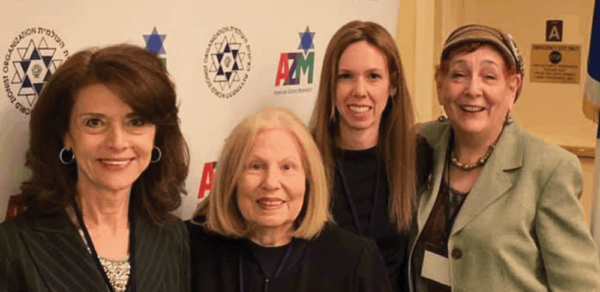
Election season is in full swing both in Israel and the United States, where all eyes are looking ahead toward the outcomes of the races this September and in November 2020, respectively. While those two elections are incredibly important for Israelis and American Jews, another looming election that hasn’t garnered as much attention is equally—or arguably more—crucial for global Jewry.

This past summer witnessed the Ethiopian community in Israel explode with rage following the killing of unarmed 18-year-old Solomon Teka by an off-duty police officer, the second such case this year. Thousands of Ethiopian-Israeli youth protested for days after Teka’s death, blocking major junctions and roads in an effort to call attention to the racism and police brutality they face.

More than a decade ago, historian Merav Mack thought of doing a small survey of Jerusalem’s old libraries, as she said, “to know what exists in them and see what needs to be digitized, who needs help, and how can we preserve them.” She got the support of the Institute of Historical Research in London, estimating that she needed between three and six months of funding to complete the survey.