
Fasting the mosquito population by sowing carnivorous plants in malaria-infested areas and subsequently establishing solar farms to increase the ability to sow carnivorous plants. This is how Yarin Bekoor Glam, Gabriel Schuster, Omer Rumi and Nissan Okashi – students of the AMIT Hamer School in Rehovot – offer a solution to the malaria problem in Nigeria.
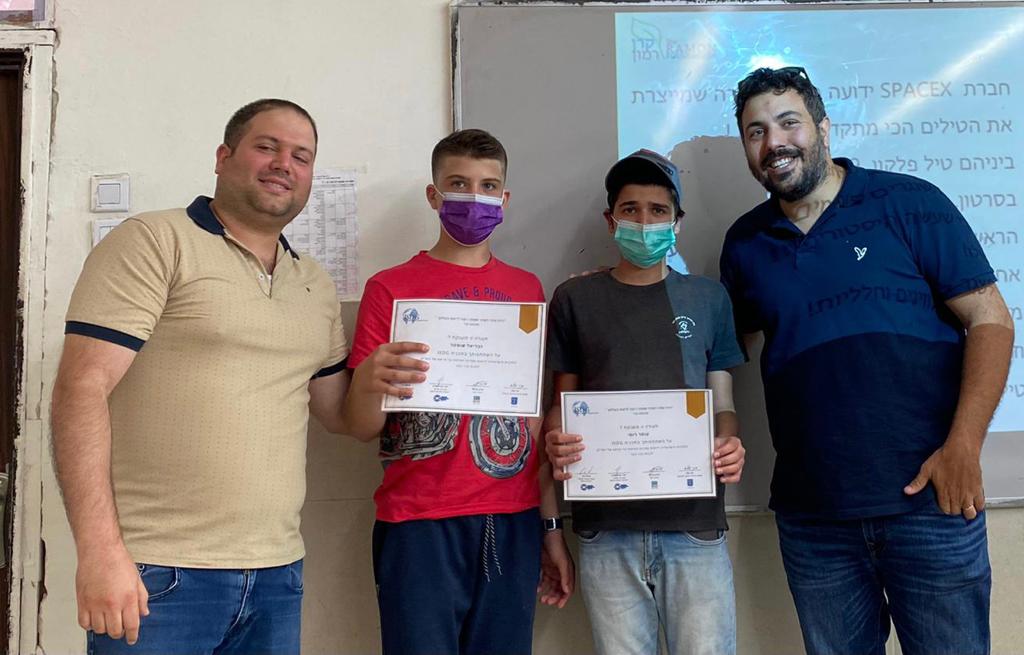
The four students completed this week the UN Goals program ISDG, in which they took part in cooperation with the Shulamit agricultural farm in Rehovot, accompanied by Natalie Yona and Idit Michaeli who work on the farm.
As part of the program, the four participated in a national competition, in which they presented in English a solution they worked on during the year for the malaria problem in Nigeria and received many compliments from the judging team in the competition who were impressed by their professionalism and creativity.
The unique Israel Sustainable Development Goals (ISDG) program was established with the aim of involving Israeli students in the international framework for achieving the UN’s Sustainable Development Goals for 2030, thus assisting the world as a whole in meeting the challenges ahead. The program is the result of a collaboration between the Ministry of Education, the Ministry of Foreign Affairs, through the Israeli Representation to the United Nations in Rome and the Jewish National Fund.
Student Yarin Bekoor Glam shares: “This amazing project has taught me so much, intrigued me, interested me and I feel privileged to be a part of an amazing learning process. I learned so many things about malaria, what it really is and how to prevent it. With the solution we have developed, we believe that malaria cases can be reduced by reducing the mosquito population by the predatory plants we tested. ”Nissan Okashi, a 3rd grade student, adds: “The project gave me the excuse to delve (relatively) into the practical and practical area, and also gave me more experience in speaking in front of an audience. I believe we have developed a good foundation for further research and experimentation that can lead to the reduction of malaria in Nigeria ”.
Rabbi Rafi Maimon, director of the Amit Hamer School: “There is nothing more gratifying than the fact that our students are working and helping to fix the world, along with developing the technological tools they are working on throughout the year. The students’ honorable achievement was undoubtedly credited to the 24/7 program coordinator and our ecosystem – Shai Goldenberg