
The new approach by the Ministry of Education which will be implemented by 100+ schools across Israel this academic year.
Over the last few years, the Israel Ministry of Education has put a major focus on improving methods of teaching English – namely, spoken English – due to the fact that many Israeli high school graduates are unable to communicate and comprehend English strong enough to understand their higher education textbooks.
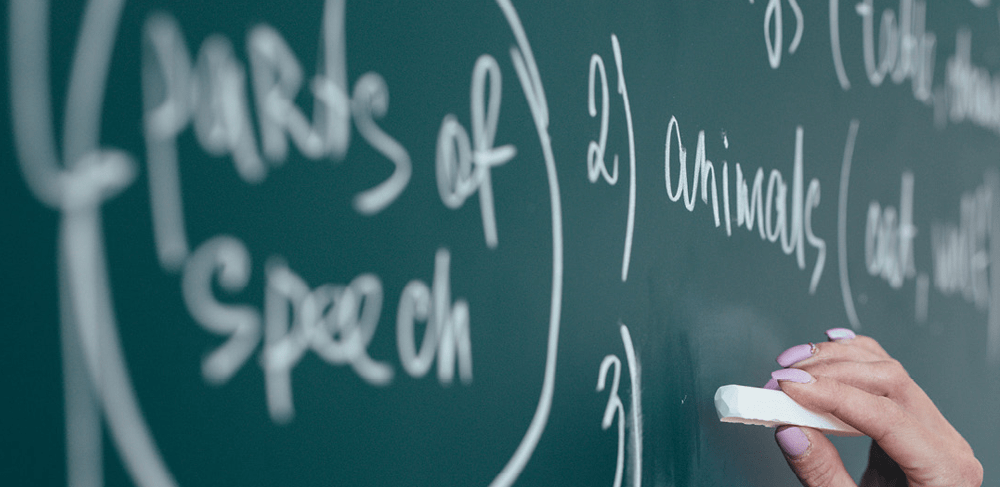
In an attempt to improve English teaching, this past school year, a pilot program was conducted in 11 schools across the country where in addition to English lessons, geography classes were also conducted in English. This pilot was deemed a success. As a result, the Ministry of Education has decided to teach other subjects in English as well, to help students expand their vocabulary and be able to hold a conversation in English.Over 100 schools across the country will be joining this program and will be conducting lessons in various subjects including social studies, geography, science, engineering, math and physical fitness in the English language.
The program is structured that two teachers will conduct lessons at once- one speaking Hebrew and the other English. For this purpose, with the aid of the MASA organization, hundreds of academics and educators from English speaking countries will be brought to Israel to help balance teaching of subjects in science, technology, engineering, and math alongside the Hebrew speaking teachers. “This new track will increase excellence in teaching english and sciences, it will improve the students grasp of concepts and increase their motivation to learn,” says MASA CEO Liran Avisar Ben-Horin.
The Ministry of Education explained this program will enable students to express themselves clearly in English by expanding their vocabulary beyond what they will gain in a simple English class. “The conversation in the lesson becomes more relevant since it starts with basic knowledge of a subject and allows them to continue studying by researching questions raised by the teacher online in English.”
The Israel Ministry of Education CEO, Shmuel Abuav expresses combining these disciplines will enable students to build relevant skills for the 21st century. “Teaching is done in a way which is innovative and relevant, and realizing its importance, we have decided to expand it gradally to more and more schools,” he explains.
“Research proves that speaking the language on a daily basis enables greater understanding.” Shirley Rimon, director of the Tel Aviv Ministry of Education explains. Tel Aviv schools will incorporate this program into the subjects of physical fitness, art, theater and dance.
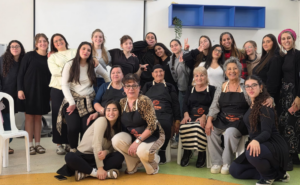
The AMIT Gould Hallel High School for Girls in Rehovot participated in the pilot profram this past year, teaching students the subject of social studies in English. School principal Miri Gil shares this program gave the girls a whole new level of learning in terms of meaning and relevance.
The program will continue in the school this coming school year, and the two teachers, one English teacher and one social studies teacher, cooperate in preparing the lessons also
together with the schools technology directory which enriches the students with tools for researching on the internet in English.
“Interdisciplinary learning expands horizons,” English teacher Hannah Shish explains. “Combining disciplines creates interaction between teachers who have to prepare together. The students are happy from the dialogue and open discussion that allows for them to have an opinion on the subject in English.”
AMIT Education Network CEO, Dr. Amnon Eldar ellaborates: “Learning extra hours of English advances knowledge of the language which is a tool essential for each student to graduate with today.”
Translation from Yediot Ahronot article by Tamar Hadad (published August 18, 2019)