
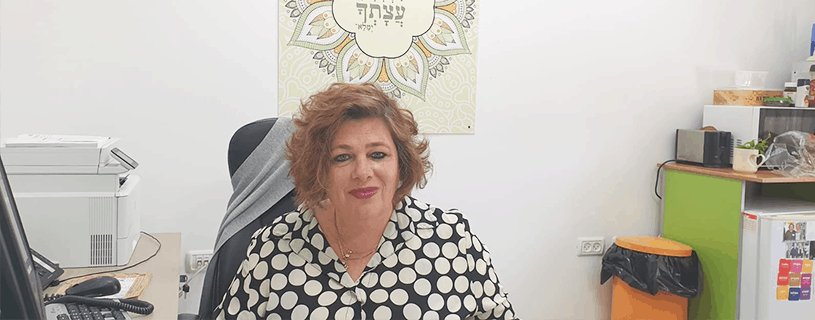
By Etti Tzabari, Principal AMIT Kennedy Acco
In this blog, Etti Tzabari, principal of AMIT Kennedy Acco, shares the challenge and triumphs of dealing with the coronavirus at her school and how the school community pivoted to the new medium, new situation, and embraced the health crisis as an opportunity.
Corona is not just a virus.
Corona is a situation that caused us to lead change and create opportunities.
Three months ago, Israel, and the world at large, found ourselves under the attack of a virus that we did not know how to deal with. All of Israel was forced into closure. People lost jobs in the blink of an eye, places of recreation were no longer available, travelers stopped flying between various destinations, and the educational system found itself rethinking its direction.
This process of rethinking and rerouting met us, school principals, in different ways.
Those of us who embedded in our educational communities a need for change, and a focus on skills and abilities that deal with future-minded pedagogy– like teamwork, independent learning, and flexibility – quickly dove into this ever-changing dynamic and starting swimming carefully but securely.
Others, who still had not internalized the need for change, found themselves in total chaos and with an inability to deal with the new reality.
At our school, AMIT Kennedy Acco, we have been involved with this change for more than three years. As part of AMIT’s Gogya process of holistic pedagogical change and the ongoing mentorship and guidance we receive from the professional headquarters staff and our cultural change mentor, we understood the importance of 21st century skills and incorporated them into our classrooms and teachers’ room. We purchased laptops for our students and staff members, and fully embraced this forward-thinking mindset.
The coronavirus, for us, was an opportunity to experiment and practice.
At the start of the crisis, our pedagogical team built a comprehensive schedule that enabled the expression of independent learning, flexibility, and most significantly, individualized attention. While other schools were first looking into the possibility of distance learning, we had already experimented, learned, laughed, built projects, held ceremonies, and so much more.
Students and staff found the distance learning to be high-quality, pleasant, without disruptions or behavioral issues, and personalized to their individual needs.
We had an opportunity in front of us, and we grabbed it.
With the reopening of schools, we found our students to be happy, calm, and with newfound skills of independent learning, acquired during the weeks at home. The staff came back to school with a stronger sense of capability to lead far-reaching change in a positive manner.
New ideas and initiatives are raised daily by the educational team, regarding how to capitalize on the skills acquired during the pandemic, and to use these skills even now that we are once again physically together in the school building. We are looking into a variety of options, including a weekly day of distance learning, pedagogical meetings in more technologically interactive formats, among others.
To summarize, I feel that during this challenging period, we identified a great many positive outcomes. Most importantly, we were able to prove to ourselves that we could adapt in a rapidly changing environment.
My hope and prayer is that all of us in Israel, and our dear friends in the United States, will be blessed with good health and a speedy return to normalcy.