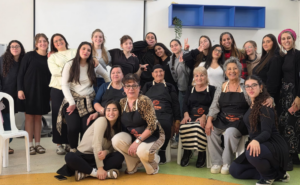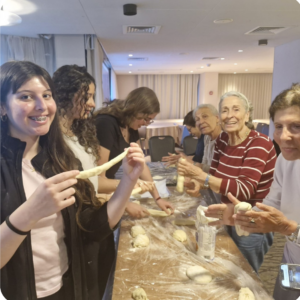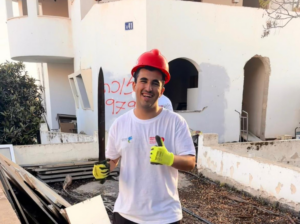


Like all things that were abruptly interrupted by the coronavirus pandemic, the year in Israel for Midreshet AMIT students ended in March. The students left Israel and went back home. But their learning didn’t stop. The students continued studying with their rabbis and teachers via Zoom from thousands of miles away. The distance didn’t shake the warm connection they developed for one another or the profound impact Midreshet AMIT had on their lives.
In this four-part blog series, Midreshet AMIT student Mimi Leifer shares her Reflections on Israel.
By Mimi Leifer
Believe it or not, I didn’t always want to go to seminary. I voiced my concerns about seminary to my mom at the beginning of senior year. I didn’t want to be in a different country where I really didn’t speak the language for a whole year. She didn’t give me a choice. She said going to Israel for the year was nonnegotiable, but not for the reasons that most parents would want their kids to go.
The reason that she wanted me to go for was to cultivate my own relationship with Israel. I didn’t understand what she meant. I had been fortunate enough to go to Israel at least once a year for chaggim and my family wasn’t the kind of family to sit by a pool and relax. We went on tiyulim almost every day and we rarely went anywhere twice. I had thought we saw the entire Israel. I just didn’t understand what she was talking about Regardless, I never won a fight with her in the past, so I decided to just listen to her.
Fast forward almost two years later and I now fully grasp what my mom was talking about.
From day one at Midreshet AMIT, I was taught how special Israel is through the teachers’ and rabbis’ personal Aliyah experiences and through the Torah we learned in the classroom. I would read the text of the Torah and watch rabbis and teachers passionately teach us of our birthright ownership of Israel and how lucky we are. I was intrigued but not fully convinced that I hadn’t formed a relationship of my own with Israel. But throughout the year, Midreshet AMIT proved me wrong.
We didn’t just sit in class and talk about Israel. We took the Torah we learned and really did #livetorah. I learned about judges in the time of the Shoftim and went to the Supreme Court and saw modern day judges. I would learn about shmitta and then go to a farm where they actually had to practice the laws. I started to see a side of Israel and Torah I wasn’t even aware of. From spending Shabbatons on kibbutzim and at yeshiva campuses and teachers houses, and being allowed to visit different cities and communities on our free Shabbatot, I started to feel proud of my heritage and I started to appreciate the words of the Torah more, to get a smile when I saw pesukim referring to our birthright which allowed us to claim sovereignty over Israel. I was so stunned at how accepted all different sects of Jews were. You could walk down the streets of Ben Yehuda and see all different kinds of Jews walking peacefully next to each other. In Israel, I felt fully accepted for everything that I was and not judged for everything I wasn’t. I walked the streets of Israel proud of my heritage and proud of how far the Jews have come.
If anyone would have asked me a year ago if Aliyah was ever an option, I would have said absolutely not. Now, I can’t say that I am rushing to sign the papers, but I have a deep love and appreciation for the land and the experiences it gave me, and hopefully, will continue to give me in the future.