
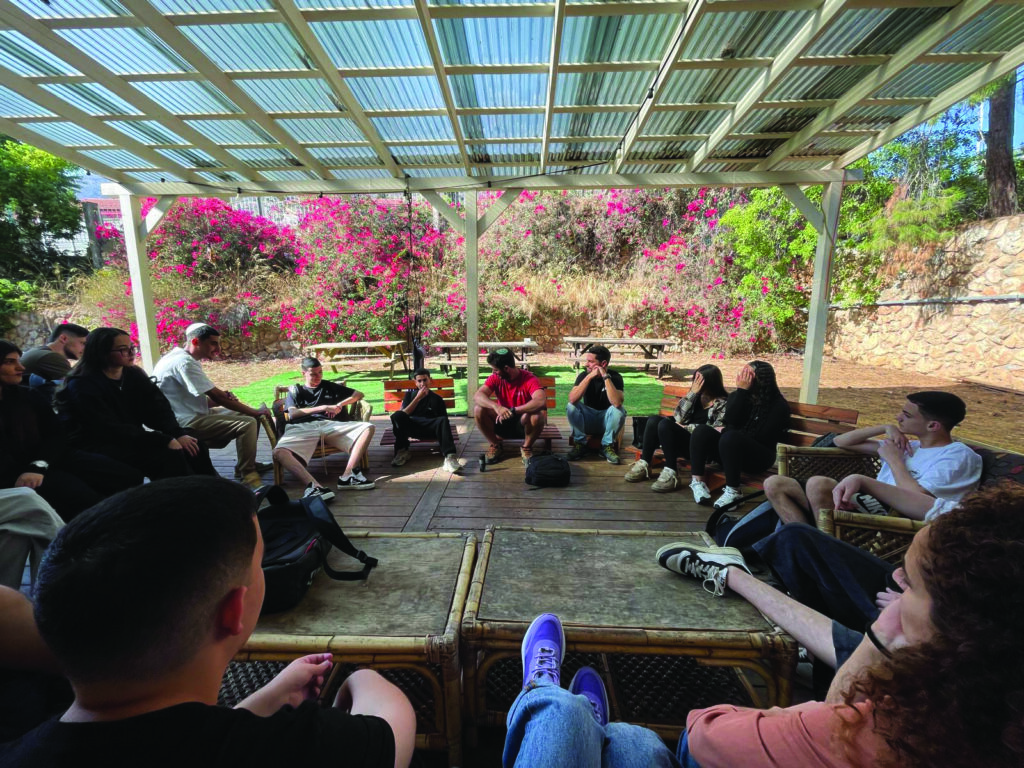
In the months following October 7, one of Israel’s quietest emergencies unfolded far from the headlines. Along the northern border, entire communities were emptied almost overnight. Kiryat Shmona on the Lebanese border was long a symbol of resilience on Israel’s frontier, and it was suddenly without its residents, its teachers, and its students. Homes stood silent. Schools closed. Families dispersed. Now, slowly and purposefully, Kiryat Shmona is coming back to life.
But as city leaders quickly understood, repopulation is not only about physical security or employment. It is about confidence. About whether young families believe they can build a future. And above all, it is about schools.
“People don’t come back just because they can,” said Moriah Daphne, an AMIT coordinator working closely with Kiryat Shmona’s education leadership. “They come back because they believe their children will thrive here.”
As residents began returning after months — many after nearly two years — of displacement, the municipality faced an urgent question: how to reopen schools in a way that would stabilize the city and restore trust. Many principals and teachers had been displaced themselves. Students returned carrying trauma, disruption, and uncertainty. This is where AMIT, Israel’s largest educational network, entered — not to take over local schools, but to strengthen them from within.
Leveraging ECO24
AMIT brought to Kiryat Shmona its ECO24 educational framework, a model already proven in other frontline communities, like Sderot. Rather than focusing only on academic recovery, ECO24 approaches education as a full ecosystem by connecting schools to families, community services, local institutions, and future employment pathways.
“The city asked us: How do we bring students back, and how do we make sure they stay?” Daphne explained. “The answer was not one program. It had to be everything working together.”
AMIT works closely with Kiryat Shmona’s municipality, education department, social psychology services, and community centers to ensure alignment. The goal: not just reopening schools, but rebuilding a sense of continuity and possibility.
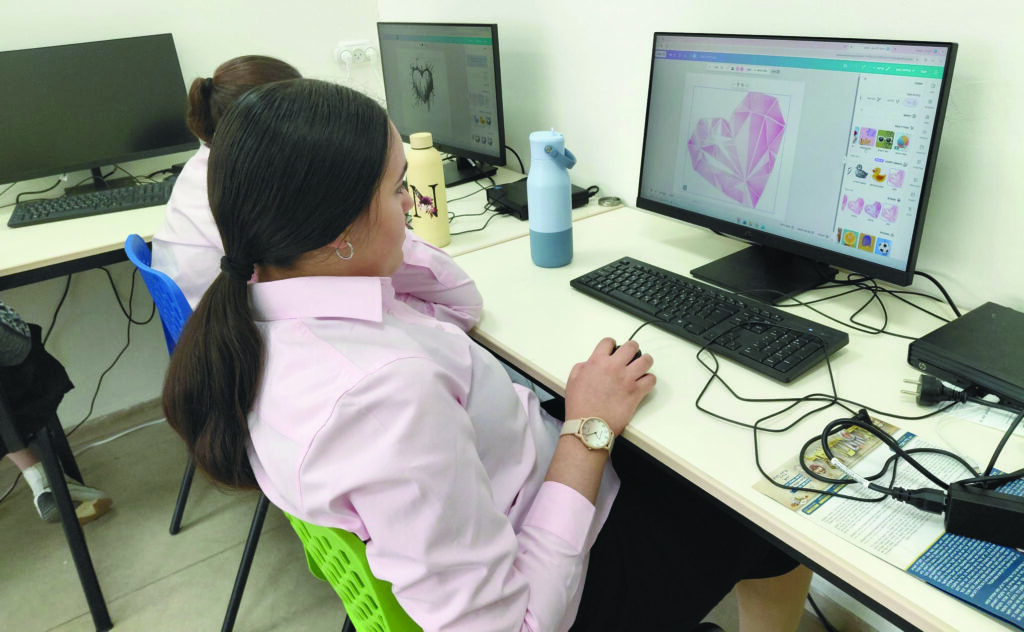
Early signs are already visible. Enrollment is rising. School violence has declined. New excellence tracks have been introduced, particularly in high tech, medicine, and elite IDF pathways. Teachers have returned — not only as educators, but as mentors guiding students through a redefined sense of purpose, helping them gain the skills and confidence to pursue their future.
Students are exposed to real-world fields and professional role models, gaining practical skills and a sense of direction that connects the geographic periphery directly to Israel’s most advanced sectors: high tech, medicine, research, and elite military service. For many students, these encounters are their first sustained interaction with industries that often feel distant or inaccessible.
In a town rebuilding its population, this exposure is critical. It shapes whether young people envision a future for themselves in Kiryat Shmona or see success as something that only exists elsewhere. By opening opportunities while keeping students rooted in their community, the schools help families believe they do not need to choose between living in the north and giving their children a strong future.
“Families look at schools as a signal,” said Yitzhaki Friedman, director of ECO24. “Strong schools project that this place has a future.”
The data supports this. Research consistently shows that education — alongside employment — is the strongest predictor of community resilience and long-term growth. Young families choose where to live based on schools. Investment in education accelerates return.
Rebuilding Community
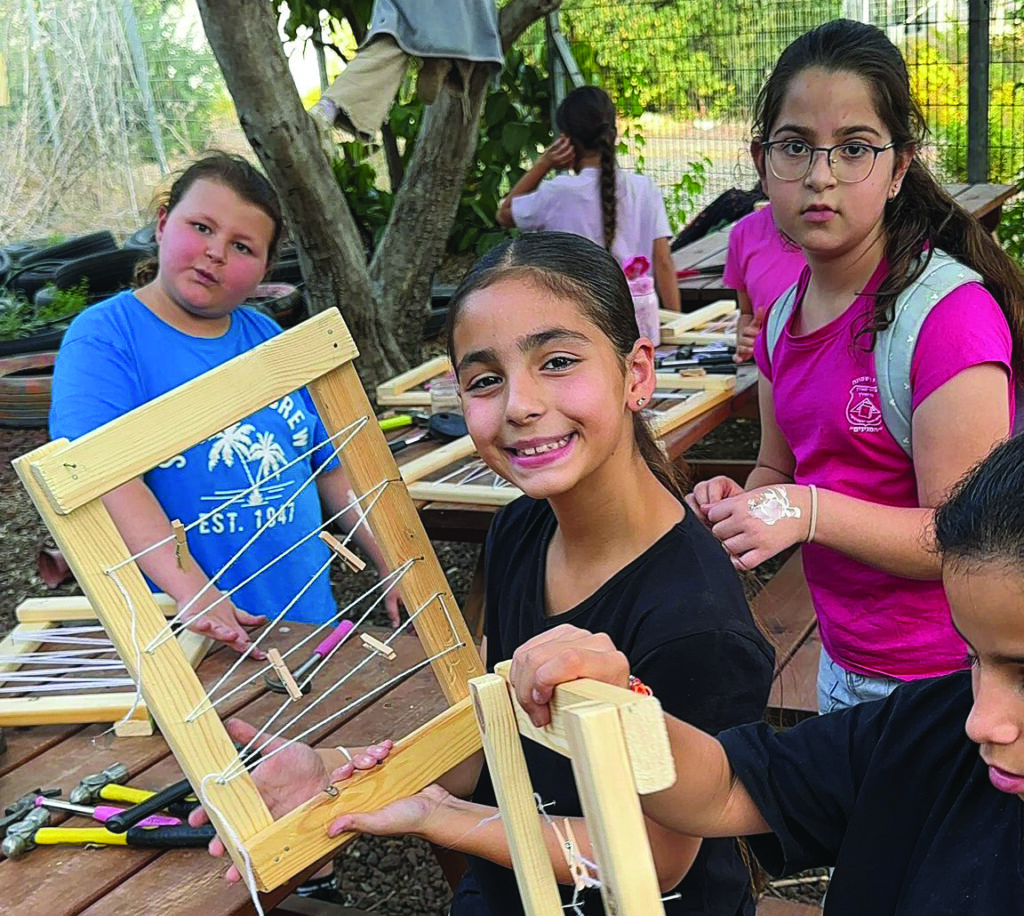
Beyond academics and career pathways, ECO24 places strong emphasis on belonging and contribution. Volunteerism, leadership, and community engagement are not add-ons, but core to students’ development. This has taken on particular meaning in Kiryat Shmona, where rebuilding is both physical and emotional.
One example is students’ involvement in new community initiatives, including guided tours and heritage projects that reconnect them to their home. Park HaZahav (Park of Gold) is a green corridor threading through the city. Once farmland, later an urban park, the space tells the story of settlement, growth, and renewal. Students explore the park’s trails, rare trees, and local ecology while learning how communities are built over time. The more they learn about the history of Kiryat Shmona, the greater the bond they feel with their city.
Armed with knowledge, students will then become guides for tourists and residents. It is education rooted in place, linking identity, environment, and responsibility. “When students see themselves as part of the story of the city,” Daphne noted, “they stop feeling like temporary guests. They become stakeholders.”
But no one pretends the work is finished. “This is a long road,” Daphne added. “It’s not just students who were gone. Principals and teachers were gone, too. We are rebuilding systems, trust, and confidence at the same time.”
A Solid Foundation
ECO24 was already strong before October 7 — then it became a lifeline. In Sderot, a city hit hard by terror for many years and worsened by the recent war in which most residents were displaced, AMIT schools became hubs of learning as well as emotional and psychological recovery. “After the October 7 attacks, ECO24 became a critical structure for communities forced to rebuild their lives,” Friedman recalled. “We didn’t wait for help. We already had the tools, so we went to work.”
The model’s success in keeping families hopeful and helping them return home caught national attention. The HaBayta Foundation (Hebrew for “toward home”) was founded to help immigrants in Israel. After October 7, HaBayta refocused its efforts on strengthening communities and the educational system in areas of Israel that were affected by the war. It began improving local educational infrastructure and fostering a sense of belonging to help displaced residents return to their homes. And when HaBayta focused its core mission on the city of Kiryat Shmona, they turned to AMIT.
“The north has suffered in silence,” Friedman said. “Students were away from home for 18 months, and many families haven’t returned. The challenge is huge. We are empowering local schools to become strong again.” Early signs are promising: increasing enrollment, new partnerships with businesses and companies investing in northern workforce development, and renewed energy among teachers and students alike.
While ECO24 is filled with heart, it is equally grounded in data. “We conduct and review full research before, during, and after. Short-term KPIs and long-term ones,” said Friedman. KPIs, or key performance indicators, are a measurable value that demonstrates how effectively an organization is achieving essential business objectives. KPIs are used to evaluate success in a particular activity or to monitor progress toward goals, providing insights for better decision-making across all departments.
ECO24 measures include academic progress and matriculation success, leadership development, post-graduation pathways into the IDF, higher education, careers, levels of active community involvement, and student well-being and motivation. The data tell a compelling story: Young families choose to live in communities where strong schools exist. Investment in education, along with employment opportunities, is the top indicator of a city’s resilience and growth. “We see it clearly,” Friedman said. “Education brings people home. It gives them hope.”
Empowering Students
He recalled one student who found himself through competitive cycling, discovering his identity, purpose, and direction. “He struggled academically, but on a bicycle, he was unstoppable. He became a leader, and that strength carried into everything else, including the classroom,” Friedman remembered. Today, that same student is an officer in the Paratrooper Corps in the IDF. “I met him after leaving reserve duty in Gaza,” Friedman said. “He thanked us for believing in him. But truly, we should thank them. We hope we are worthy of this amazing generation.”
Though every student is included in ECO24, participation in the deeper tracks is voluntary. “About two-thirds jump in right away. The others watch. And then they see what’s happening and usually decide they want in,” Friedman said.
Teachers, too, take on new roles as mentors and connectors. Many come from professional fields aligned with student majors. A science teacher might also be a medical technician. A debate instructor might be a civic activist. Their expertise extends the meaning of “teacher” into coach, guide, and role model. “To change a child’s life,” Friedman said, “you must see them fully. Not the grade on the paper but the person they can become.”
There is momentum. Kiryat Shmona is regaining its vibrancy. Businesses are returning. Jobs are being created. And schools, silent for the past two years, are again filled with movement, ambition, and noise. “As is said and well-known in Israel, there is no Galilee without Kiryat Shmona,” Daphne said. “And there is no Israel without the Galilee.”
What is happening in Kiryat Shmona reflects a broader truth emerging across Israel’s border regions: Education is not only about preparing students for the future, but also about anchoring communities in the present. By strengthening schools, expanding opportunity, and surrounding young people with purpose and possibility, AMIT and its partners are helping families make a critical decision: to come home, and to stay.