
 By Amnon Eldar, AMIT director-general
The discourse surrounding the character of the school of the future is usually lacking because it has to do with improving the existing model. It takes as a given basic assumptions of the past, which don’t allow us to examine in depth what kind of school we would like to have in the future. Change and innovation are vital and meaningful for everyone in a school, especially the students. If there is no change in the education system and in Israeli schools, they will become irrelevant to our students.
Israel’s education system will be radically different 10 years from now, when we celebrate the country’s 80th Independence Day.
One of the most significant changes will be a new conceptual and cultural notion of what a teacher’s role is. In the past, we have used a hierarchical and uniform learning method that views the teacher as the sole source of knowledge. In the future, a teacher’s role will change from a “transferer of knowledge” to a learning facilitator. Instead of having one teacher per class, multiple teachers will simultaneously guide their students as they learn in open spaces. The students will be grouped according to interest and not by age, and they will progress at their own personal pace.
In each school, the principal and the teachers’ community will be given autonomy to redesign all elements of their school, while remaining in accordance with the education system’s values.
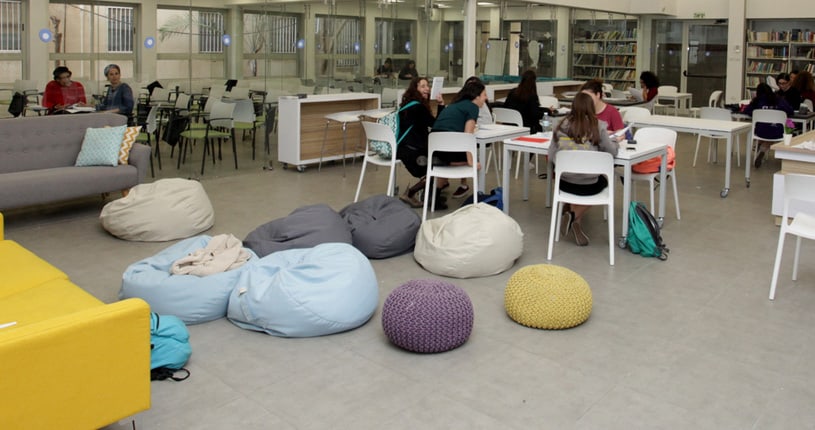
We will also see a significant change in the school’s physical design: It will include open learning spaces that enable and encourage creative thinking and broadening horizons; have translucent or semi-translucent walls; and spaces that encourage transparent learning processes for students, teachers and staff. The school will encourage social engagement and the use of diverse learning resources. The interior spaces will be adapted to pedagogic changes in teaching and learning: the furniture will be modular, flexible, and suited to these evolving learning needs. In the school of 2028, learning will happen in a collaborative manner through learning communities. The areas and subjects studied will be redefined; learning methods and modes of assessment will be reexamined to determine whether they are relevant to the current reality; and the central axis of a school will be its communal identity.
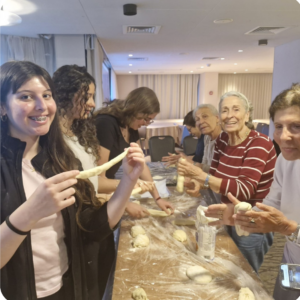
Learning will be based not only on mentors, but will include partnerships with high-tech workers, scientists, companies, and businesses that will transform the learning experience into an interesting and relevant one for students. The learning process will be founded on the principle of experiential learning among principals, teachers, educators, and students alike. This type of learning—which cultivates students that take initiative, are inquisitive, do research, and aim to make new discoveries—also strengthens the students’ perceptions of their own abilities and inspires them to be active participants in the learning process. Ultimately, it also enables them to realize their full potential and accomplish wonderful achievements.