

By Alisa Bodner
When Einat Rubin decided to donate her kidney, one of the first calls she made was to Arik and Penina Abergil, whose son, Matan HY”D, had studied in the AMIT HaOfek Technological High School in Or Akiva, where Rubin is the principal. The Abergils were overwhelmed with emotion when Rubin shared that she would be donating a kidney in memory of their son, an IDF sergeant in the Golani Brigade who was killed on October 7 in defense of Israel.
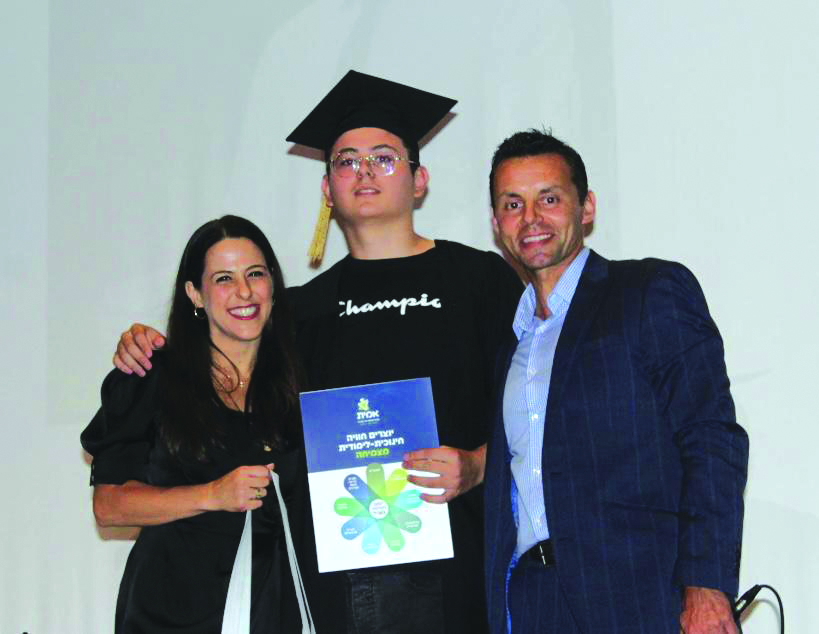
Matan Abergil excelled at HaOfek, which serves approximately 130 at-risk teens between grades nine and 12. He challenged himself by studying electrical engineering, and he successfully completed his bagrut (matriculation exams) at the end of grade 12. Friends and teachers described him as a shy, modest, and intelligent teenager. He wasn’t the most vocal student, but he set high goals for himself and worked hard to achieve them. Matan was determined to serve as a combat soldier in the IDF, drawing inspiration and support from the teaching staff at his high school.
As a student, Matan demonstrated tremendous responsibility toward others. In addition to their academic studies, students at HaOfek engage in chesed (acts of kindness); participate in skill-building classes such as photography, art, and cooking; and take part in outdoor treks that stretch their physical and mental limits. In grade 12, Rubin shared, Matan completed a difficult trek during an excursion with his classmates. After the grueling hike, he went back and forth multiple times to help his peers who were struggling. He even carried classmates on his shoulders to ensure that nobody would be left behind. He exemplified values of leadership, responsibility, and loyalty.
After graduating from HaOfek, Matan enlisted in the IDF as a combat soldier. The staff at his high school kept in touch with him and attended his various ceremonies, including his Corps Beret ceremony, where he received an Outstanding Trainee award.
Then tragedy struck. On October 7, Matan and comrades from the Golani infantry regiment’s 13th battalion took part in a fierce battle in Kibbutz Nir Am. While defending the kibbutz from Hamas terrorists that had infiltrated the border, Matan and six other soldiers found themselves trapped in an armored personnel carrier (APC). The soldiers were surrounded by terrorists who hurled rockets and mortar bombs at the vehicle, yet they continued fighting valiantly. And then a terrorist fired a grenade at the soldiers.
According to accounts from his comrades, Matan tried to throw the grenade out of the vehicle but was unable due to the angle of the APC. In a matter of seconds, after realizing he could not toss the grenade, he hurled his body against the projectile in order to absorb the explosion and save the lives of his brothers-in-arms. At the age of 19, taking his last breaths, he uttered, “I tried to do everything to protect the people of Israel.” At his funeral, one of his comrades said, “You saved every one of us, and you protected us with your body.”
Rubin learned about Matan’s death shortly after October 7. “He fell a hero’s death,” she said, and explained that if she had been asked to think about a graduate who jumped on a grenade to save others, she would have known it was Matan.
Leading by Example
The motto of AMIT HaOfek Technological High School—“To Dream. To Believe. To Succeed!”—speaks of the staff’s commitment to empowering every student to believe in themselves, which in turn leads to their success. According to Rubin, this is part of the school’s larger goal of cultivating teenagers who will take responsibility for their own lives and contribute to the Israeli people. When other institutions give up on a student and that student then walks through HaOfek High School and leaves with a belief in themself and a responsibility toward the broader society, Rubin considers it her school’s greatest achievement.
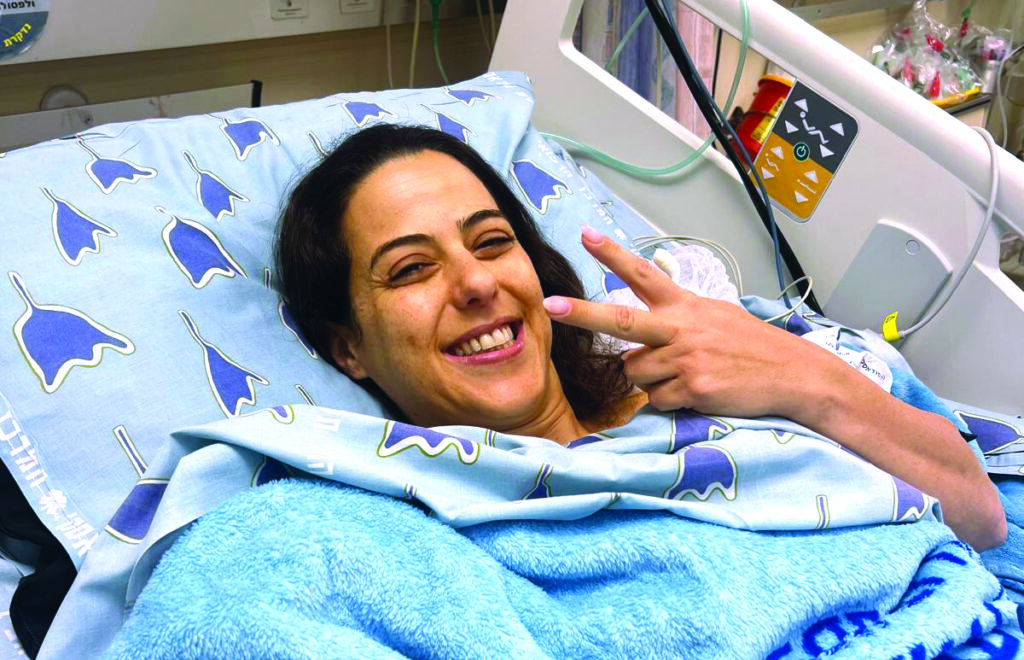
These are principles Rubin emulates in her leadership. So, when she considered a meaningful way to honor Matan’s memory, it was natural to do so by doing good and giving life to another person, as he emulated. Last August, she donated a kidney, which was implanted in a 60-year-old man. She calls this a “small act” of kindness to spread more light into the world.
Matan’s father, Arik, was deeply moved by this act and described the family’s relationship with their son’s former principal. “Already from the first encounter [with Rubin], I felt that this is a special woman. Her ability to demonstrate sensitivity and solidarity was at a very high level, and it was impossible not to feel that this was authentic and coming from a deep place,” Arik shared. “The connection to his death and the fact that she was inspired to do this act because of Matan was very moving to us and filled us with tremendous appreciation and respect for this special woman who is so beloved by all.”
Rubin has worked in the field of education for nearly 20 years, including the last four as the principal of HaOfek High School. One of her main aspirations has been to create a warm and welcoming home that her students are excited to enter every morning—one in which all of them feel empowered to pursue their dreams. Rubin’s can-do attitude serves as an inspiration for students as they walk through the doors of HaOfek with confidence, knowing their teachers are there for them as they work toward their goals.
Rubin chose this profession because she views education as the most important job in Israel. “An educator has the ability to shape the identity of the country by empowering and educating future leaders,” she said. And Rubin leads by example, demonstrating her deep connection to her students as well as to Am Yisrael.