
By Menachem Kaiser
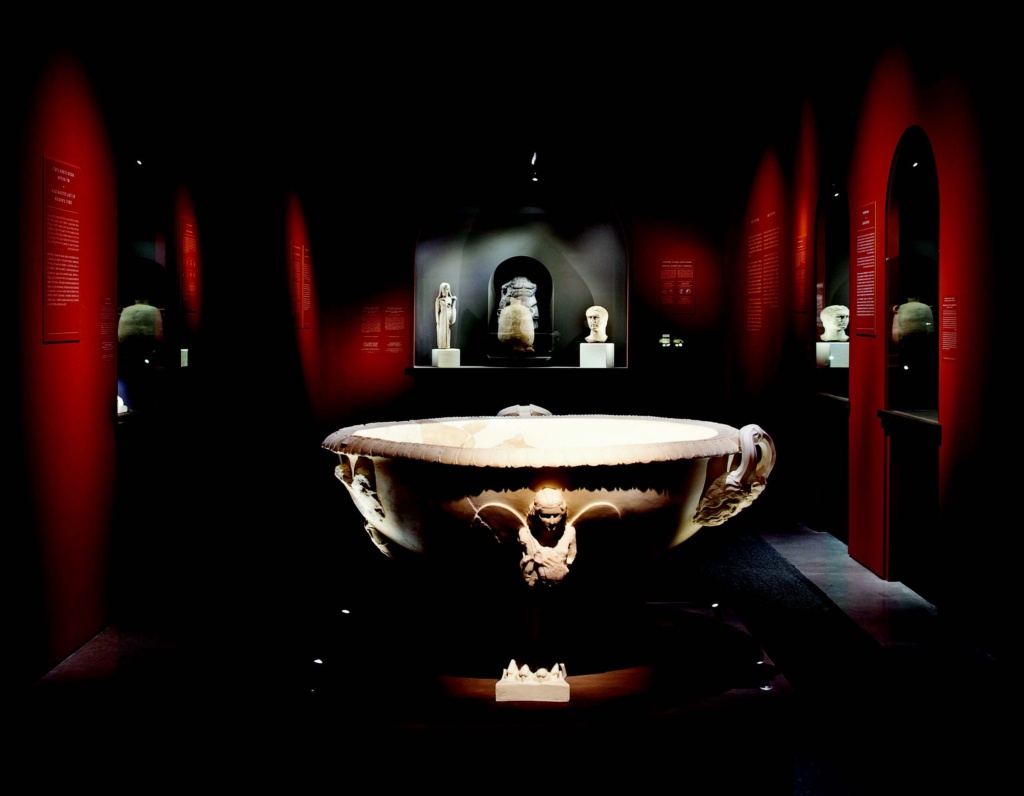
“Herod the Great: The King’s Final Journey,” currently showing at the Israel Museum, seeks to reexamine and contextualize the history and legacy of King Herod (73 BCE – 4 BCE), who ruled Judea from 37 BCE until his death. This is the largest architectural exhibit ever undertaken by the Israel Museum, which seems appropriate: Herod was one of the great builders of all time; his structures – which include Masada, the Second Temple in Jerusalem, the Herodium palace, and the town and port of Cesearea – form the backdrop of seemingly every storyline of 1st Century Judea.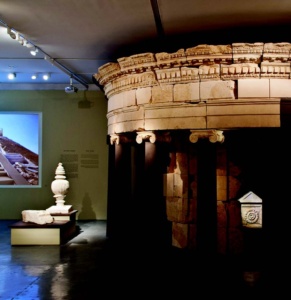
To this day, Herod remains a polarizing figure – though responsible for some of the most astonishing architecture of his time, he was a ruthless (if efficient) ruler who viciously suppressed uprisings, murdered his wives and children, and spent his entire life attempting to legitimize his Jewish roots.
The exhibit, with over 250 artifacts – many of which were excavated from Herod’s seemingly infinite palaces and fortresses – is simultaneously dense and accessible. For those less familiar with 1st Century Judean history, a walk through the exhibit is an excellent and immersive introduction to the architecture, design, art, and even politics of Herod and his era; for those with more of a background, the exhibit, representing the largest collection of Herod-related material ever assembled, is a revelation. The displays are wonderfully and precisely catalogued and curated, and include never-before-seen artifacts (such as Herod’s recently discovered mausoleum and sarcophagus), and excellent and creative use of digital imagery.
The exhibit begins in the reconstructed Throne Room, from Herod’s Jericho palace-fortress where, according to Josephus, Herod died. The restored plaster and pigments –cracked, speckled tiles of faded crimsons, pinks, harvest browns – are a startling indication of ancient opulence. On the floor, in the center of the room – where Herod’s coffin presumably lay – there is a coffin-shaped projection with an introductory text inviting the visitor to follow Herod’s final journey: Herod was carried from this room to Herodium, where he was buried. (As the exhibit culminates with Herod’s mausoleum and sarcophagus, visitors thus follow Herod’s own path.) It’s a nice touch: a literal overlay of digital onto the historical: Herod’s journey, enhanced.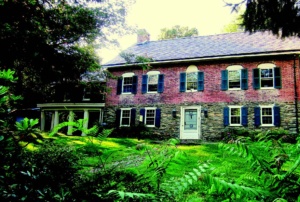
And indeed, the most impressive aspects of the exhibit – where the care and imagination of the curators are most apparent – are the videos, which strive to impart just how massive, expensive, and opulent Herod’s structures were. On large projection screens throughout the exhibit, digital models of Herod’s palaces are superimposed on actual, live footage, allowing the viewer to literally see the startling dimensions and design of structures long since destroyed. Masada, perhaps the best-known and visited of Herod’s structures, can be, once properly visualized, appreciated for the immense architectural achievement it represents: a fortified and self-sufficient threetiered palace on the side of a cliff. There is, as well, a video of the Second Temple, filmed at the Museum’s own ancient Jerusalem model. Watching the footage, in fact, is arguably more instructive than visiting the model: the close, panning camerawork brings out the majestic scale and detail to such a degree that you forget you’re looking at a model.
 The last room holds the centerpiece of the exhibit: a reconstructed section of Herod’s mausoleum, from Herodium. It is nothing short of wondrous: pieces of Ionic columns and curved cornice rebuilt to original dimensions and placements. It is, by design and in effect, a grand, royal gesture – here marks the body of the King. Yet at the same time it is marked by incompleteness – pieces are missing; there was no effort to camouflage the reconstruction. The mausoleum is a ghost of what it once was; the imagination must fill in what is missing, and is thus transported.
The story behind the mausoleum is as interesting as the mausoleum itself: the archaeologist Ehud Netzer searched for forty years before finding the mausoleum on the side of Herodium. (Netzer tragically died at the site, when a railing collapsed and he fell nine feet). The exhibit has a loving, interesting video dedicated to Netzer and his work.
Gomez, who had been a financial advisor to the King, escaped to France with his wife and young son, Luis Moses. Although the father was imprisoned for several years, the family finally got to England and eventually to the New World. There, Lewis (the Anglicized version) Gomez became a fur trader and in 1714, just short of 300 years ago, built a stone blockhouse in New York’s Hudson Valley.
That house, the oldest remaining residence of Jewish settlers, still stands. It is the Gomez Mill House and Historic Site, located some 65 miles north of New York City, a comfortable day trip.
For a while, Gomez lived in New York City where he prospered as a merchant and was chosen as the parnas (president) of the Spanish and Portuguese Congregation Shearith Israel. In 1705, Queen Anne granted him denization, the right to do business and live freely within the colonies without an oath of allegiance to the Church of England.
In 1714, Gomez bought about 6,000 acres of land in what is now Orange County, and built his sturdy stone house, a grist mill, an ice house and a root cellar. The original one-story structure still has its thick massive stone walls, fireplaces, trading counter and beamed ceiling.
The Gomez family, which had been forced to convert to Christianity in Spain, maintained a strong Jewish identity. Their descendants include Emma Lazarus (“Give me your tired, your poor, your huddled masses yearning to breathe free”); and Supreme Court Justice Benjamin Nathan Cardozo.
The last private owners, Mildred Starin and her husband, Jeff, bought the Gomez House with a GI Bill loan in 1947. By this time, the old house was badly in need of repair, as were many of its artifacts. Ms. Starin, an interior decorator, worked tirelessly for many years to restore the house and furnishings and to research its history, while raising four children and caring for countless cats, dogs, geese and ducks.
Mildred Starin succeeded in having the Gomez House placed on the National Register of Historic Places in January 1973 and sold it to the Foundation for Mill House in 1984, remaining for some years as resident manager