
A core value of AMIT is “Klal Yisroel.” We are a big tent where all members of Israeli society regardless of background, religion, and ideologic perspective, are valued and integrated into our network. But this doesn’t mean we lose focus on the specific values, challenges, or goals unique to each type of school. Today I want to talk about our religious schools. What follows is a summary of a conversation I had last month with Moriah Shapira, the director of religious girls’ schools, and Rafi Maimon, the director of religious boys’ schools.
Both Moriah and Rafi began by speaking about the need in religious schools to infuse the day to day lives of their students with Judaism, spirituality, and tikkun olam. They both described the need for experiential education, responsive religious leadership, and new ways of teaching religious subjects to reach today’s teens. Both stressed that “Gogya,” AMIT’s innovative educational platform, is as important for Judaica as it is for any secular subject, and that special events, unique days of learning, and musical programs are critical to religious engagement.
When these two educators started in their new roles this past September, each school group developed a mission. For the yeshivot, it is: “Building a community that calls in God’s name for improving the world.” Rafi stressed that AMIT yeshivot are designed to be both outward looking and inner focused; that each yeshiva is a holy, yet open space with opportunities for dialogue, and the values of Klal Yisroel and social justice are seen through a lens of avodat Hashem (worship of God) and Jewish text. In most yeshivot, academic excellence particularly in STEM is the key goal for every boy to have a good army posting and successful career. Rafi has instituted several programs to ensure AMIT yeshivot are not only academic training grounds, but they also provide the opportunity for boys to develop broader, more meaningful identities.
For example, a Sanhedrin program with higher levels and longer hours of Talmud study now coexists with a regular Talmud track at six of our yeshivot. This is a true example of Klal Yisroel, because in Israel, boys that want intense Talmud study usually attend schools that cater exclusively to students like them. Rafi described the Yeshiva version of “Open Mic Night,” where once a week a Rabbi sits on a stage in the school and students ask any questions they want. But religious schools are not monolithic. Rafi also spoke about making sure students in the periphery who often come from more traditional, less Orthodox backgrounds, receive religious grounding in kashruth, shabbat, and laws of family purity to make sure they leave school with enough knowledge to maintain a religious life.
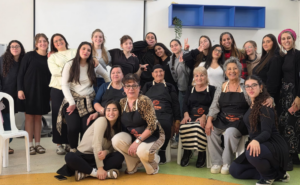
For Moriah, helping girls break the glass ceiling in Judaica as well as STEM is her top priority. She sees excellence in both secular and Judaic academics as the primary path to developing empowered, religious women. The mission of the girls’ schools is, “Planting seeds to heaven,” providing aspirational growth opportunities for every girl in a religious, personal, and professional framework. She also places developing female religious leaders a close second, because in many girls’ schools, too many educators see themselves as second to men in the religious realm. To address this challenge, Moriah and her team have created a leadership program to develop a group of high achieving teachers into female religious leaders that will inspire and empower their students. There are also new opportunities for girls to be exposed to real-life role models in a meaningful way. Specifically, the emphasis on Torat Chaim, “living torah,” means creating Batei Midrash in many schools where girls learn Torah and Talmud with female scholars in their free time. It means piloting a program where girls attend the Bar Ilan midrasha and learn with students there. It also means creating opportunities for AMIT girls to engage with successful, religious women in their high-tech offices. But here too, there is variety within the group. In the periphery, in more conservative communities, female religious leadership is generally not viewed as an inspirational goal. Therefore, we need to work respectfully within each community to ensure maximum engagement while constantly raising the bar and challenging our students.
As Rafi described, the AMIT approach is both inner focused and outward looking. On the one hand, our goal is to develop students that have serious religious purpose, knowledge, and engagement. At the same time, however, we want them to understand that strengthening Israeli society and working to make the world a better and more equal place is part of their religious responsibility.