
By Chaim Trachtman
THE March of the Living became a rite of passage after my adolescence. I had the opportunity to mind the gap when Rav Shalom Malul, the extraordinary principal of the Yeshivat AMIT Yagel in Ashdod, invited me to join a group making the weeklong journey to Poland.
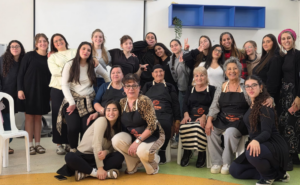
I would accompany a 12th grade class, nearly 35 adolescents less than a quarter of my age. It is a difficult trip whether you are young or old, a difficulty intensified after October 7.
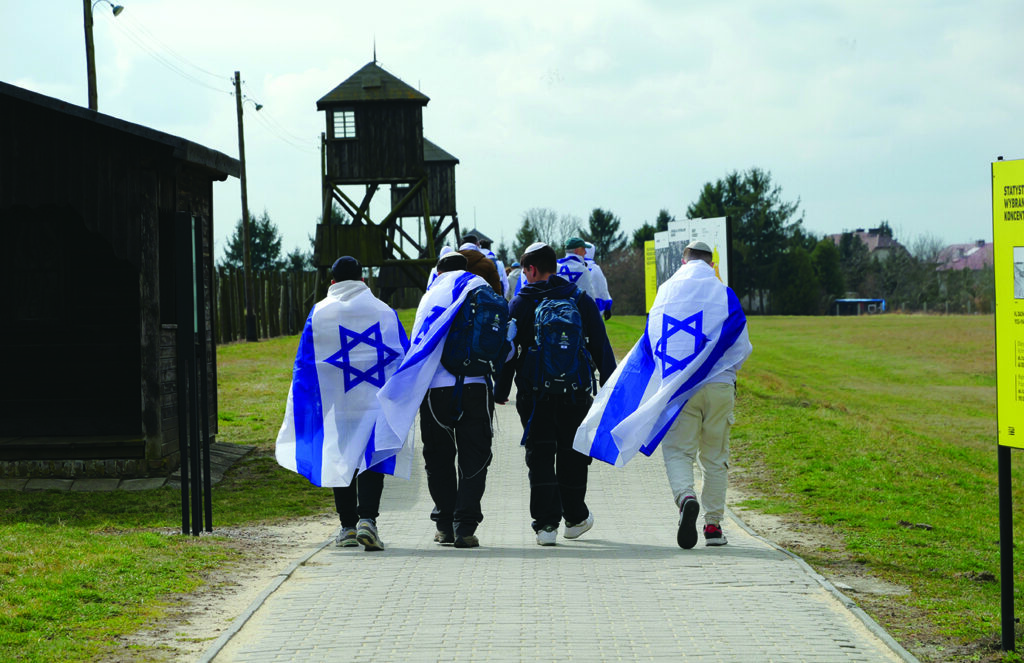
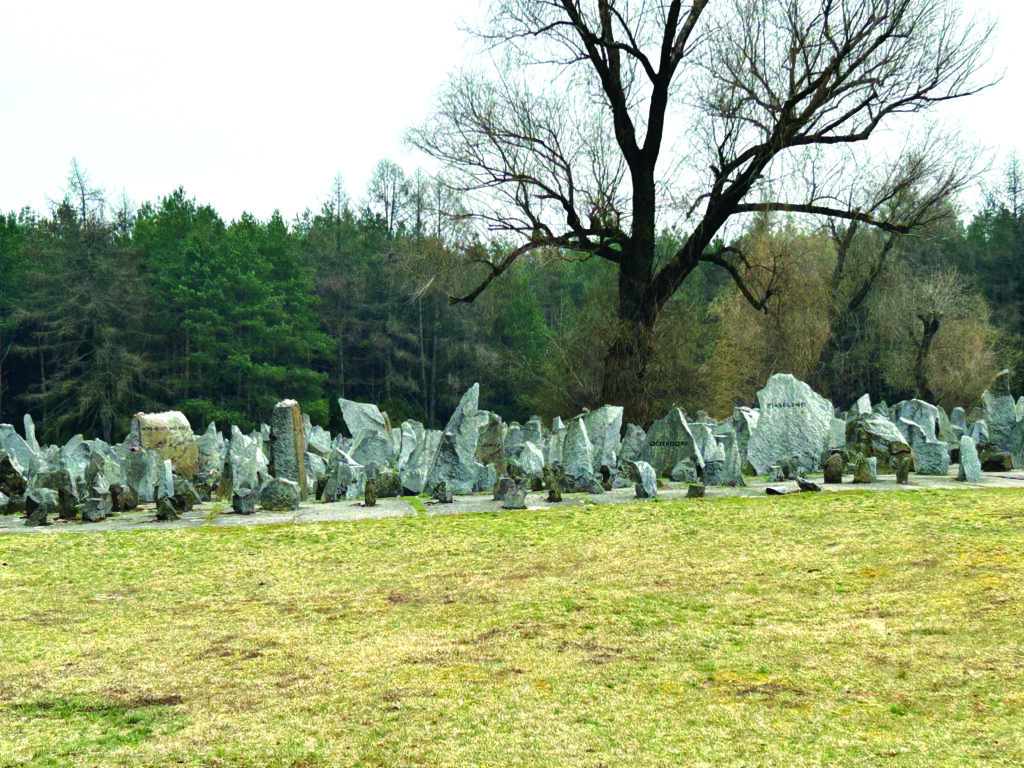
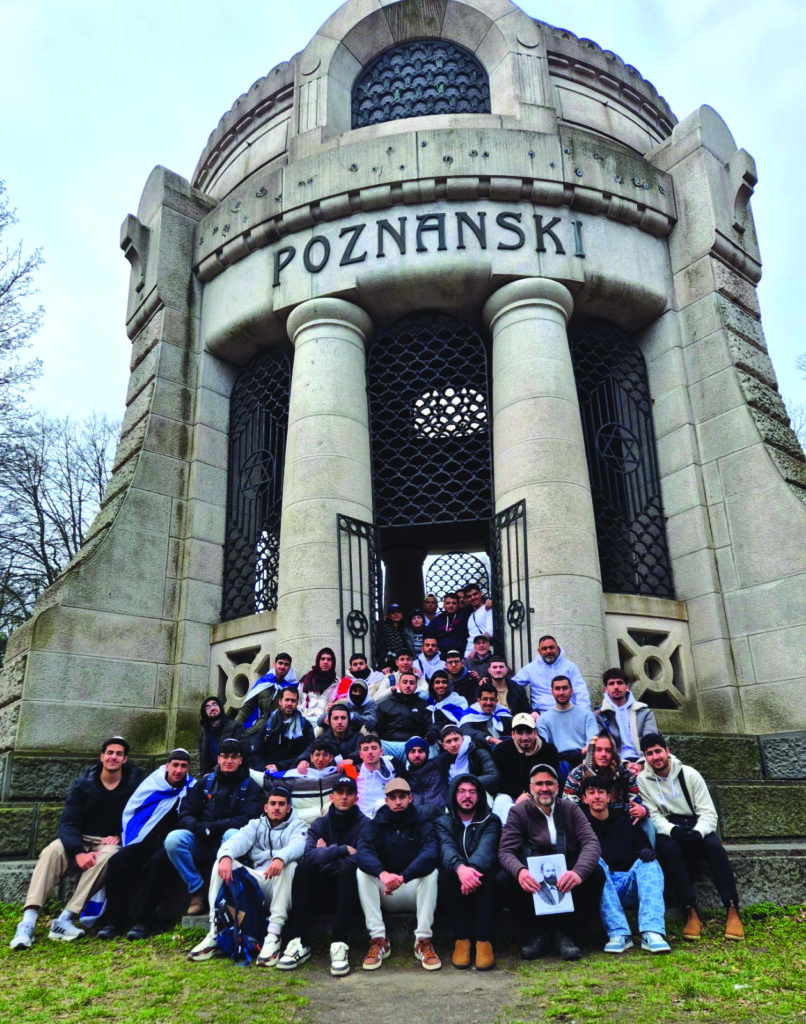
We visited all the standard stops, from the massive Treblinka and Majdanek death camps to the small grassy mound over the Jewish bunker in the Warsaw Ghetto. We stared through the bus windows at the flat Polish countryside and walked into the foreboding forests that surround so many of the towns and villages. We stood on sites where men, women, and children were herded into silos, churches, and mass graves to be shot and burned alive. We learned about the resolute men and women who performed a tahara (ritual cleansing) on everyone who perished in the Lodz Ghetto and maintained a record of each burial site. This was in sharp contrast with the vast unmarked grave of the victims of gassing in the mobile vans in Chelmno. There were unique sites, like the grave of the Jewish priest that Rav Malul had befriended in Yafo. Ask him to tell you the story.
The bulk of the students on the trip were from Sefardic backgrounds. Outwardly they were very demonstrative—lots of hugging, backslapping, and hand-kissing on Shabbat. They wore tallitot when they davened; they chanted the tefillot aloud in the nasal sound of the Middle East bazaar. To my relief, they prayed quickly. The back of the bus was filled with the boisterous sound of 18-year-olds glad to be away from home, out of school. They started slowly in the morning because they were up late at night. But they were emotionally accessible, with hearts that could be reached. Zbylitowska Gora is a site where children were killed en masse. The boys had many siblings, younger and older, but could they even imagine the cruelty of the place, their brothers and sisters being brutally tortured and murdered? The teachers gave them small pieces of colored clay and asked them to fashion a toy and write a note that could be given to one of the slaughtered children. The depth of human connection was overwhelming.
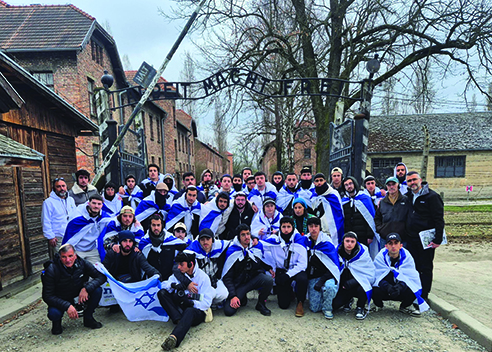
At the end of each long day, after dinner, usually around 10 p.m., they gathered with Rav Malul for a debrief to discuss their reaction to what they had seen and learned. They formed a circle, a maagal. I made it a point to join each circle to witness how the students processed what they had experienced that day. I was fortunate—none of them was my son (or daughter) and nothing I could say would embarrass or inhibit them. Virtually every boy spoke. I cannot diagram the pecking order. I am sure there was one, like with any other group of healthy adolescents. There were a few quiet ones and of course a few others who always jumped in first. But I was genuinely struck by the honest feelings and openness that nearly all the students exhibited, the depth of the interplay between Rav Malul and the students that unfolded in the face of their shared knowledge of the horrors in Otef Aza (the Gaza envelope). It was not the standard picture of the tough, thick-skinned, arrogant, battle-ready Israeli adolescent.
In addition to Rav Malul, there were four dedicated staff members from the yeshiva on the trip: Netanela Bezalel, Rachel Goldman Aloof, Ziv Hasan, and Amnon Zamir. Their collective ability to sustain the interest of the students and maintain their focus was remarkable. Some of the students came to Shacharit (morning services) late on the first morning; sometimes they strayed from the group. But, overall, the spirit and cohesiveness were impressive.
Rav Malul’s extraordinary capacity to forge bonds with the survivors and bring each site to life with a story about someone he knows personally ensures that a journey to Poland with him is beyond compare. But focusing on these poignant narratives gives short shrift to his intense preparation: finding exactly the right poem to distribute to the students, what letter to read, what detail to highlight, when to burrow deep into the depth of sorrow, and when to lighten up. A trip to Poland with Rav Malul is not a gadget play. It is an intricately choreographed dance of the past and future, a pedagogical masterpiece.
Lessons Learned
What did the students teach me? When we sit at the Seder, we are asked to visualize ourselves as if we are being freed from slavery and to teach each generation the obligation to fight against oppression. When we visit Poland, we are asked to envision the immense suffering of the millions who were slaughtered by the Nazis and to educate the world about the obligation to defend the dignity of man and fight against irrational hatred and brutality. Two singular events, separated by nearly 3,000 years; two events with universal messages. But each of us can only see things from one vantage point and through our own individual eyes. It is impossible to free ourselves from who we are and where we come from. This can stand in the way of accomplishing the task at hand—understanding the past and applying it to the future.
Perhaps the only way to learn these timeless lessons is to get outside of ourselves, experience them with others who are different than us and add their vision to ours. This is what the students gave me. If you go to Poland, consider going without your partner, with a group from another country, on a mission from an organization that is not at the top of your priority list, from a different age demographic. Invite someone new to your Seder. I was unsettled on the trip—but it opened me up to a deeper appreciation of what is being asked of us as human beings committed to making this a better world for those who come after us.
What did I learn on the trip to Poland? Rav Malul was very focused on his message to the students over the course of the week. On the one hand, it was an unabashed call to exact revenge on behalf of the millions whose lives had been mercilessly cut short by the German and Polish monsters during the Shoah. At the same time, he was exhorting us to appreciate that the choice of how to live was in our hands. Would we opt for a moral life of chesed and mishpat (kindness and justice) guided by the Torah, or one in which the other is demonized, dehumanized, and ultimately destroyed? Justifiable vengeance and genuine empathy. These thoughts reverberated in my mind over the seven days as I pictured these wonderful young men in uniform in a few years manning the frontlines and doing battle against the implacable enemies of the Jewish state.
As I pondered Rav Malul’s teaching, it echoed how the Torah frames the crime and punishment of the ir hanidachat, the city in which the majority of the people are incited to worship idolatry. The punishment is unbearably harsh. Everyone—man, woman, and child—is executed by the sword, all the property is burned, and the locale can never be repopulated.
But God promises the people that if they fulfill this mitzvah (commandment) properly in all its gruesome detail, they will be granted mercy and a promise that they will flourish. It is one of the handful of mitzvot for which the reward is spelled out—violent justice linked to divine compassion. The Rabbis considered ir hanidachat to be one of the three mitzvot that never were and never will be. That said, one could simply dismiss it.
I would offer a different take on what the Rabbis were trying to teach us when they asserted that it was a mitzvah that was never fulfilled. It is not that ir hanidachat does not exist. Nazism was pure idolatry, a rejection of God—a denial of shared humanity, that man was created in the divine image. The German followers of the National Socialist party deserved punishment. Those who have the courage to confront the incomprehensible evil of the Shoah and obliterate it merit a blessing of peace.
But it is hard to get it exactly right, to thread the eye of the needle between exacting retribution and reaching reconciliation. The justifiable violence against the idolaters in the ir hanidachat and the perpetrators of the Nazi crimes can quickly break free of social restraints. Yet boundless compassion can blind us to evil and paralyze our efforts to do battle with it. This is the human condition—a delicate balancing act.
And that is what the Rabbis were telling us when they taught that ir hanidachat never was and never will be. We will not get it exactly right. Nonetheless, we are charged to forever seek the moral clarity that will enable us to call idolatry by its name and struggle to eradicate it. At the same time, we must never lose sight of our ultimate purpose, tikkun olam (repairing the world), and never allow the destructive forces unleashed against idolatry to overwhelm us, to deny our shared humanity.
This may have been Rav Malul’s aspirational message to his students—young adults poised at the end of childhood to assume the role of personal, communal, and national leaders—and the old person who accompanied them on this powerful trip to Poland.