
By Heidi Mae Bratt
There’s much in common between the Samis Foundation and AMIT Children. The two organizations have forged a new partnership, one that helps forward the Foundation’s mission in Israel, and at the same time gives AMIT Frisch Beit Hayeled, home to some of the most vulnerable, at-risk children, an infusion of funds for therapies, especially critical in these pandemic days.
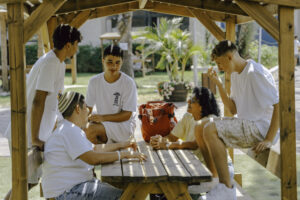
The Samis Foundation awarded Beit Hayeled a grant of $90,000 to benefit more than 80 children, ages seven to 14, who live and are supported in the Jerusalem surrogate home. The therapies, including art, animal, and more traditional psychotherapies, help the children overcome their traumas.
“We are so grateful to the Samis Foundation for its very generous donation to Beit Hayeled’s comprehensive therapy program,” said Shari Safra, AMIT’s vice president of Financial Resource Development. “We also very much appreciate that the Foundation funded us immediately so we could begin the therapies to help our children who suffered from the stress of coronavirus on top of their family traumas. These much-needed funds help us accomplish what we aim to do every day at Beit Hayeled and AMIT — create a better future for our children.”
Connie Kanter, CEO of the Seattle-based Samis Foundation, said, “We are delighted that 25 years into the Foundation we have been able to make the acquaintance with AMIT in the way that we have and have the ability to make a difference with AMIT.”
The award fulfills one of Samis’ categories of support in Israel to help “widows and orphans”—orphan being defined as someone “who has lost his or her provider.”
“These are youth that have been displaced from their families,” Kanter said. “They are unable to live with their families for whatever reason, whether court-ordered or whether their parents were unable to parent them properly and they’ve come to AMIT’s door.”
“When we began looking at where to direct our philanthropy, Beit Hayeled was brought to our attention. We were aware of the unbelievable reputation of AMIT and the amazing work the professionals there do for these children.”
Several trustees visited Beit Hayeled during their annual trip in February and were very impressed and moved by AMIT’s work there, Kanter said.
While many Beit Hayeled children do, in fact, have biological parents, “These are children who can’t go to their homes,” echoed Rachel Grunbaum, Samis Foundation’s Israel consultant.
Since its inception, Samis has supported “intensive, immersive” K-12 Jewish education in Washington state, as well as several Israel initiatives. It continues to support local Jewish day schools—more than 30 percent of their school budgets are foundation funded—as well as Jewish summer camps, teen Israel experiences, youth enrichment and engagement programs.
In Israel, Samis’ projects include five broad categories: archaeology, college scholarships, immigration, widows and orphans, and wildlife conservation. Awards have benefitted scholarships for Ethiopian and Haredi communities, a women’s shelter, the Jerusalem Zoo’s new aquarium, among others. This year, the Samis Foundation hit a major philanthropic milestone. To date, it has awarded $100 million in grants.
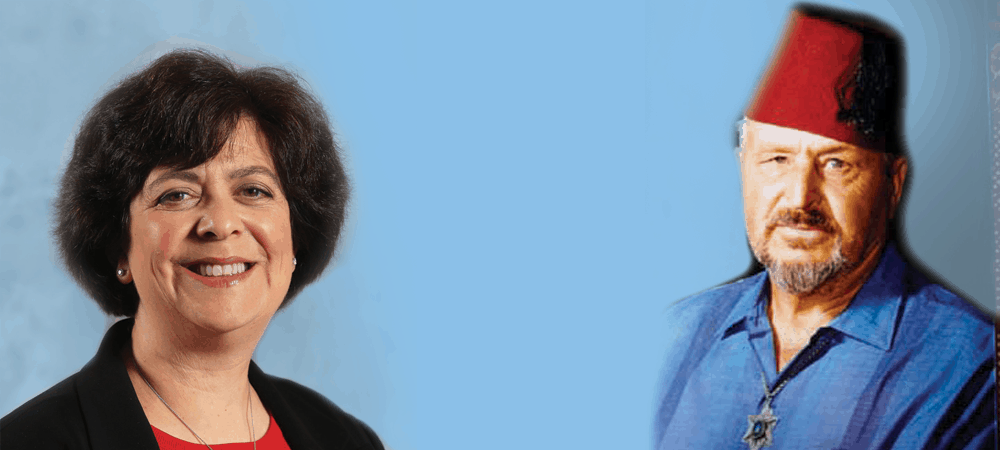
The Foundation’s creator, Sam Israel, believed in giving back, Kanter said. Born in 1899 in the Sephardic community of Rhodes, he apprenticed as a shoemaker before immigrating to Seattle in 1919, where he founded a series of shoe repair businesses and eventually landed a contract to repair shoes for the U.S. Army during WWII.
Even then, Kanter said, Sam Israel, who died in 1994, found a way to give.
“Sam Israel was the low bid and got the contract,” Kanter said. “He replaced the soles on the shoes of soldiers who came through the local Army base. At one point, he told the Army he wanted to renegotiate his contract and dropped his price. He said, ‘I don’t need the money. The country needs the money much more to fight the war.’ Sam Israel
really had a heart of gold.”
He invested in Seattle real estate and amassed a significant portfolio valued at about $180 million. The Foundation reaps the benefits of those investments.
So, what is the Seattle connection between the Samis Foundation and AMIT?
Like Sam Israel, AMIT’s founder, Bessie Gotsfeld had her beginnings in Seattle. She lived there during her first years of marriage to Mendel Gotsfeld. In Seattle, she became acquainted with the Mizrachi movement, which eventually became AMIT. In fact, one Samis trustee even knew Mendel Gotsfeld’s family because both were in the clothing business. The trustee even kept old newspaper clippings reporting the sale of Mendel’s business in 1919 and Bessie’s death in 1962.
While both Sam Israel and Bessie Gotsfeld never had children of their own, they dedicated their lives to supporting and educating Jewish children.
“I look at Sam Israel who had no children and also had no formal education after bar mitzvah,” Kanter said, “yet his area of focus was Jewish education. Likewise, AMIT brings together both serving children and educating them.”