
By Michele Chabin
PETACH TIKVA, Israel – Given his difficult upbringing, no one in the social services department of this city just east of Tel Aviv would have been surprised if Gil Nahari, now 19, had fallen prey to crime or drugs.
Abused by his mother, he was handed over to his grandparents at the age of seven. At age ten he moved in with his divorced father but ended up in a boarding school at twelve and another one at thirteen. Back with his father at fourteen, he enrolled in AMIT Yeshivat Kfar Ganim as a day student, and, at fifteen, at the AMIT Kfar Blatt Youth Village in Petach Tikva.
A self-described trouble-maker, Nahari, now 19, said he wasn’t ready to take responsibility for his actions until near the end of high school, despite the efforts of AMIT Blatt’s dedicated staff, who saw his pain but also his potential.
It was then that he decided to enroll in AMIT Kfar Blatt’s post-high school mechina program, which prepares AMIT’s most vulnerable male graduates to serve in the IDF, master a profession, and live meaningful, independent lives.
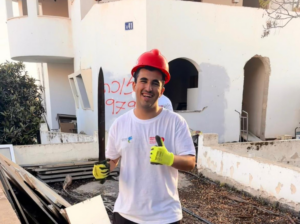
The 18-month-long mechina program combines religious studies, Jewish studies, training in auto mechanics and industrial management along with life skills training at the village’s michlalah (junior college). Studies at the mechina are coordinated with the IDF and fall under the supervision of the Ministry of Education.
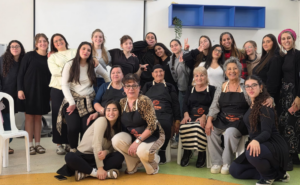
Female students in the midrasha— the mechina’s sister program—receive comparable life-skills training in addition to classes in Jewish studies and training to become legal or medical administrative assistants. A whopping 98 percent of michlalah students, who live on campus in dormitory buildings, enlist in the IDF or do National Service.
“In the mechina I’ve learned how to take control of myself and how to gain self-confidence and prepare myself for the army and beyond,” Nahari, now a dedicated student with a passion for learning said on a warm autumn day on AMIT Kfar Blatt’s leafy campus. “And I’ve even learned how to be a good husband and father, things I could never learn from my own parents.”
While not all of the youth village’s students face the same difficulties Nahari has overcome, “all of our children come from homes with severe economic and/or social problems,” said Maya Avivi, AMIT Kfar Blatt’s principal.
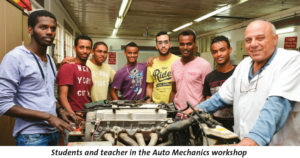 Every one of the youth village’s students, from seventh grade through junior college, come from dysfunctional families dealing with deep socioeconomic problems, absorption problems, chronic physical and mental illness, violence, sexual abuse, drug addiction, prostitution, imprisonment abandonment. Nearly 200 of the village’s 500 students are from Ethiopian families.
Said Avivi, “Our goal is to ensure that every student who leaves the village will do so with self-confidence and the tools, whether it be a partial or full matriculation exam, to succeed in life.”
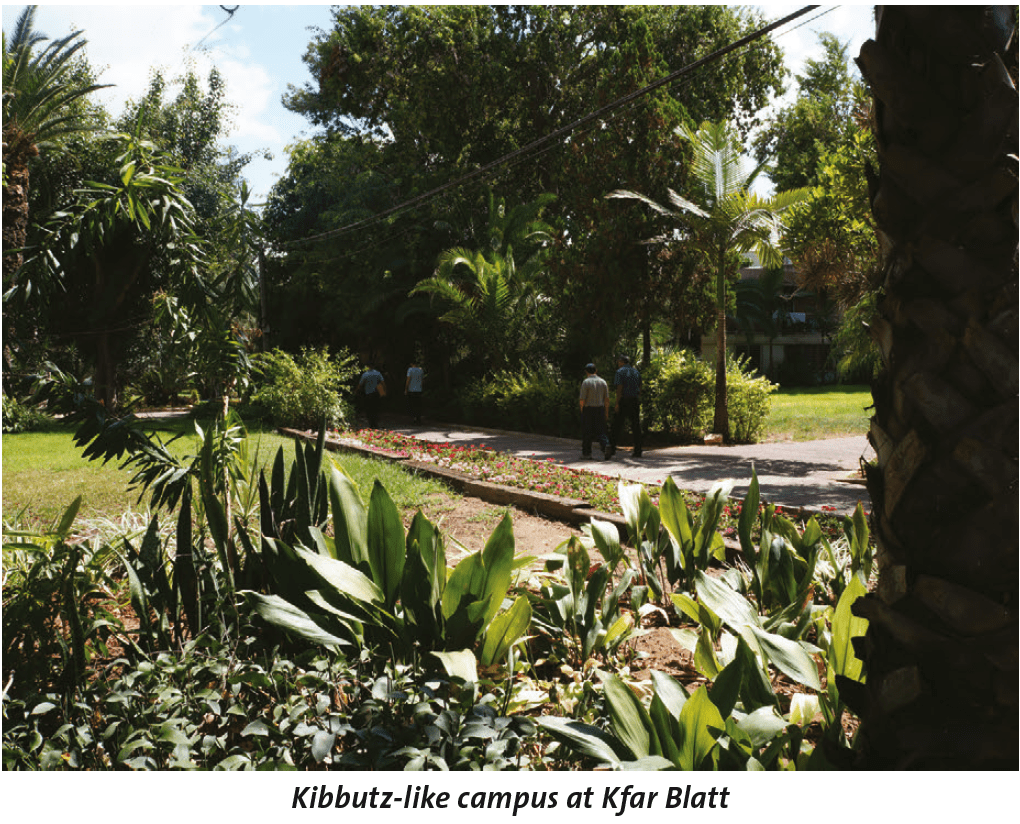
AMIT Kfar Blatt’s kibbutz-like campus, full of expansive lawns and low-set buildings, houses a middle school, a high school, and the junior college. Middle-school students receive a full school day and after-school activities but return home every evening.
Depending on their situation, middle schoolers have the option of living at home (external students) or in one of the campus’s twelve group homes, called mishpactonim. Every group home has a set of “surrogate parents,” usually young married couples, some with children, who provide the 9th to 12th graders with love and a positive model of how loving family members behave toward one another.
Nati and Sivan Hazan are one such couple. They live in one of the campus’s two newly renovated mishpactonim, along with more than a dozen boys and their own three children
“We feel like we’re fulfilling a mission, that we teach by example,” said Nati as he supervised some of the boys who were eating lunch or lounging on sofas in the mishpacton’s dining and living area. Other boys were gathered in the residence’s new computer alcove.
The Hazans help the students navigate their homework, reach and obtain goals, and learn how to solve problems. Recently the couple helped one of their charges sit shiva in the mishpachton. “The father of one of the students died and he wanted to sit shiva here, the place he feels most at home. “It was a learning experience for all of us,” Nati said.
While the Hazans are there for the boys day and night, seven days a week, Nati said they don’t feel burdened. “When you give to others you receive. We receive a lot from the boys.”
Nitsan Aryeh, who is a surrogate parent along with her husband Uri, said she helps the girls in her mishpachton figure out how to solve problems among themselves.
“We also work on how to build relationships between couples,” Aryeh said in her apartment, where a sign with the word “Home” hangs from the wall. “The girls see us every day and it’s like a mirror. We see how they see us and we ask ourselves where we need to improve, as a couple and as parents.”
Galit Cohen, who serves as both a counselor and an English teacher for the village’s high schoolers, said the students need and receive the kind of educational and emotional support they would never receive at another school. “Seventy percent have no connection with at least one of their parents, and the parent who is present often can’t provide the help they need.”
Cohen said that some of the students who still live at home don’t have enough money to buy a bottle of shampoo or a tube of toothpaste. “When our counselors visit them at their homes, sometimes there is nothing in their refrigerators. They feel ashamed.”
Focused on rehabilitation as well as education, AMIT Kfar Blatt provides students with emotional therapy when needed, as well as a great deal of after-hours tutoring. In fact, many of the teachers return later in the day to provide tutoring in everything from math and Hebrew language to English and physics.
The high-school students, whether religious or secular—AMIT Kfar Blatt is one of the few Israeli schools where religious and secular study and live together—also have at least seven to ten hours of Jewish studies per week.
Like many other Israeli high school graduates, those who enroll in AMIT Kfar Blatt’s post-high school programs want a year or two to prepare for life, which in Israel means military service or National Service and whatever may lie beyond.
But due to their difficult upbringing, these AMIT students have many more challenges than most of their peers. “Usually they don’t have parents who can help them choose between this or that position in the army, or this or that program,” said Avital Yehoshua, head of the midrasha. “There’s no one at home to accompany them through life.”
During this preparatory year, the midrasha expects the girls to take on adult responsibilities: waking up on their own at 6:00 a.m., managing their time, planning and living on a budget, and going food shopping, among other things.
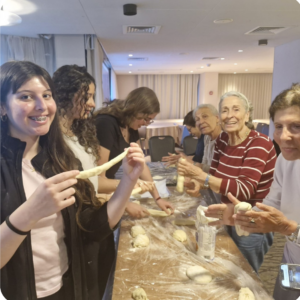
In addition to their academic and Jewish studies classes, the students take classes in communication skills, how to build a loving relationship, personal budgeting and how to care for their bodies.
The midrasha’s graduates “come to be with us on Shabbat,” Yehoshua says. “They talk to the younger girls and share their experiences with them.”
Midrasha student Bosana Ambiala, who arrived at AMIT Kfar Blatt in the ninth grade, said her home town of Beer Yaakov “was very poor and not a place conducive to learning.” Nor could her single mother, an immigrant from Ethiopia with seven children, provide them with everything they needed. “Here, I’ve learned how to get along with people, and since enrolling in the Midrasha, I have much more self-confidence and more self-control. I used to get very angry and anxious.” Ambiala, 19, said she also feels more religiously grounded. “I feel strengthened in my Judaism. I keep Shabbat, the holidays. It gives me peace.”
For Harel Ben-Shalom, 19, who transferred to AMIT Kfar Blatt High School when he was 16, the experience was “a life changer.” “Before coming here I was in a yeshiva and they told me I didn’t have a future. My grades were really low, and even though I felt I was a good kid, they called me a chutzpan—impudent.” Now in the post-high school mechina, Ben-Shalom is earning excellent grades.
“This is the first time I’m feeling confident. I feel I can hold my own in a conversation and no longer compare what I have to what other people have. I’m content with what I have and who I am.”
Determined to become a career IDF officer, Ben-Shalom said he is also determined to be a good husband one day. “After studying about relationships, I understand that if I want something, so does a woman. When the time is right, it will be about us, not just me.