
By Michal Rosenberg
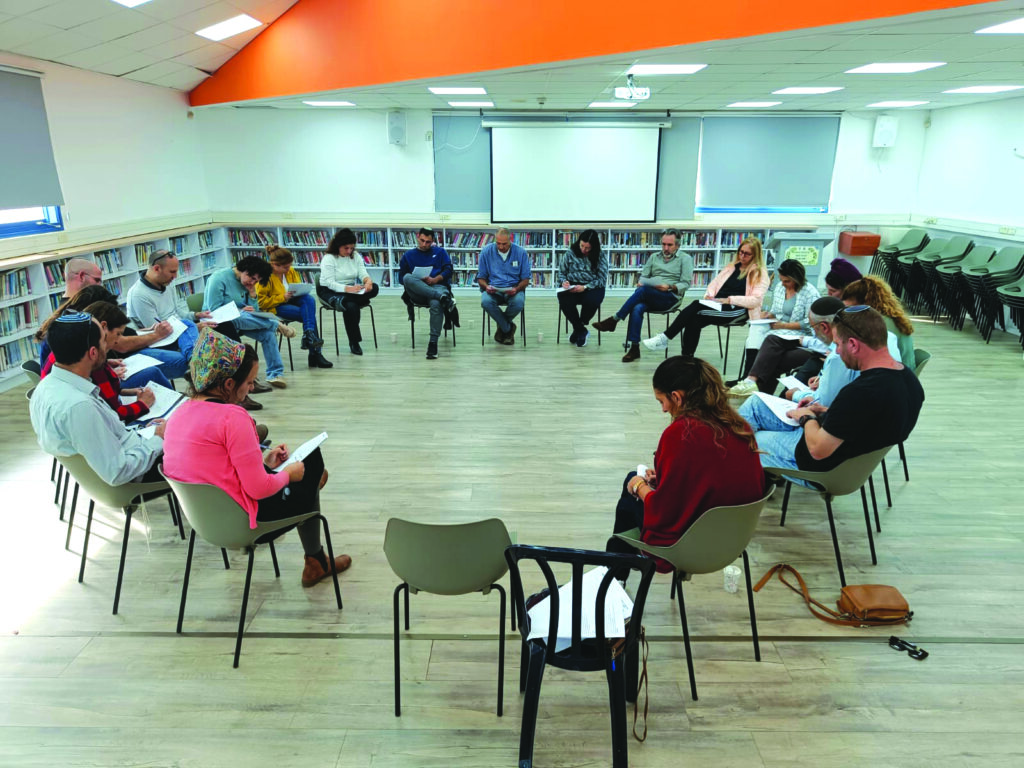
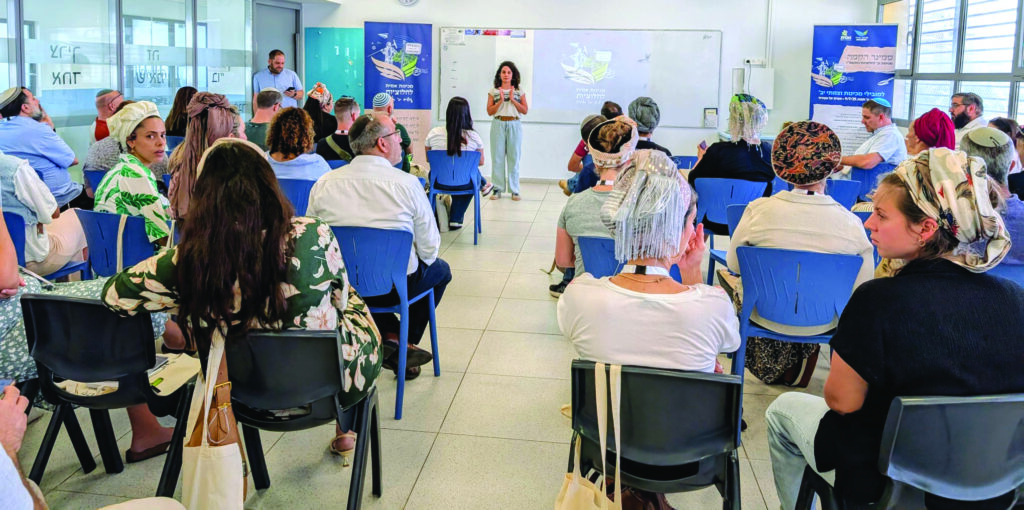
One group is from a secular AMIT high school and the other is from a religious AMIT yeshiva. The students role-play, sharing each other’s stories of growing up in different social and religious environments. At first, many hesitate, unsure how honest to be, how much to reveal. But as they get more comfortable, they open up and find common ground. By the end, they are performing together, combining talents and forming genuine friendships.
This is a scene brought to life by Chevra V’Chiburim (Community and Connections), a cornerstone initiative of the AMIT Network to cultivate unity within Israeli society. The project enables students and educators from different sectors—religious, secular, Haredi—to engage with each other and create meaningful relationships. Through layered, structured interactions, Chiburim facilitates dialogue, breaks down barriers, and nurtures mutual understanding and respect.
Expanding the Tent
Historically a network of Religious Zionist schools, AMIT made a strategic decision 10 years ago to become a network of Klal Yisrael. AMIT identified the rifts in Israeli society as one of the core challenges facing the State of Israel, and putting its values at the forefront, developed a plan to utilize education to build bridges among these sectors and create sweeping societal change.
Based on Isaiah 54:2, “Widen the place of your tent … and strengthen your stakes,” the network embarked on two parallel processes, expanding into new and diverse populations—secular and ultra-orthodox—while strengthening their Religious Zionist strongholds.
Focusing on highlighting shared values, AMIT created a collaborative compass with guiding values and principles, written jointly by educators, students, parents, and AMIT leadership. This compass is adapted to the specific DNA of every school, allowing for personalization while maintaining a common thread.
To introduce new measures, AMIT began working with a diverse and eclectic Educational Council composed of thought leaders from all walks of Israeli life—religious, secular, male, and female—representing a wide range of religious, political, and social views. The council provides guidance and direction to the network’s leadership, effecting real change on complex issues. One example is the development of joint curricula in all AMIT schools in civics and geography—subjects typically taught differently in religious and secular education departments—to create a unified language and perspective.
AMIT Director General Dr. Amnon Eldar shared, “Ten years ago, former Chief of Staff Benny Gantz addressed AMIT principals. He shared that despite the many external threats facing our people, of largest concern were the rifts within our own Israeli society. He pleaded with us to use our educational platform to create positive change. Today, we see this so clearly, with Iran, Lebanon, Syria, Hamas, etc.—the list is endless. But we see that with unity, drive, and purpose, the Jewish people prevail. The same must be true of us internally as a nation, and that is what we have such tremendous focus on in the field of Chevra V’Chiburim.”
Yoav Rimer, head of Identity and Values at AMIT’s mamlachti (secular) schools, reinforced the department’s objective: “We are working to instill a concept of ‘connections’ across the entire network through various mediums, including identity journey units for the students and a master’s program for teachers.”
Connection in Action
AMIT is currently piloting a new program called “Connected Communities,” directed by Gila Eliash. The program will run in 10 locations this year and eventually expand to all AMIT schools. “The goal is for schools with different identities to form long-term, meaningful relationships. The school leadership and educational staff get to know one another deeply through dialogue and shared encounters. The students then meet through a variety of joint activities, such as volunteering, learning, and hiking, and participate in joint ceremonies and events over the course of their time in high school,” explained Eliash.
Recognizing that meaningful change starts at the top, the program begins at the leadership level, with school principals participating in workshops and retreats to build constructive collaboration. The educators learn how to navigate conversations among diverse student bodies, how to balance maintaining one’s own identity while learning about others, and how to resolve debate peacefully and respectfully. They discuss challenges they face, uncovering the similar values that encourage them to lead by example: If they experience the desired shift in perspective, they can better inspire it in their students.
Teachers join the program in ninth grade, meeting for educational workshops and planning sessions that seek to promote empathy and instill a sense of shared national belonging. They also learn how to defuse disagreements constructively, setting an example for students to follow. When students see respect and collaboration being modeled by their teachers, they mirror that behavior.
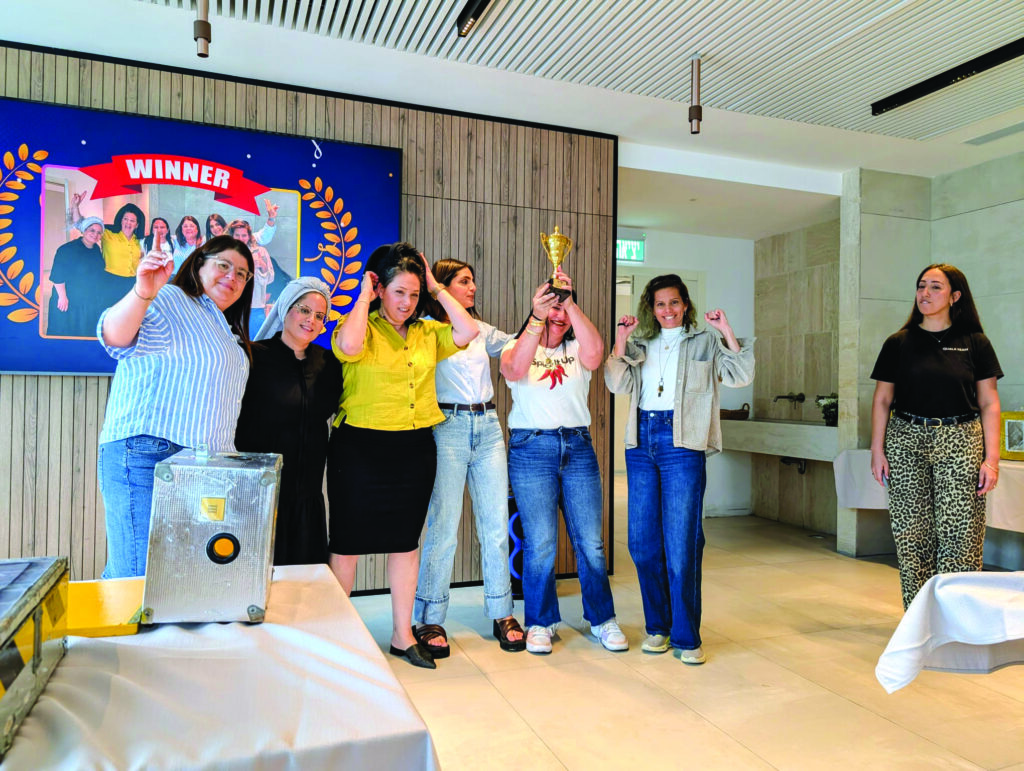
In 10th grade, students start participating in facilitated discussions on social issues. In 11th grade, they take their lessons to the streets, with games and competitions bringing students together outside the classroom to create memorable moments on the field. In their final year of the program, students work together on a meaningful culminating project in the broader community.
The program is run in partnership with Gesher, an organization dedicated to fostering unity and understanding among diverse segments of Israeli society through educational initiatives and dialogue.
With the upheaval of the last two years, scheduling this vital programming has been a challenge. “Teachers who participated in the sessions we held this year had a very meaningful experience and understand the importance of exposing students to this platform,” reported Rimer. “But ironically, with the ongoing conflicts, it has been very difficult to meet and run our programming as usual, despite the desire and recognition of its value.”
From Resistance to Revolution
Of course, not everyone embraced TATZAM immediately. As with any major cultural change, there were skeptics—among teachers, parents, and even students.
“But we don’t see opposition as a problem,” said Yost. “We see it as a place to start a conversation. Why is this teacher resistant? What do they care about that’s making them hesitant? That’s how we engage—with respect, curiosity, and empathy.” In fact, many of the program’s strongest advocates were once its loudest critics. After experiencing the process themselves, they became believers—and champions.
“When a principal goes through it and sees the difference in their own life, they don’t just want TATZAM in their school—they demand it,” Yost laughed.
Looking ahead, AMIT has ambitious goals for TATZAM. The hope is that every AMIT student, teacher, and principal, regardless of background, will continue to benefit from the program’s deeply humanizing approach. “We’re aiming for full participation across our network,” said Yost. (AMIT runs 88 schools in 32 cities in Israel.) “But more than that, we want to share this model with the rest of Israel, and the world.”
To that end, AMIT continues to invest in training, curriculum development, and research partnerships to refine and expand the program. TATZAM is not static; it evolves in response to feedback, real-world needs, and the changing educational landscape.
Perhaps the most radical thing about TATZAM is its redefinition of success. In a world obsessed with grades, test scores, and measurable outcomes, AMIT is offering something different: an education that starts with the human being, not the data point. High school student Ofek (her name means “horizon” in Hebrew) made it clear: “The most important thing I have experienced with TATZAM is gaining self-confidence. I was a very shy girl, and now I have more confidence, and I have learned many new things about myself.”
“It’s not about turning students into robots who perform well on standardized tests,” Yost insisted. “It’s about turning them into human beings who know who they are, what they want, and how to get there— together.”
And that’s a lesson worth learning.