
long with the kibbutzim near the Gaza border, Sderot came under heavy attack on October 7, 2023. Hamas gunmen invaded, managing to commandeer the local police station before the Israeli army came in and destroyed it, along with the terrorists. Sderot residents were evacuated to hotels in Jerusalem, Eilat and the Dead Sea, and the city effectively became a ghost town.
Amid this upheaval, AMIT jumped into action, quickly setting up remote learning options for the thousands of students who were evacuated when their three area schools shut down. AMIT also offered psychological support, resources and a framework to continue their daily lives during this incredibly harrowing time.
For at-risk young people from the periphery of Israel—the majority of AMIT’s students—the trauma of war and displacement is uniquely devastating. These children and teens need the structure and routine of regular schooling to provide them with a sense of stability otherwise absent in their lives. This is a key component of their emotional and educational journeys.
Services for the Whole City
Now, more than a year and a half after the war broke out, most residents have returned to Sderot and the population has even grown, said Dani Rahat, vice president of strategy for AMIT.
This resurgence has helped foster a new partnership in Sderot between the municipality and AMIT. AMIT already runs three high schools in the city: the Mekif Klali, with 1,200 students from seventh to 12th grade; Kiryat Hemed, a religious school with 550 students; and Beeri, an ulpana (high school) for girls with 340 students. With this new relationship more formally in place, AMIT is providing its unique educational model and teacher training services to the entire city of Sderot.
“From the very first day [after October 7], we coalesced to do whatever we could for the city of Sderot,” Yotam Ruf, head of the minhelet (management) in Sderot, said. “After March people began returning to the city, and when the state wanted to support Sderot they turned to AMIT.”
Gil Hadash, head of the education department in the municipality of Sderot, agreed.
“In extreme situations like October 7 and its aftermath, organizations are measured by their ability to react quickly and effectively. AMIT was there from day one. The crisis was monumental but also a historic opportunity to do something that has never been done before,” said Hadash.
“I want to see a student from Sderot in the International Science Olympiad; I want to see a student from Sderot finish the air force training. This is all possible now because of the city’s partnership with AMIT,” he continued.
With AMIT now working with teachers and principals in all the schools in the city, Rahat believes its educational model of striving for academic excellence—as well as an emphasis on “emotional learning”—can help children as they deal with the trauma of October 7, and in some cases with the loss of close family members.
Dr. Amnon Eldar, director general of AMIT, highlighted the profound strategic partnership between the AMIT Network and the city of Sderot: “In the wake of one of the most challenging wars in Israel’s history, the children of Sderot have endured immense hardship—being displaced from their homes, facing constant disruptions to their daily lives and experiencing significant setbacks in their education. These children deserve not just to recover, but to thrive. The education system in Sderot must set a new standard and become a model of excellence for the entire nation.”
He continued, “Today, the AMIT Network is at the forefront of this transformation, delivering an innovative and holistic framework that spans pedagogical innovation, emotional well-being and personal growth. From first grade to 12th grade, we are equipping teachers and students alike with the tools they need to overcome challenges and achieve excellence. AMIT is proud to lead this pioneering effort and firmly believes that, together with the municipality of Sderot, we are building a model that will not only transform Sderot but serve as an inspiration for cities across Israel.”
Ongoing Support for Every Student
AMIT sees each child holistically as their own world with strengths and weaknesses. Its educational model aims to build up these strengths and encourage students to dream, set goals and work toward achieving them—while delivering important emotional support as well.
Rahat is aware that outsiders look at Sderot as an underprivileged area. Towns and cities in Israel are ranked economically. While Ra’anana, with its many English-speaking immigrants, is a 10, Sderot is ranked a 4. Yet the city of 35,000, which has a large proportion of religiously observant Jews, has demonstrated tremendous resilience. Almost all its residents have returned home, and the population has grown, despite the war.
Teachers in AMIT schools have shown tremendous dedication, even though many are evacuees themselves or serve for long stretches in reserve duty—a competing responsibility that demands much of their time and energy. Many of the teachers also have young children, who themselves are dealing with the trauma of October 7. Yet the teachers show up every day to teach, putting aside their own difficulties to educate and nurture AMIT students.
“Every day, whether in person or by phone, I tried to plant seeds of hope that the world can be a safe and loving place,” Tehila Yifrach, a homeroom and English teacher in Mekif, said. “We went through, and are still going through, a difficult journey. But we are determined to transform this time into a symbol of revival. They won’t break us; they won’t defeat us.”
Yifrach said her students did well in their end-of-year matriculation exams, despite all they endured.
And students are deeply grateful to AMIT for supporting them through the ongoing crisis.
“I will never forget October 7; I remember it like it was yesterday,” said Arad Kedoshim, a student at Mekif. “Everything just fell apart: our whole routine, our homes, life itself. I was evacuated to Eilat, and AMIT quickly opened learning centers. That gave us a feeling of home as well.”
Part of AMIT’s model is offering students educational support in small groups and even one-on-one, which is especially important for students with any kind of learning or social-emotional challenges.
Kedoshim said he especially enjoyed the AMIT learning platform that was put on YouTube, enabling students to watch classes they may have missed and stay in touch with each other and their teachers. AMIT’s swift establishment of alternative learning centers was crucial. Despite being displaced from their homes, students were able to maintain connections with some familiar teachers and classmates. That consistency helped them with both the initial trauma and the months of displacement.
Sderot has many large families, for whom making temporary new homes in hotels was especially challenging, and students found it difficult to find a place to study. Now that they’re back in their own homes, those challenges have eased.
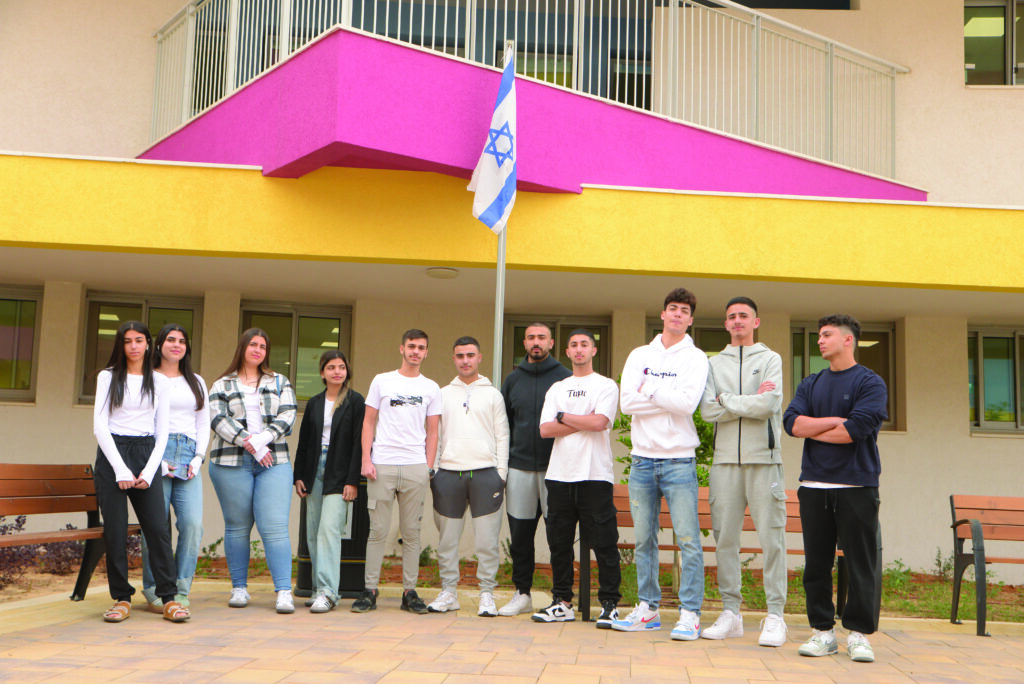
An exciting new development is the citywide implementation of AMIT’s 24/7 initiative. This program promotes positive after-school activities for children, such as sports, learning or volunteering, and encourages students to participate in as many as possible so they have healthy outlets in their free time. Moshe Jacobs, the 24/7 coordinator for Sderot, has introduced the belt model—like in judo—to track the engagement of all the students in the city, interviewing them to get their feedback and logging the info into a central database. Students with the highest level of engagement, black belts, were recently rewarded with a special ceremony and certificate praising their efforts. This public celebration encourages others to increase their participation and expand their horizons.
Both Ruf and Rahat observe signs of a stronger and flourishing Sderot, although they caution it will take years to truly see the scope and impact of this new partnership with AMIT. However, they remain confident that Sderot’s students will continue to thrive and, thanks to AMIT, become a beacon of resilience and educational excellence for other cities across Israel.