
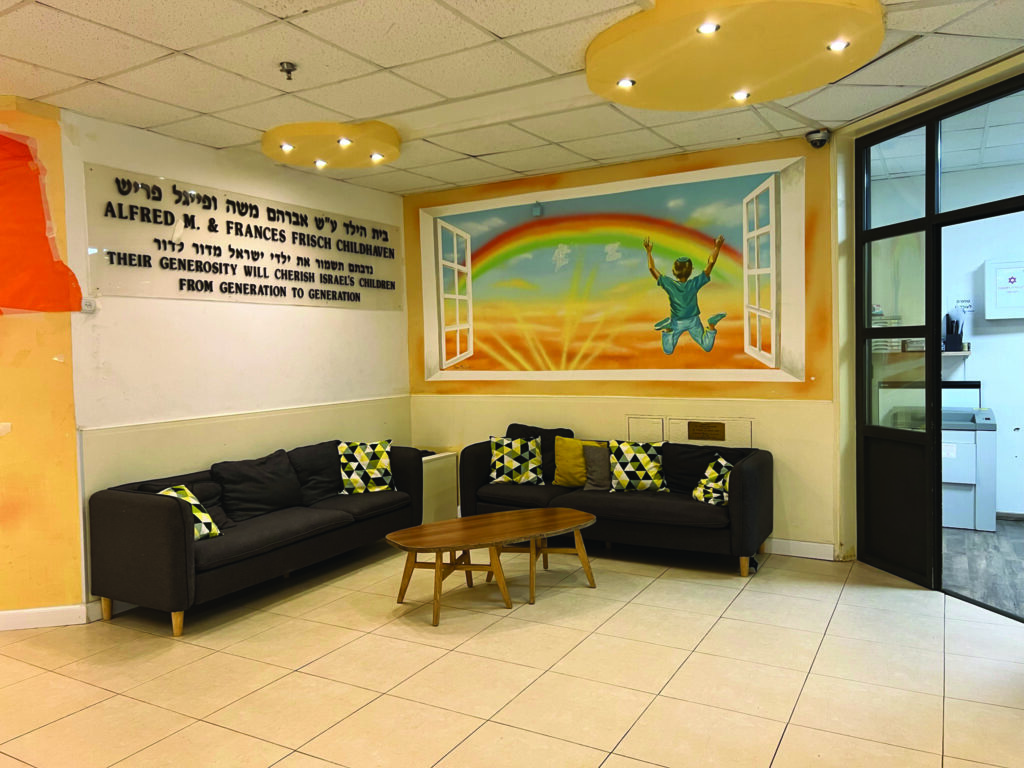
As AMIT marks its 100th year, the network celebrates decades of educational and social leadership across Israel and looks back at its foundations. One of AMIT’s most iconic programs, Frisch Beit Hayeled, was established in 1983 in the Jerusalem neighborhood of Gilo as a residential home for children.
Beit Hayeled pioneered the framework of mishpachtonim, small family residential units, for children who could not safely remain living at home. Educators understood that nothing could truly replace a child’s biological family, yet by creating the experience of a stable family environment, they could offer children that vital sense of security, warmth, and a healthy home life. That model, though evolved over the years, continues to this day.
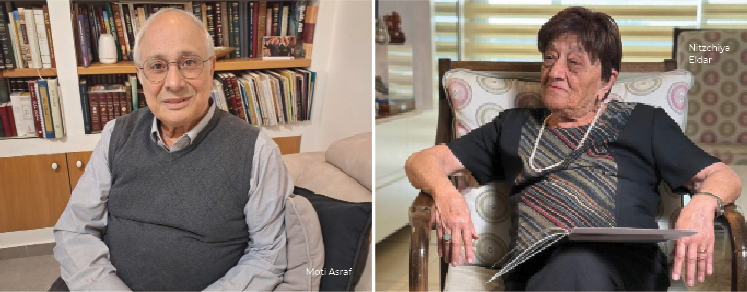
Two of Beit Hayeled’s most dedicated directors, Nitzchiya Eldar and Moti Asraf, reflected on their time at its helm, the lives they touched, and what this demanding and deeply human framework meant for them and for the children it served.
A Calling of Conviction
For Nitzchiya Eldar, 91, education was never simply a profession. From a young age, she felt drawn to teaching and educational leadership. A seventh-generation Israeli, she recalls being encouraged to pursue law, which at the time was considered more prestigious than a career in education. But she was firm in her choice. “I had to follow my heart and my inner conviction,” she said.
That conviction shaped a long career in formal education. Nitzchiya served as a high school principal for 20 years, leading students through academic and emotional challenges. Her professional path took a decisive turn when she was approached by former AMIT Director General Dr. Ami Ze’evi and asked to lead Frisch Beit Hayeled. He told her that this role would be the “pedagogical poem” of her life. In retrospect, she wholeheartedly agrees.
Nitzchiya, mother of the current director general of AMIT, Dr. Amnon Eldar, explains that managing Beit Hayeled was fundamentally different from running a school. This was not about exams or curricula. It was “hatzalat nefashot, rescuing lives,” she said. The children who arrived there had often grown up in homes shadowed by addiction, severe mental illness, violence, criminality, and sexual abuse. Remaining at home was simply not safe.
Alongside Nitzchiya’s leadership, Beit Hayeled relied on young educators who committed their own family lives to the mishpachton model. Among them was Moti Asraf.
From Immigrant to Educator
Moti’s journey was shaped by his own early experiences. He was born in Casablanca, Morocco, and immigrated to Israel in 1962 at the age of 10. He vividly remembers arriving at a transit camp (ma’abara) in Pardes Hanna with an electric refrigerator that could not be used because there was no electricity.
In 1970, while a student in Jerusalem, Moti began working with AMIT as a counselor at Meshek Yeladim Motza. He then enlisted in the IDF, and after his military service began working as a teacher. During these years, he married and became a father to two children. In 1983, he returned to AMIT, marking the beginning of his long-term leadership role at Beit Hayeled.
Until 1983, AMIT operated two residential settings in Jerusalem: Meshek Yeladim Motza, located in the Talbieh neighborhood, and Tel Ra’anan, located in the Baka neighborhood. In 1983, both moved into a new facility in Gilo, where Beit Hayeled took its current form and adopted the pioneering therapeutic-educational approach of the mishpachton model.
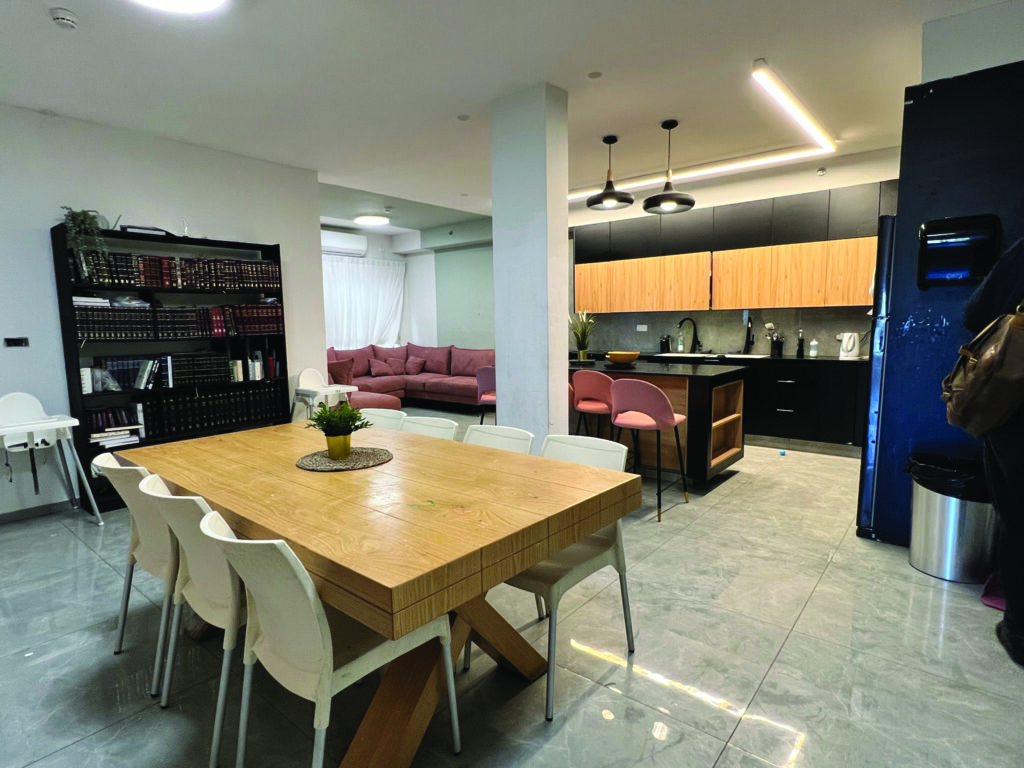
The mishpachton model houses children in small family units. Instead of large dormitories with rotating staff, each unit is led by a married couple who live there day in and day out and function as parents in every sense. Care, education, and therapy are embedded in ordinary routines: meals, homework, holidays, conflict, and comfort. This structure creates stability and continuity for children who had never experienced either.
Moti and his wife were already married with children of their own when they became surrogate parents within a mishpachton. They raised their own children alongside the children of Beit Hayeled, sharing daily life under one roof. Recognizing Moti’s dedication and deep commitment to the children, Nitzchiya asked him to serve as her deputy director, and the two worked side by side at Beit Hayeled for many years. Following Nitzchiya’s retirement, Moti went on to serve as director of Beit Hayeled.
The Daily Rhythm
Nitzchiya described Beit Hayeled as a hamama, a greenhouse — a carefully protected environment designed to allow children who had been deeply hurt to grow gradually and safely. Each family unit was supported by professionals, including a social worker and psychologist, ensuring close and sustained attention to every child. For all the educators involved — counselors, surrogate parents, social workers, and leadership — the commitment and personal responsibility extended to all hours, day and night, throughout the year, including Shabbatot and holidays.
Beit Hayeled never operated a school on campus, which remains true today. Each child living in the home attended a school in the city appropriate to their individual academic, emotional, and therapeutic needs. Children were transported daily to different schools across Jerusalem and returned in the afternoons to Beit Hayeled for homework, enrichment, activities, and the rhythms of family life. Birthdays and bar and bat mitzvahs have always been marked individually, with care and intention — moments of recognition, dignity, and joy for children who had rarely experienced either.
Alongside its residential model, Beit Hayeled also operated an external program for children whose homes were deemed safe enough for them to remain. These children attended school during the day, spent their afternoons and evenings at Beit Hayeled eating meals, studying, and participating in activities, and returned home to sleep at night, preserving family connections whenever possible.
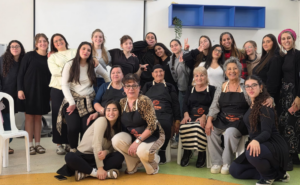
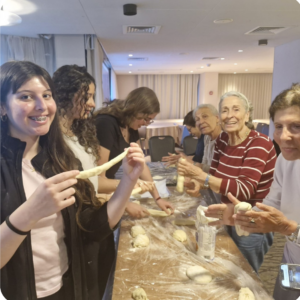
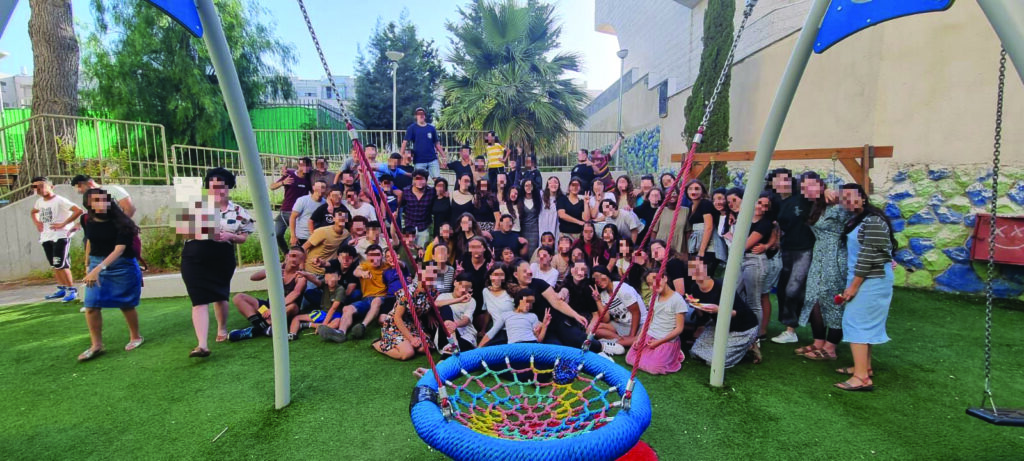
Midreshet AMIT, a gap-year seminary for girls, opened in Beit Hayeled 19 years ago. The girls from the seminary spend time volunteering at the residential school a few times a week, creating special relationships with the children who live there. The bonds formed during these visits have a huge impact on both the seminary girls and the Beit Hayeled students.
Shift to Therapeutic Care
During the 1990s, changes in national welfare policy reshaped the population arriving at Beit Hayeled. Children with less complex needs were increasingly placed in community-based frameworks, leaving residential homes to care for those with more severe needs.
Moti recalled the moment clearly: Beit Hayeled stood at a crossroads, faced with a choice between closing its doors or fundamentally reshaping its model. The decision was to adapt, a sign of AMIT’s long-standing ability to respond to the shifting needs of Israeli society.
The number of children in each family unit was reduced. Professional staffing was expanded, with social workers and psychological support significantly increased. Over time, Beit Hayeled evolved into a fully therapeutic residential framework in response to the depth of trauma carried by the children who arrived.
Impact on Educators’ Families
The immersive nature of life at Beit Hayeled shaped not only the children who needed to live there, but also the families of those who chose to work there. Moti explained that his own children shared the experience of growing up inside the family unit, sharing daily life, meals, and responsibilities with the children of the home. As his kids grew older, they naturally became mentors and role models.
Moti shared that for years he had concerns about whether raising his children in such an intense environment had been fair to them: “Only years later did I receive the answer that calmed me. It did them only good.” His children described their years at Beit Hayeled as formative and meaningful. He connected their professional paths to the values and experiences they absorbed growing up in Beit Hayeled. Today, his children work in security and therapeutic fields, reflecting the impact of those formative years.
The Meaning of Success
For both directors, success was never measured by prestige or titles. It was measured by whether a child of Beit Hayeled could build a stable and healthy life.
Moti recalled a boy born with a cleft lip whose mother could not bear to look at him. Beit Hayeled secured funding for surgeries that restored both his appearance and his sense of self. The staff refused to give up on him, choosing instead to see his future. Years later, he stood under the wedding canopy as a husband and later became a father of five, asking Moti to stand beside him in place of his parents. He went on to build a full and responsible life. Another graduate later returned to share a memory from his bar mitzvah. His father, struggling and broken, could offer only borrowed tefillin and a cup of coffee to his son. At Beit Hayeled, the staff made sure he experienced a proper and meaningful bar mitzvah celebration. They purchased a new set of tefillin and held a celebration in the dining hall. That moment stayed with him for life. Years later, he insisted on donating his first paycheck to Beit Hayeled to pay back some of what had been done for him. He has since gone on to establish a high-tech company.
Looking ahead
Nitzchiya sees AMIT’s defining strength as its ability to attend to the individual child, to adapt without losing core values, and to constantly reflect and evaluate. She views Beit Hayeled as part of a broader national responsibility to care deeply, act professionally, and never shy away from complexity.
Together, these two leaders who guided Beit Hayeled, both side by side and individually, shaped its professional and moral foundations. Under their leadership, hundreds of children passed through the home and dozens of couples served as surrogate parents. The standards they set continue to guide Beit Hayeled and the 60 children living there today, reminding us of the simple truth that every child needs at least one adult who believes in them.
Beit Hayeled reflects the AMIT Network’s enduring commitment to the students it serves, the educators it supports, and the nation it helps build. In classrooms across the country — in fields and farms, on stages and in science labs — AMIT sees every child and continually strives for better in a changing world.
Because the mission matters. Building the next generation to succeed and lead with Jewish values has guided AMIT educators for the past 100 years and will continue to inspire them for the next century.