
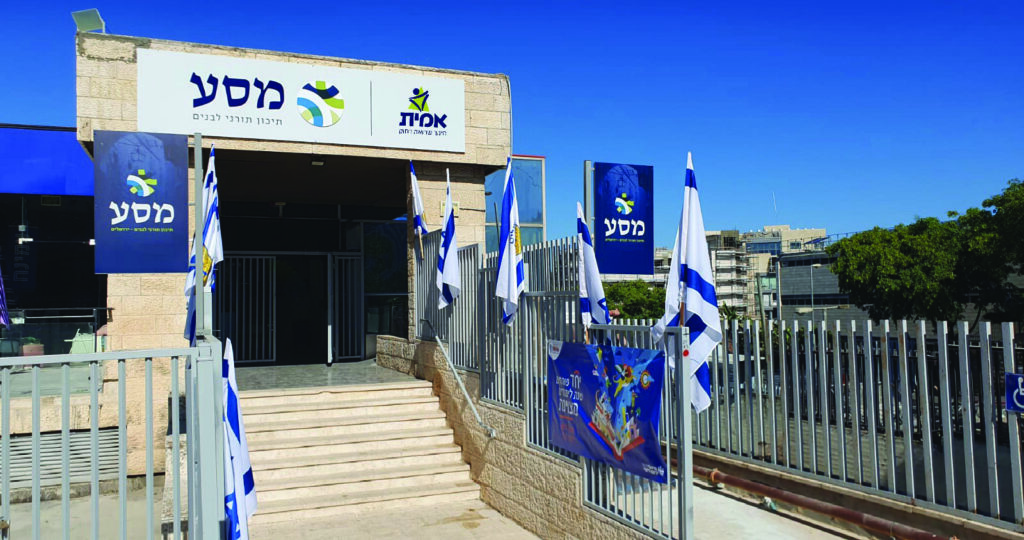
What does it take to build a school from scratch? A true community center for students and families, designed to support learning, connection, and belonging.
AMIT Masa High School, a brand-new school for boys in south Jerusalem, brings this vision to life. The school opened its doors in the 2025-2026 academic year in conjunction with the Jerusalem municipality. At the end of November, the AMIT Network officially won the tender to manage the school and took steps to cement its operations. The school fills a gap among boys’ Torani schools in the area and is mostly geared toward the dati leumi (Religious Zionist) community.
This school isn’t merely a set of classrooms, but a bold new model for Jewish education that sees every student, not just the mainstream. AMIT Masa pushes boundaries and expectations in a city where the past is ever-present and the future is fiercely important. For AMIT, Israel’s leading educational network, building a new high school in Jerusalem is more than a project. It’s a mission — a chance to expand opportunity and ensure that every child has a place to thrive.
“There is a growing community in Jerusalem looking for a school aligned with their values and aspirations, and there’s simply no more room in the existing schools,” said Dani Rahat, AMIT’s deputy director of strategy and municipal relations.
New housing developments in Jerusalem’s southern neighborhoods are attracting young families who believe in a vibrant, modern approach to Jewish life. But while neighborhoods like Givat HaMatos, Har Homa, Talpiot, Arnona, and Gilo are blossoming, educational options have not caught up.
This shortage isn’t abstract. It affects real families, including many olim who arrived in Israel with hope and determination but limited resources. These are working parents who believe in Torah values and academic achievement. They want more for their children — more than traditional options, more than a one-size-fits-all religious school. The current schools are full, and the city took notice.
“The municipality recognized the same need,” Rahat shared. “We want to be stronger in Jerusalem, and this was the opportunity.” It was the opportunity not to just add another building, but to build the future of AMIT pedagogy from scratch.
Usually, AMIT enters established schools and transforms them — guiding educators and principals, redesigning curriculum, and igniting a culture shift. “Here we have the extraordinary chance to shape a school from day one,” Rahat said.
It’s the kind of opportunity educational leaders dream about: There is no legacy structure to dismantle. You have a principal aligned with AMIT’s mission, a community hungry for innovation, and a municipality ready to partner. It truly is a perfect alignment — the right moment, the right people, and the right place.
A Founding Principal
The principal of the new school is David Simchon, who lives in a community just south of Jerusalem, but his heart — and much of his career — has been in the soul of Israeli youth life. He spent years as a professional in the Bnei Akiva youth movement, building leadership and identity through informal education. That experience shaped his understanding of what young people need most: to be seen, to be valued, and to be involved.
“Informal education is where students become leaders — where they discover what they care about and take responsibility,” he explained. “I wanted to bring that into the school system.”
After completing a leadership training program for senior educators, Simchon joined AMIT — a network that already believes deeply in weaving social-emotional learning and student voice into everyday schooling. But he wanted more: “I wanted students to be active participants in their own education, not just recipients.”
Two years ago, he attended a meeting with Jerusalem officials about a new school that needed a founding principal. He recognized the moment instantly. “I saw that I could build something new — not inherit a system, but create one,” said Simchon. “Build a school exactly as we know it needs to be for today’s teens.”
The October 7 war delayed the opening by a year, but for Simchon, the extra time was a gift. “It let us fully develop the curriculum and the full AMIT experience, incorporating ECO24, Tatzam, mentoring, enrichment, Torah, identity, everything. We had the chance to create this from nothing, which is exactly as perfect as we could make it,” he said.
Adapting to Every Student
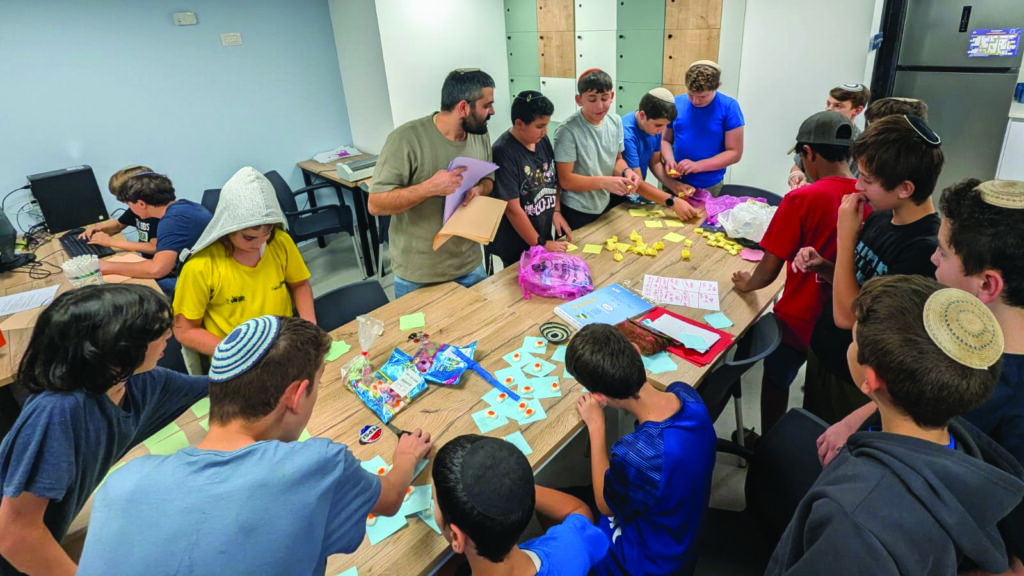
The school began with two seventh grade classes and will expand yearly until it becomes a full high school, with three classes per grade level. Each class of 30 is divided into two small groups of 15, each with a dedicated mentor. Mentorship has always been central to AMIT’s approach, and here it is not a supplement; it is the foundation.
“Each day begins with Tatzam, the AMIT program focused on the emotional well-being and personal connection with each student,” Simchon explained. “Not in a full classroom, but in small groups and one-on-one.” These sessions focus on personal development, strengthening group belonging, and reinforcing key emotional skills such as self-awareness, emotional regulation, and interpersonal communication.
He has already seen the difference: “If a student says he’s tired or that the electricity went off at home that morning, we know how to respond. We don’t ignore real life. We guide them through it.”
At AMIT Masa, feelings do not get left at the door. While strong academics remain central, including high expectations for bagrut (Israeli matriculation exams) success, the school believes true learning expands through passion. “We have built in many hours each week to strengthen students’ interests in their passions — for example, chess, cooking, economics and finance, sports, politics, coding, whatever they love,” Simchon said. “School needs to teach what is meaningful to the student.”
This approach is especially important for new immigrant students, who may arrive with fear, insecurity, or the painful sense of starting from behind. “When a child’s interest becomes the starting point, confidence grows,” he explained. “A student who feels competent becomes a student who can succeed.” This is AMIT’s ECO24 model in action, ensuring that learning continues far beyond the bell.
AMIT’s Learning Management System adapts the classroom experience to each child, meeting learners at their level and preferred method. Throughout the school day, students choose how they learn: independent research, small groups, hands-on labs, or guided workshops. This groundbreaking tool is one of AMIT’s recent innovations, part of its commitment to personalized learning and pedagogic excellence.
“It’s the school’s job to adapt itself to each and every student,” Simchon said firmly. “Not the other way around.” And this new approach is already attracting attention. “Many others want to copy what we are doing!” he laughs. “That means we’re onto something.”
Living Out Our Values
Behind every innovation is a set of values AMIT staff, teachers, and students live by every day:
- Empowering students as leaders of their learning
- Personalizing education through mentors who know each child
- Investing in enrichment and identity as much as academics
- Building community through Jewish values and belonging
- Never giving up on any student
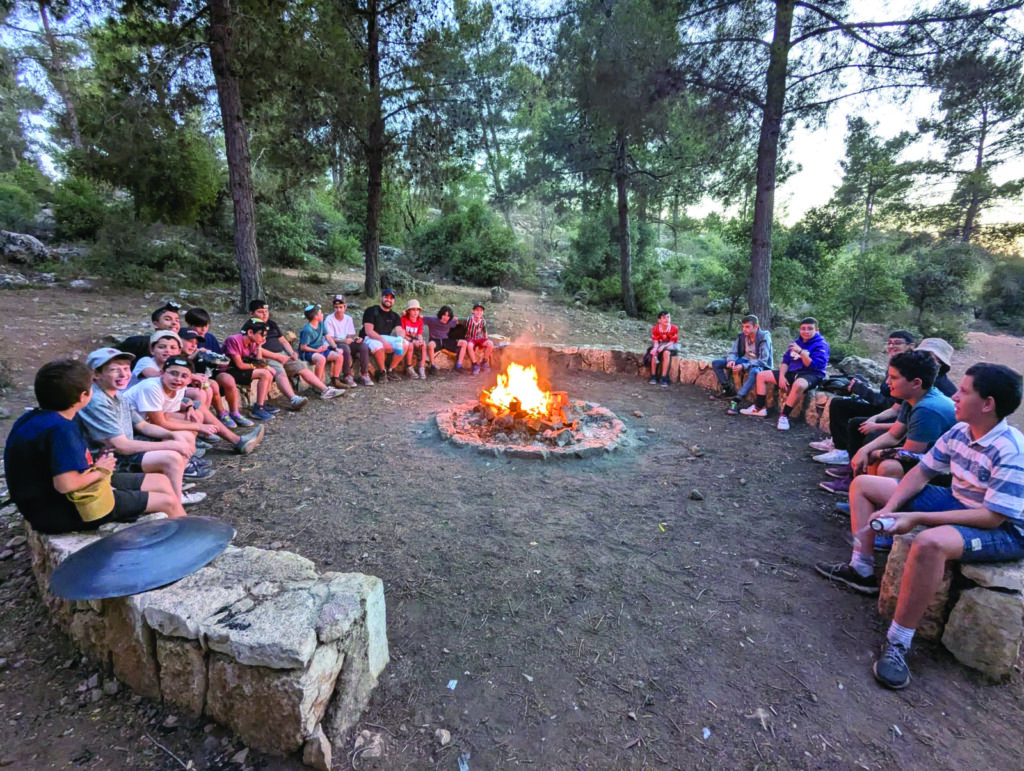
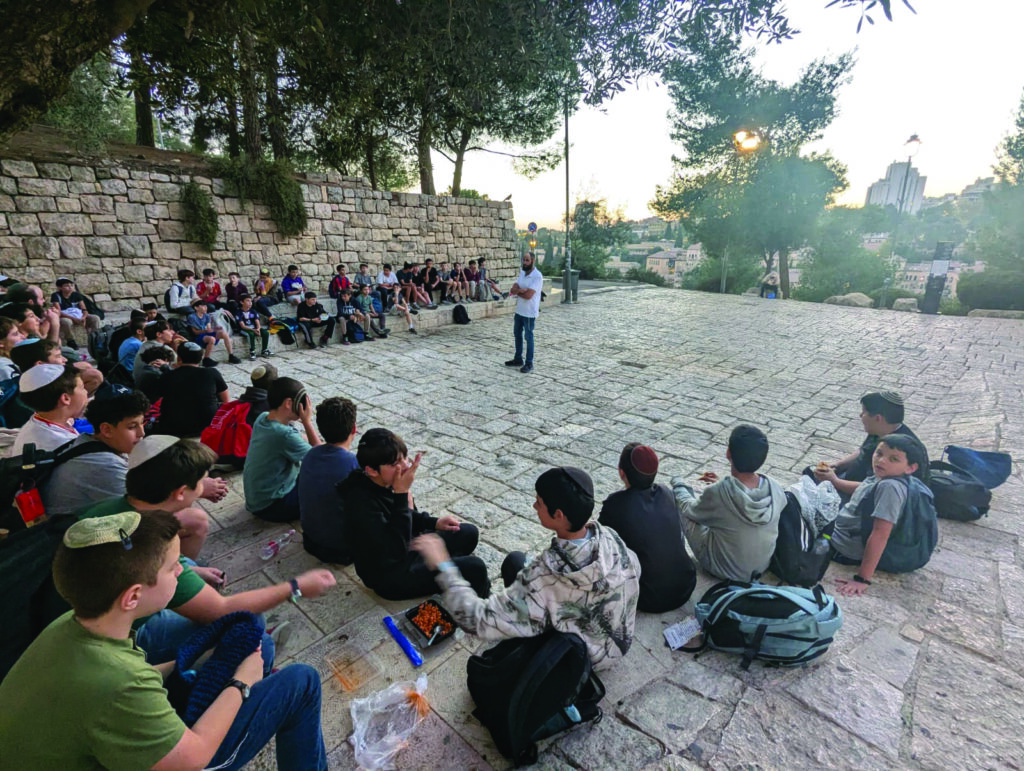
Once a week, the school day goes late into the evening. Those hours look more like a vibrant youth movement than a typical school day, with student-led activities, leadership challenges, values-driven social engagement, and more.
“We’re not just checking a box called ‘informal education,’” said Simchon with a smile. “The kids design the programs. They run them. School is a partnership, and they are creating their own community.”
That community extends beyond the students to include and strengthen their families. And Simchon already sees early signs of a dream taking root, including laughter in the hallways and pride in parents’ eyes. “We are so happy with the staff and the students,” he said. “The culture is alive. There is joy.”
AMIT Masa is serving students who may not have the same resources as others, Rahat explained: “Some are olim. Some are living on a more fragile economic base. But that has nothing to do with their potential.” By placing the school in a new, affordable neighborhood, AMIT isn’t just solving an educational challenge; it is helping stabilize an expanding community. Schools build roots and create belonging.
Over the next five years, enrollment will expand, additional grades and classes will open, and the building will grow. What is now a bright beginning will become a thriving centerpiece of community life. In a city where the world’s eyes often turn toward conflict, this school tells a different story — one of hope, of possibility, of the next generation finding its voice.
Future soldiers, scientists, engineers, and leaders in every field will look back with pride at the school where they learned the values that shaped them. Rahat expressed it more simply: “We are building more than a school: We are building a future.”