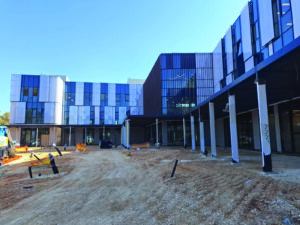

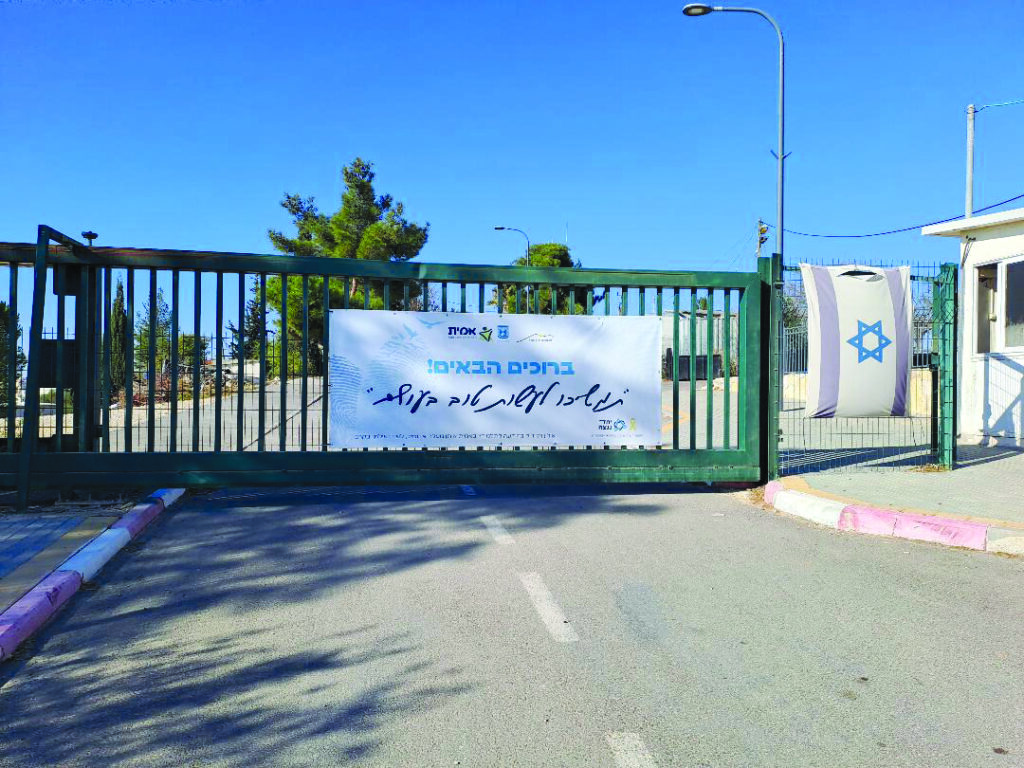
Visitors to AMIT’s Beit Chagai Youth Village are greeted by fresh air and magnificent views as they enter the residential school for at-risk youth. The southern Chevron Hills location, about an hour’s drive from Jerusalem, offers many serene and beautiful spots for communing with oneself and with nature, the perfect backdrop for the deep work that takes place here. Horses, sheep and sheepdogs can be spotted roaming the area under the care of the students, grades seven to 12, who take pride and satisfaction in practicing a profession that has belonged to Jews for millennia.
When AMIT assumed control of Beit Chagai in September 2023, it was a pivotal moment for the facility, which had long struggled with financial instability, educational challenges and high staff turnover. Originally founded by area residents, Beit Chagai faced significant hurdles in achieving its mission. Recognizing its potential, and armed with extensive experience in creating transformative, educational homes for at-risk youth, AMIT stepped in to provide the expertise and leadership needed to set the school back on track.
As Israel’s leading educational network, AMIT has a proven track record of uplifting youth from Israel’s periphery, empowering them to maximize their potential through innovative education and a nurturing environment. For decades, AMIT’s Frisch Beit Hayeled in Jerusalem has been a model of excellence, known for its holistic approach to education. Now, with AMIT overseeing Beit Chagai, boys who age out of Beit Hayeled at 13 can seamlessly transition to Beit Chagai, ensuring continuity in their growth and development.
To lead Beit Chagai into this new chapter, AMIT appointed Yoni Elmashali, a seasoned and compassionate educator who previously served as vice principal of Beit Hayeled. Under his leadership, and with AMIT’s unwavering commitment to creating groundbreaking opportunities for its students, Beit Chagai is positioned to become a vital resource and a safe haven for at-risk boys in Israel’s southern region.
“I came here to return the village to its glory days and offer a positive, appropriate and respectful response to the boys’ needs,” said Elmashali. “After a year and a half, we’re firmly on the right track.”
Providing a Strong Support Network
Beit Chagai currently serves 35 boys living in four mishpachtonim, family-like units where the youth live together. Each mishpachton is headed by a devoted young couple who live in the same apartment as the children, serving as surrogate parents. Each mishpachton is also staffed by a counselor and two young women who are completing Sherut Leumi (national service). A night shift was instituted to provide around-the-clock care and attention to the dorm’s teenage residents.
Elmashali resides on-site with his wife and their five children, fostering a close-knit and nurturing community. Adding to this foundation is the spiritual guidance of Rav Avraham Yitzchak Schwartz, the rav of Kiryat Arba, who visits daily to pray and study Torah with the boys, enriching their lives with inspiration and meaning.
A significant part of the village’s success lies with its teachers—dedicated and compassionate educators who pour their time, energy and hearts into supporting their students.
The ratio of 35 students to 54 staff members underscores the school’s deep commitment to providing individualized care and attention. The staff’s dedication is evident in their tireless devotion to the boys under their guidance.
“Despite the challenges posed by the war, like heightened tension and staff members serving in miluim (reserve duty), we’ve been able to achieve greater stability,” said Evyatar Shaki, director of Beit Hayeled, who also oversees Beit Chagai. “Four couples joined us at the start of last year, and all have remained deeply committed in their roles.”
“I’ve learned a lot here, and changed a lot,” a 15-year-old student shared. “The teachers are not regular teachers. They go above and beyond and do a lot for me.”
Valuing Every Student
Another aspect of Beit Chagai’s success is its personalized approach to supporting at-risk youth. Each student thrives under an individualized therapeutic plan, carefully crafted by a dedicated team of psychiatrists, psychologists and social workers. Recognizing the unique challenges some boys face, such as substance abuse or the need for intensive support, the village also established tailored frameworks to meet their specific needs—whether through the school’s core programs or alternative approaches better suited to their circumstances. This comprehensive and compassionate system ensures a safe, focused environment where all students can fully engage in their academic growth and therapeutic healing.
Along these lines, students actively participate in transforming the campus through hands-on classes in art, carpentry, metalworking, gardening and animal care—skills that not only enrich their lives, but also help revitalize and beautify the village they call home. For example, students in the carpentry class built some of the wood structures on campus, while those in the metalworks class contributed to some of the metal framing and structures.
Motti Arbel, AMIT’s community director overseeing schools for at-risk youth, shared a meaningful moment from his recent visit to the metalworks class. “This week, I asked the teacher what they needed. He explained that they were working with basic metals but lacked enough of a high-quality one called MIG. When I inquired about the cost, he said 10,000 shekels (about $2,500). I immediately said, ‘You got it.’”
Arbel continued, “Seeing the students’ faces light up was worth far more than the cost. Here, they know they are valued, their needs are met, their teachers believe in them—and they feel it. That’s what makes all the difference. It gives them strength, hope and faith in themselves and in others.”
Investing in Empowerment
Most of Beit Chagai’s budget comes from Israel’s Ministry of Welfare, but some funding comes from AMIT as well as private donors invested in its unique mission to empower Israel’s youth. Sometimes, those donors come from within the AMIT school itself, Arbel explained.
He shared the story of a student who struggled mightily with self-control. The student was unable to sit still and often acted out destructively. Seeking a solution, the principal asked what might help him calm down. The student’s answer was simple: music. When the principal explored the cost of creating a music room and purchasing instruments, the estimate came to 30,000 shekels—a sum he didn’t have readily available.
Moved by the need, one of the teachers stepped forward and offered to fund the project in memory of his late wife, Kochava Even Chaim, who had been tragically murdered by terrorists. Today, the music room, Kochav HaKfar (The Star of the Village) is a state-of-the-art facility complete with a recording studio, named in her honor. It’s a powerful tribute and a wonderful space for students to explore.
Transforming Lives
Arbel shared another anecdote that illustrates Beit Chagai’s transformative power. “One day a relative of mine called me up because her son was acting out, and I told her to come look at the village. She hesitated because they’re Charedi (ultra-Orthodox), and Beit Chagai accepts students from across the religious spectrum. Six months later, when her son was in danger of being forced to attend a secular school, she came to see our center and was blown away.”
Arbel continued, “Her son not only came but he thrived, discovering talents he was never allowed to pursue. He immediately became the official chazan (cantor) in the synagogue and led Selichot. He also loves to cook and began cooking for all his friends. He’s soon going to join the army but today, thanks to Beit Chagai, he believes in himself and what he can accomplish.”
Beit Chagai’s success can be seen not only in stories like these, but in statistics. Four out of the five 12th graders who took Israel’s demanding matriculation exams last year passed handily, and there’s been a 30% increase in enrollment since last year.
The students feel cared for, and when they see that their contributions to the village are valued, their confidence grows because they are seen as trustworthy and reliable.
“Many times, kids who come from troubled backgrounds perpetuate the cycle and build a troubled home themselves,” said Arbel. “We’re working to break that cycle.”
“There’s nothing like our village,” said a 17-year-old, with enthusiasm.
Beit Chagai is more than just a youth village—it’s a lifeline, a home and a launchpad for growth. In its short time under AMIT’s leadership, it has become a beacon of hope for at-risk boys, empowering them with the tools, confidence and sense of belonging to break through hardship and build a brighter future—for themselves, and for Israel.