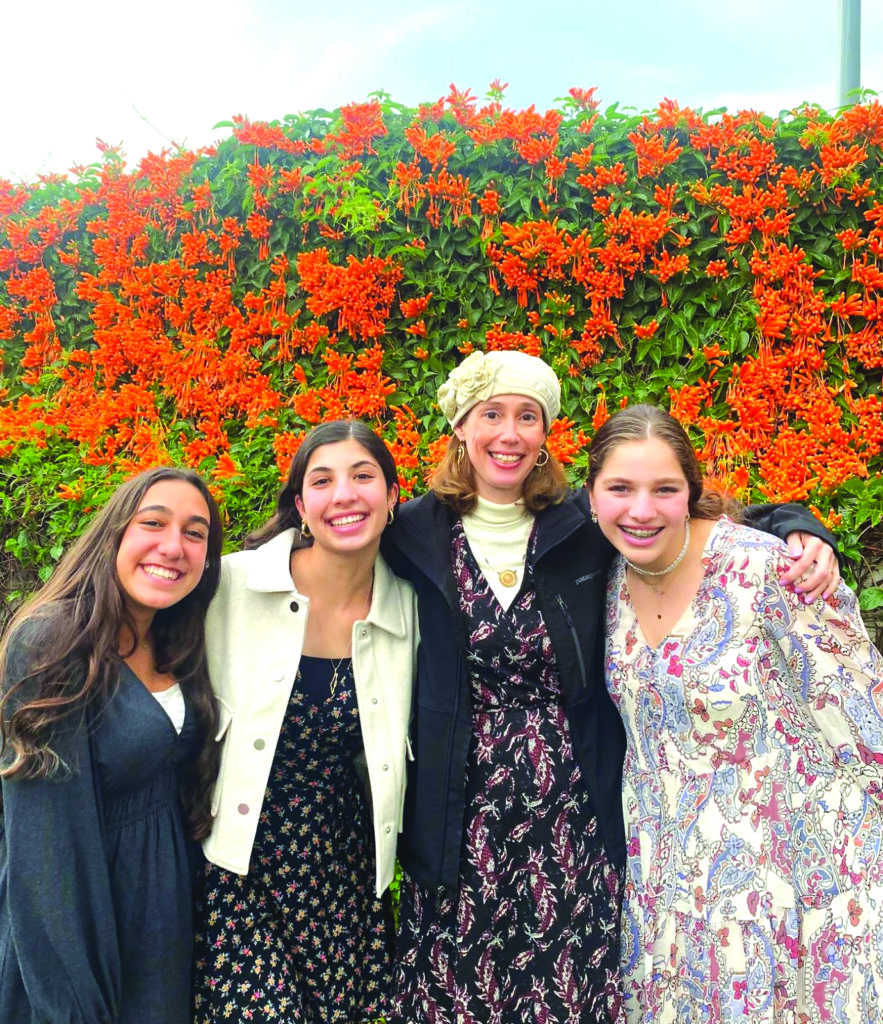

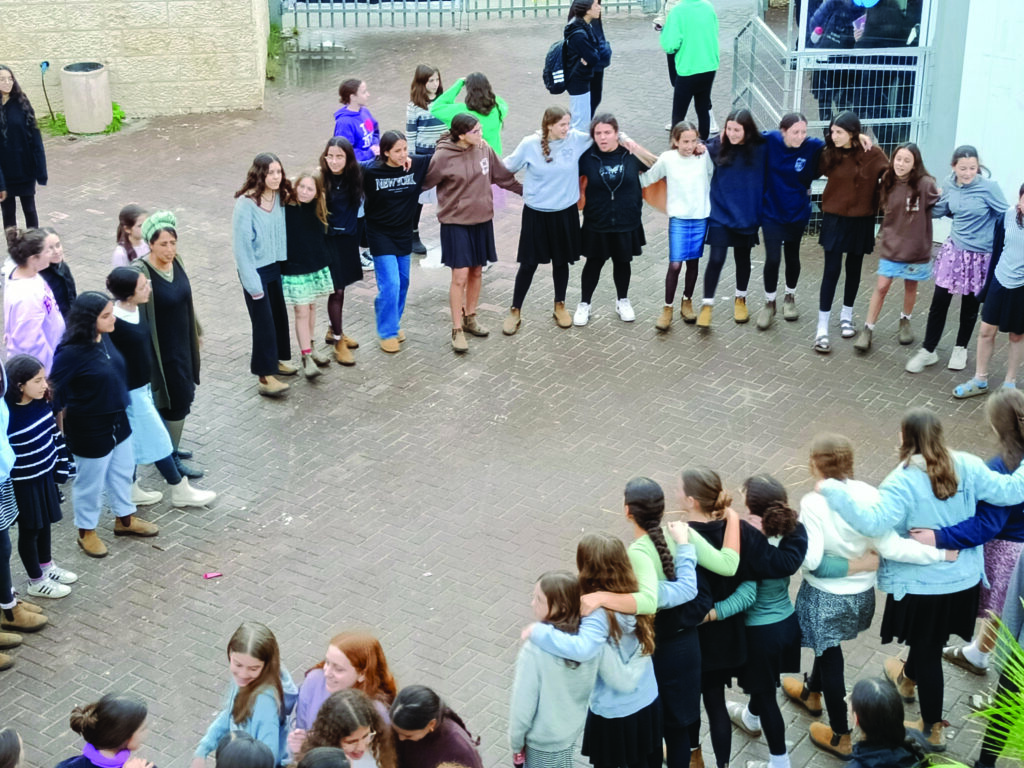
AMIT Bellows Noga is an award-winning school located in the bustling neighborhood of Ramat Beit Shemesh. It’s a city where Jews of all backgrounds, nationalities, and levels of religious observance live together peacefully, reflecting Noga’s own identity.
“Our students are very diverse socioeconomically, religiously, and culturally,” says Miriam proudly. “It’s not a homogenous environment, and I appreciate how our diversity enables our students to appreciate all people and make friends with those who come from very different backgrounds.”
“I found out that beyond all the great academic programs that are offered, what’s even greater is that Noga doesn’t try to force one specific agenda on its students,” says Liel Metz, a senior at Noga. “I would get into heated political arguments with some of my best friends and five minutes later we would be laughing about it, and I think that says it all. One of the most important things I got out of my years of learning there is the ability to accept and listen to those who differ from me.”
"I feel like I’m doing meaningful work, and keeping busy helps keep me focused."
- Ronit Hochster
A SCHOOL IN SHOCK
Regardless of their origin or the unique qualities that set them apart from their fellow students, on October 7, everyone experienced a collective sense of fear and sorrow as the nation faced a terrorist attack unprecedented in modern Israeli history. And, suddenly, those charged with caring for and educating children had to somehow learn to manage not only their own emotions, but manage, as well, the shattering uncertainty and grief of children in their charge.
Miriam maintains it’s an ongoing process where she and her staff learn something new each day.
“At first, we were shocked like everybody else and nobody knew what was going on that first week,” she explains. “But where we were on October 8 is not where we were on November 8, or December 8, and so forth.”
Miriam and her staff took that time to sort out the situation of each of their students: who had experienced casualties among their families, and who had family members called into military service. One student’s brother was taken hostage in Gaza.
“In a peak moment,” Miriam says, “we had over half of our teachers with spouses or immediate family members actively serving in the army. Some were let out over the ensuing months. But it was definitely overwhelming.”
Miriam’s own husband has been serving in the army since October 8; another five or six teachers are in the same situation. “A bunch of our Haredi teachers had husbands serving in the army for the first time, who had asked to be called up,” notes Miriam. “I find that very special.”
It’s also indicative of the unique sense of civic duty and resilient spirit that nearly every single Israeli has tapped into in the wake of tragedy. And the staff and students of Noga are no exception.
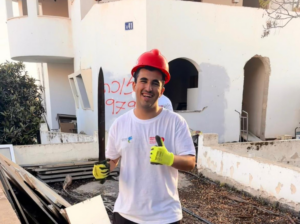
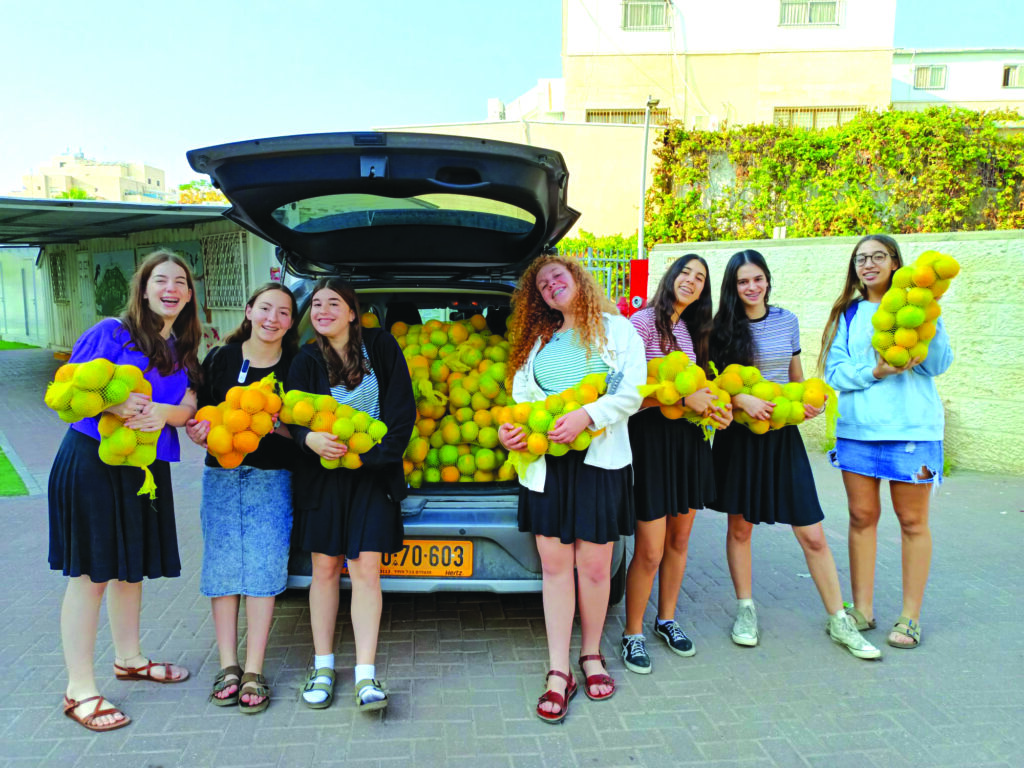
“We did a lot of things to support our teachers, like set up a rotation of homemade dinners and offer babysitting, and our students have also volunteered to give back to Israel at large,” says Miriam. “They’ve gone on several agricultural picking trips, worked with refugees from the North and South staying at hotels in Yerushalayim, and packed supplies for the army.”
Also at the forefront of Miriam’s mind was security. “We have nearly 500 students and not enough shelter space, so after two weeks of no school, Zoom lessons began until we could figure out how many students we could host in proportion to the safe spaces we had on campus,” she explains. And even then, sirens rang out regularly.
“You have to realize that most of us in Ramat Beit Shemesh have never experienced a siren in our community,” says Miriam. “For us, it was a big deal. We’re not trained like the people of Sderot are. So we had to consider what to do, what happens when there’s a siren that goes off when students are on a school bus, or girls are in a carpool lane waiting for the buses. There were a lot of different kinds of scary moments.”
Miriam and her staff did a lot of drills and planning, in addition to redesigning the curriculum to accommodate the staggered schedule of students. They also paid extra close attention to which girls needed more emotional and mental health support during this time of heightened anxiety and uncertainty.
By Hanukkah, all students were back in school full time, and a measure of routine had returned, though echoes of the surreal permeate that veil of normalcy, like the daily tehillim students say for one of their own whose brother remains a hostage in Gaza.
“I feel like I’m doing meaningful work, and keeping busy helps keep me focused,” says Ronit Hochster, a mechanechet for juniors and the director of the history and social studies departments for each grade. Her son, Yoav, was in the army for three months, during which time she slept very little.
A fourth-generation teacher, Ronit has been at Noga for some 22 years. “I see teaching as shlichut, and it’s wonderful to be at Noga where the learning is at such a high level, and values-based,” she says. “Our students learn it’s their duty to contribute to the state of Israel and the Jewish people, and that’s come into sharper focus these past few months since October 7.”
Ronit also appreciates the understanding extended to her and her fellow teachers when they can’t meet the demands their important jobs require day in and day out. “When Yoav’s best friend was killed in action, I just couldn’t come to school that day,” says Ronit. “And I was given that time, no questions asked.”
She continues, “It’s really indicative of an AMIT school—they always support their teachers, recognize their achievements, and encourage us to step outside the box and pursue new educational pathways. I’ve been with this school for almost 22 years in large part because I appreciate how much they want us to succeed and set us up to excel.”
From the recreational, like doling out sufganiyot on Hanukkah and an annual trip to Eilat for top teachers, to the educational, such as making freely available online courses about the latest educational developments and stocking schools with plenty of computers and other tools of modern learning, Ronit says she and her fellow teachers “feel the backing of AMIT in many ways.”
Noga, Now
As this magazine is being prepared to print, Israel is still at war, and 132 men, women, and children are being held as hostages somewhere in Gaza. But Israelis are no strangers to resuming a normal life amid surreal circumstances.
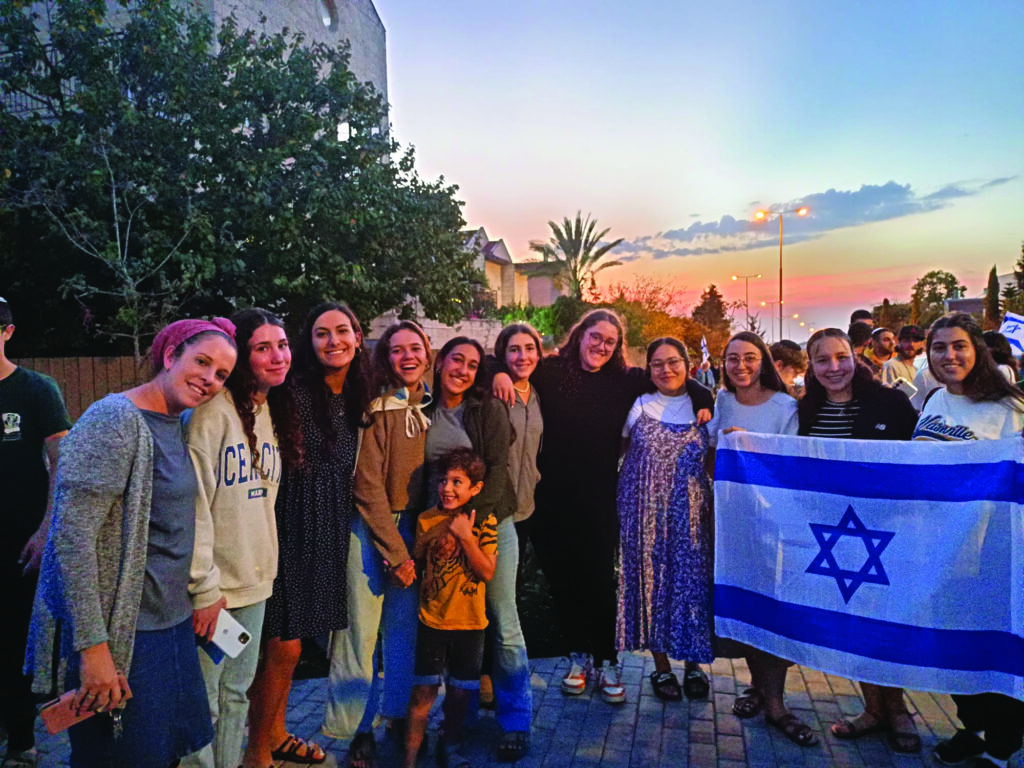
Noga students are still actively volunteering, which Miriam says gives them a sense of “moral legitimacy” to be studying math and science in a country still rocked by ongoing war. Miriam also decided to continue doing tiyulim—hiking, sightseeing around Israel. “I think it’s almost a Zionist act to continue that now,” she explains. And students have resumed much of their extracurricular activities, including Shabbatons, though each is evaluated given the times.
Consider an annual program run by seniors for the entire student body:
“We asked seniors, ‘What do you think we should do? We didn’t choose to be in a war, and you didn’t choose to be seniors during this time. What do YOU think we should change or not change about this program?’” recounts Miriam.
This degree of autonomy for young women to decide for themselves was empowering for students, who offered a range of responses to the query posed to them by their educators. “They had beautiful opinions, thoughtfully and respectfully expressed, and most importantly, they’re thinking about how to infuse the people around them with strength for what they’re going through,” says Miriam. “Each girl is thinking now: ‘What can I do to respond to this situation with strength and grace, to the best of my abilities?’”
They must have learned it from administrators and teachers.
“As difficult as it is to try and adjust to anything normal, I feel truly blessed that I’m surrounded by people who so selflessly devote themselves to the only country we can call our own, and I hope to soon follow in their footsteps,” says Liel. “More than anything, being a teenager in Israel, especially in times like these, is understanding that you’re part of something bigger, and that you will do anything to ensure a future in the only state you can call home.”