
By Abigail Klein Leichman
The AMIT network has successfully helped two generations of immigrants from Ethiopia and the countries of the former Soviet Union overcome linguistic, cultural, socioeconomic, and academic hurdles on the path to becoming fully contributing members of Israeli society.
Although newcomers from Western countries generally arrive with greater resources, children in an unfamiliar land always face challenges. At AMIT Eitan Jr. and Sr. High School for Boys in Ma’ale Adumim, students from English-speaking homes find warm support during their transition and beyond – no less than those students from more disadvantaged backgrounds.
“When we started gaining the trust of immigrant families from 13 different states and countries – including French, Ethiopian, American, Canadian, Portuguese and Russian immigrants – to educate their sons, we tried to give every immigrant group proper guidance beyond what the Education Ministry provides,” said Daniel Be’eri, now entering his sixth year as principal of the award-winning school.
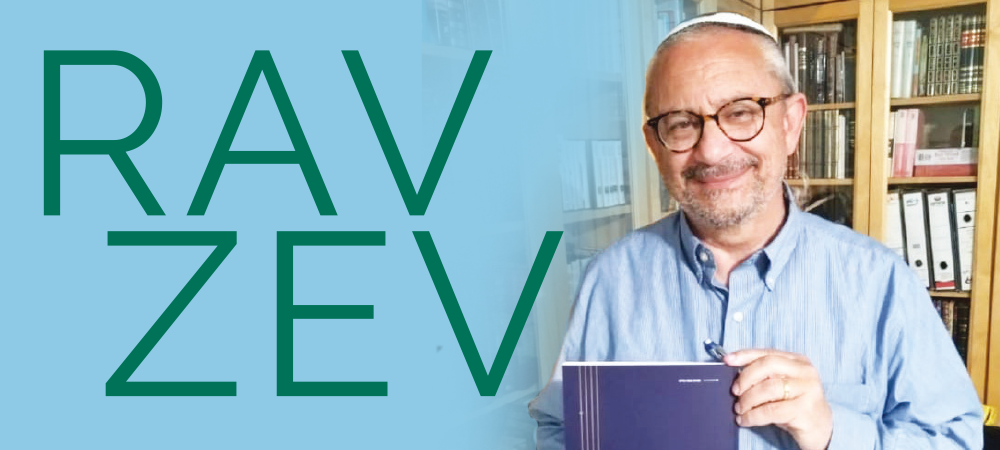
AMIT Eitan gives these boys a boost in the person of Rabbi Zev Shandalov — aka “Rav Zev” — who made aliyah 12 years ago from Chicago following a career in business, education, and the pulpit.
In fact, in one of those “small world” coincidences so common in Israel, Be’eri’s father was good friends with Shandalov’s late father-in-law in Chicago. “I was teaching in a classroom at AMIT Eitan for three and a half years and then I proposed to Daniel that I work with the immigrant kids — a couple of Ethiopians, a Russian, and many English speakers,” he said. “They need handholding for the language, for the culture, for whatever it may be.”
Be’eri readily agreed. During his 12 years at AMIT Eitan he’d seen a large uptick of English-speakers in the school’s population, and particularly an influx of Americans about seven years ago, before he became principal.
“We understood that what we need is Rav Zev to work with them and be with them during all or most of their classes and help them understand what’s going on, to study with them and help them prepare for bagrut,” the matriculation exams leading to an academic diploma.
“Rav Zev is the rabbi for many Anglo families in his neighborhood,” continued Be’eri. “When we bring students or parents of these families for meetings, he knows their background and can give guidance. Sometimes he works with the whole family. It’s really unique how community and school life come together here.”
There’s no job description in the Education Ministry for Shandalov’s position at AMIT Eitan, the principal emphasized. “We made it up. We hire people for special jobs that have a big influence in their community.” Which helps explain why AMIT Eitan won the prize for best national religious school in Israel in the 2020-2021 school year. Having taught for seven years at the school so far, Shandalov declared that he’s never encountered finer people.
“It’s the best staff I’ve worked with in any position in my life, from business to the rabbinate. Truly the school is for the kids. Daniel Be’eri’s administration is very encouraging to the faculty and students to come up with new approaches, new ideas, new innovations.”
Shandalov’s work with immigrants was one of those innovations. Among other boys he has assisted, he accompanied a core group of four students from seventh through 12th grade, assisting them through coursework, projects, and matriculation exams.
“It was a lifesaver that Rav Zev was there,” said Yonatan Reiffman, now a 19-year-old hesder yeshiva student at Sha’alvim and still a weekly study partner of his mentor.
“We made aliyah from Wisconsin in 2014, when I was going into seventh grade. I was a little nervous knowing no Hebrew and coming into a classroom full of Israelis,” he related.
“It was extremely crazy not knowing a word that was being said. Language is a big barrier both academically and socially. I didn’t retain information as well because I was spending so much energy trying to understand what the teacher was saying,” he recalled.
“But from the first day of school, Rav Zev was there, translating and helping me understand. In the beginning, he would come into class and help translate. He’d explain word by word and whole ideas. Later he would sometimes pull us out of class. I remember that 10th grade history was hard for the new immigrants, so he’d do a private kind of class going over the material with us and translating what was in the textbook.”
As they began understanding Hebrew better, the group of Americans continued relying on Shandalov as a teacher, study partner, and confidante. “When we learned with him, he’d joke and tell funny stories, so our learning was filled with laughter. He did so much for me and all my friends that no matter what I say about it won’t do it justice,” said Reiffman.
“Even for things not connected to school, he was there for us. We could text or call him, and he’d always happily help us with any problem. In the later years he helped us prepare for the bagrut in school and on his own time he’d invite us to his house to go over the material. He said a bunch of times that his goal was to make sure every one of us graduated with a teudat bagrut [academic diploma] and he is the main reason we all did that.”
Indeed, said Be’eri, “These were kids who hardly knew Hebrew when they started, and they finished with good grades on their bagrut.”
Reiffman said that looking back at his overall experience at AMIT Eitan, “I made a lot of nice friends, the school was warm, and the teachers were extremely nice. I heard from friends at other schools that this was not necessarily the usual experience.”