
By Heidi Mae Bratt
Did Theodor Herzl, the spiritual father of the Jewish state and modern political Zionism, envision that one day the reality of a thriving Israel and its right to exist would be digitally discussed and promoted around the globe, and heard in such far-flung places as Tanzania, Vietnam, Peru, Oman and Chechnya—to name a few?
Safe to say, perhaps not.
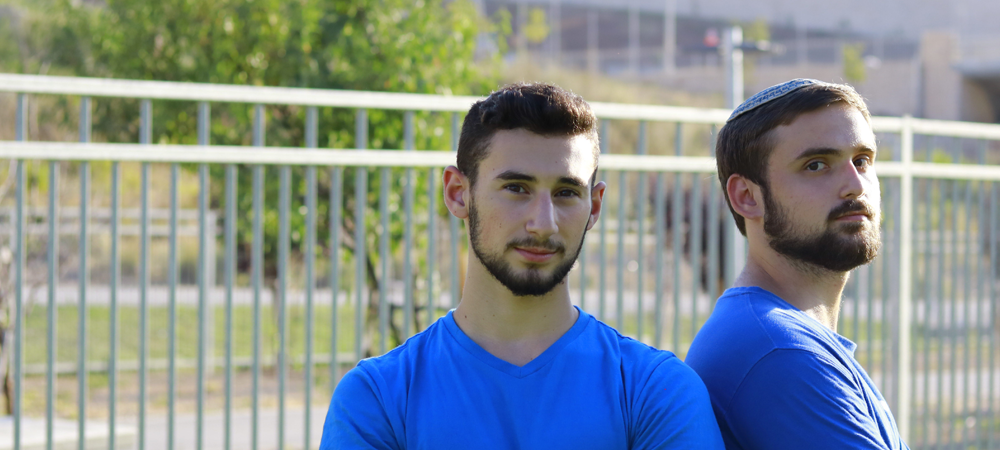
But Azriel Fein and Moshe Schwartzberg had a dream—and have a mission.
The two recent graduates of Yeshivat AMIT Nachshon have created a lively, informative podcast, “Within Zionism,” that they say, “tells the truth” and educates listeners about Zionism and anti-Semitism as it explores different avenues of Israeli history, sociology, culture, sports and other topics of interest.
Azriel, 19, who goes by the name Azi, said the pair, who follow the news assiduously, wanted to start something that would refute what they saw as a preponderance of anti-Zionist and anti-Semitic information, especially on social media, and open a dialogue.
“We knew we had to do something, especially after the most recent attacks from Gaza,” Azi said.
They bandied about doing a YouTube channel or a newsletter but settled on creating a podcast because of its growing popularity and episodic nature. They delayed the launch because “we were overthinking it,” said Moshe, 18. “We really wanted to have a studio and equipment for the first episode.”
Then the first COVID lockdown hit and both high school seniors were confined to their Beit Shemesh-area homes.
“I was bored during quarantine and I called Moshe and said, ‘Get your computer. Let’s record this,’” recalled Azi.
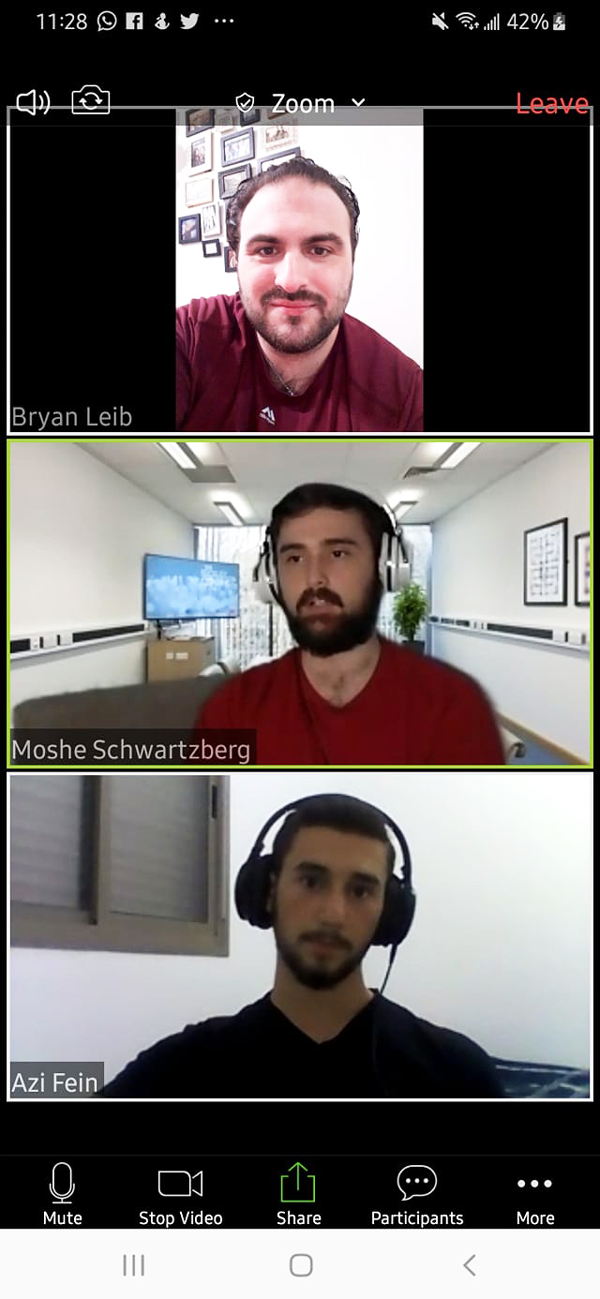 Recording over Zoom, using two different microphones and then massaging their tete-a-tete with the help of a free software editing program, the inaugural podcast of “Within Zionism” was born: a look at the back-to-back holidays of Yom HaZikaron and Yom Haatzmaut, Israel’s Memorial Day and Independence Day.
Since that first podcast, the pair, even during their IDF preparation program this year, have continued to record and post their podcast. They have interviewed several activists and prominent Jewish leaders, including former MK member Yehuda Glick; David Lasday, COO of the Israel Lacrosse Association; activist Rudy Rochman; and educator Rabbanit Sharona Halikman, among others. They have also recorded podcasts on teens talking about coronavirus, the history of Zionism and more. Lots of research goes into all their podcasts, they say, and they’ve grown their team to include others.
They have also spread into other platforms and estimate that they have nearly 3,000 listeners across all their platforms, with an average of 100 listeners per episode. Their highest number of listeners are in the United States and Israel, but France, Germany, Bahrain, Pakistan and a long list of other countries tune in to hear Azi and Moshe and their guests.
“I think it’s amazing that these two young men have found a way, during the craziest time in the history of our world, during this global pandemic, to create what they did and to use this time to raise the voices of their generation to create a dialogue around the world talking about Israel, about Zionism and the Jewish people,” said Bryan Leib, a former Congressional candidate from Pennsylvania, who now works as a senior adviser to Azi and Moshe and was a guest on one of their episodes.
“This is so powerful and what they are doing and what they have created speaks to the very core of who these two are. To put themselves out there for the world to hear, especially because how contentious these issues are. They are using their own voices to spread the truth about Israel and Zionism,” Leib said.
A deep love of Israel and Zionism was always a part of the fabric of their lives.
Both Azi’s and Moshe’s families are from the United States and both made aliyah when they were young. Azi hails from Cedarhurst, N.Y., and is the son of Ellie and Donny Fein. He has three brothers, Shmuel, the eldest, and younger brothers Shraga and Akiva. He was 7 years old when his family made aliyah. Moshe was a tot of 2½ when his parents, Debora and Hanan, left Miami to move to Israel. He is the oldest of five, along with siblings Daveed, Shmuel, Noa and Yakira.
Azi and Moshe have also created new ways to connect with others. Most recently, they had a meetup with young people from the UAE, Morocco and Bahrain, where some young people dialogued for close to three hours with their Israeli contemporaries.
“We reached out through social media and posted a sign-up sheet. There were five people from Morocco, three from UAE and one from Bahrain. We wanted to create friends and further peace in the Middle East,” they said. The two also created a WhatsApp group for this Abraham Accords effort.
Through all this, Moshe said, “We have had several people reach out to us on different platforms, and all of them have been positive. We have had several debates with people and some of them have ended it with them agreeing with us, or with the understanding they need to learn more about their opinion.”
Said Azi, “Our future goal is to create a platform where people can feel comfortable talking about Zionism whether they’re pro or against. We believe that a big thing that is holding back our society from ending anti-Semitism and anti-Zionism is the fact that the ones who are pro-peace very rarely speak up because they are either afraid or they do not believe that a change is possible. We want to get more people to understand the importance of talking about this subject.”
Azi added, “As we mentioned before, we have had several debates with people who ended up changing their opinion. We have helped future peace by creating friends from the different countries in the Middle East. And we are sure with the podcast alone we have made people think about what Israel really is, and what Zionism really means.
“I want to emphasize how important we see it is to talk about this. So many people I have talked to tell me that they avoid (discussing Zionism) because it is too political. They need to understand that Zionism is not all political. You don’t need to ‘be into politics’ to express your gratitude in this amazing and historical country. The “Within Zionism” podcast is not political at all and we have so many great conversations.”
While they have been operating on a shoestring budget with little more than their passion and the miracle of digital technology and communications, Azi and Moshe are making a major impact right now, Leib said.
“It occurs to me that these two young men will soon be entering the IDF to protect their homeland,” said Leib. “But the way I see it, they are already doing that. They are already protecting their homeland, fighting for Eretz Yisrael and for Zionism. But their weapon of choice is not a gun—it is the microphone.”