
A well-known song of Rabbi Nachman of Breslov starts with the phrase kol haolam kulo gesher tzar maod, the whole world is a very narrow bridge. The words are usually understood to mean that we are all in a tenuous position. But it also implies that it is our collective responsibility to widen bridges and foster connections. Unfortunately, this has been a year of both diminished physical and social connections. But it’s not only COVID. The world has gotten narrower as we’ve gotten more polarized. It doesn’t matter whether in the U.S. or Israel, people would rather not deal with others who have different views. Where once we had one world with many competing perspectives, we now have many isolated silos. That may be good for grain, but not so much for people.
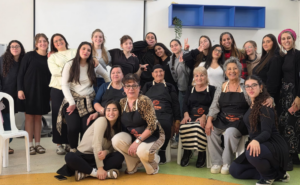
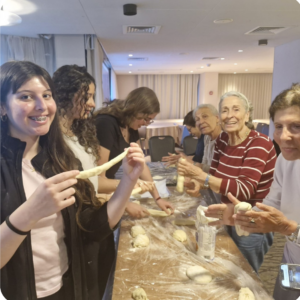
At AMIT, we believe that a critical piece of a successful education is engaging with others to better understand the world they inhabit. During the past two weeks, AMIT held a network-wide program called shavua chiburim – week of connections – to commemorate Yitzchak Rabin. Students met with different Israeli personalities from across the political and religious spectrum. They heard from ultra-Orthodox and Labor MP’s and Munir Madi, who runs a pre-army mechina program for Jews and Druze students. There were discussions on the meaning of collective memory, prayer and Zionism with small groups of religious and secular students.
But this is not something new. At AMIT, we help children become adults that engage with the world, grapple with issues, and continually reevaluate their positions because they are unafraid to confront new data and connect with people holding differing opinions. We participate in programs like Kaleidoscope that bring together Jewish and Arab students to dialogue and create bridges from a young age, with the hope that this will positively impact Israeli society as students get older. It also meant engaging in one-on-one conversations among students at AMIT Eliraz (a religious boy’s school), along with students from a secular Jerusalem school and an Israeli Arab school. Students met several times last year and held weekly facilitated discussions based on Instagram stories they uploaded about food, hobbies, religion, music and other subjects they were interested in.
Last Thursday night, I watched a program on anti-Semitism put on by AMIT’s leadership in Los Angeles. I was reminded once again that the best way to stop Jew hatred is by engaging and getting to know the “other.” If our students don’t come out of AMIT schools believing that we live in a world where bridge building is a positive, we will not have done our job. As Nurit Davidi, AMIT’s head of social responsibility put it, “we want our students to think critically, open their minds to fellow Israelis, and learn how to have a dialogue with people who think differently. Of course, it’s not just about dialogue. It’s about listening deeply, thinking things through, and being open and honest.”
I can’t imagine a better recipe for educational and societal success.