
By Dr. Stu Halpern
The ritual and theological nadir of the Jewish year comes, surprisingly, in what is often the happiest time for most, the summer. Every year, when the sun shines brightest and masses of people are spending time at the local beach, Jews withdraw for three weeks from leisure activities to prepare for the ultimate day of Jewish mourning. Tisha B’Av is the time we mourn the destruction of the first and second Temples in Jerusalem and take an introspective look, both on the personal and national level, at our efforts to merit its rebuilding.
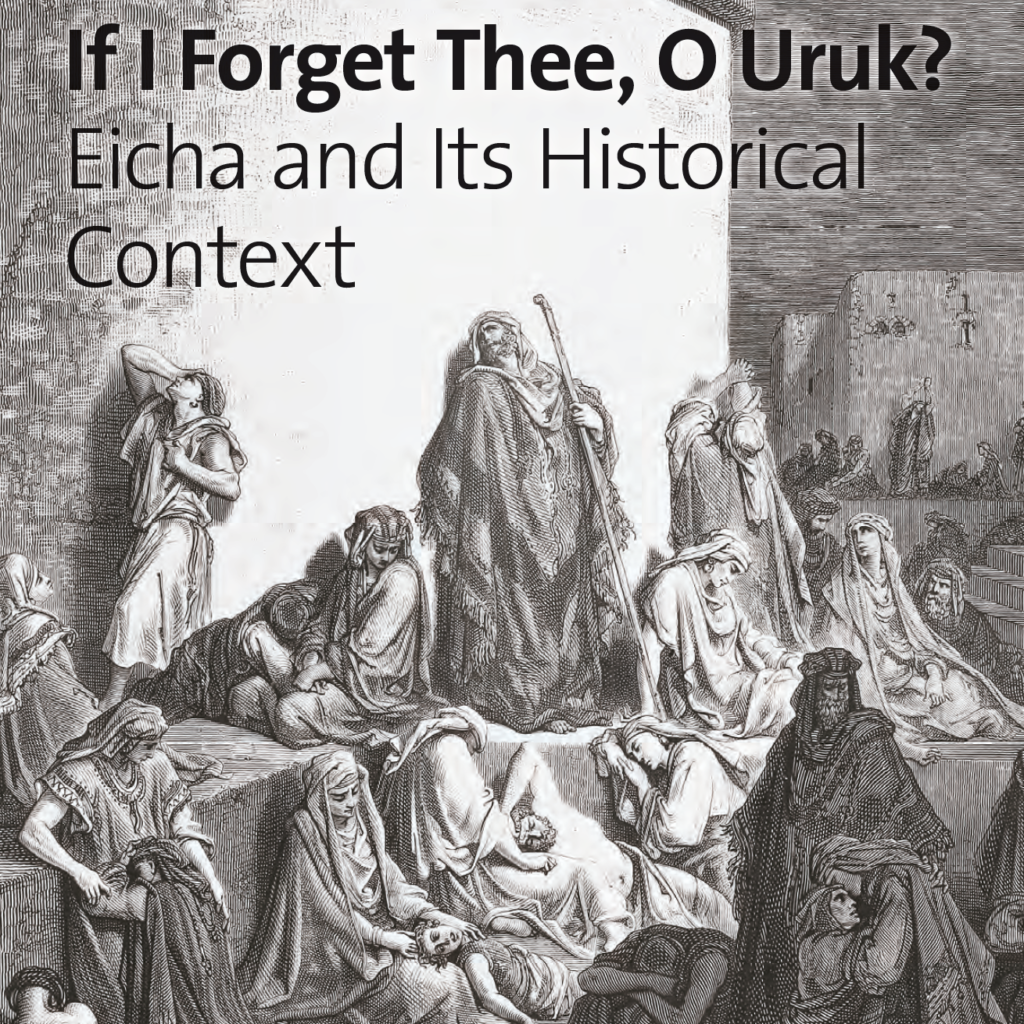
Scholars of the ancient world have made some interesting discoveries of late that shed a unique perspective on Tisha B’Av’s message. As Prof. Adele Berlin, the retired Robert H. Smith Professor of Biblical Studies at the University of Maryland, notes in her commentary to Lamentations, there are numerous examples of mourning for destroyed cities found among Israel’s ancient neighbors. These expressions of grief, with titles such as “The Uruk Lament,” “Lamentation over the Destruction of Ur,” and “Lament for Nibru,” bewail the destruction of pagan cities, including those of the Sumerians, and contain images, even phrases, similar to those found in our own book of Lamentations (Eicha), the Biblical account of the aftermath of the Temple’s destruction. In Lamentation over the Destruction of Ur, for example, the pagan city grieves bitterly: “O my city, attacked and destroyed, my city attacked without cause.” Similarly, in the biblical Lamentations, the author notes that “My enemies have hunted me like a bird without cause” (3:52). And in the recounting of the destruction of Uruk, another pagan city, we read that “the sensible shall beat their chests, they shall droop their heads… they shall wander aimlessly around the city asking: Why? They shall wring their hands; their courage shall run out.” Analogously, in the book of Lamentations (Eicha), the destruction is explained as follows: “It is because of the sins of the prophets and the iniquities of the priests, which have shed the blood of the just in the midst of her. They wander as blind men in the streets…” (4:13-14).
But while the similarities of the images and themes evoked by these ancient writings are distinctive and common to any destroyed city in any era, they are belied by the underlying differences in the cities’ civilizations. The Sumerians, for example, believed that one city at a time should have hegemony over a large territory—when that city declined, another would arise to take its place as the supreme locale. Jews, in contrast, believe in only one holy city, whose kedushah (holiness) is eternal; we believe that the primacy of Jerusalem is everlasting. I know of no one who still mourns for the destruction of Uruk, Ur, or Nibru, nor do I imagine that if there were people who did, they would utilize their mourning as a period of introspection and teshuva (repentance) as Jews utilize the period of the three-week runup to Tisha B’Av.
As Rabbi Joseph Soloveitchik puts it in his work The Lord is Righteous in All His Ways (edited by Rabbi Jacob. J. Schacter), “How many peoples would you find today who are busy mourning an event that occurred more than 1900 years ago? The world does not understand us. What we mourn for is the distance that now exists between us and Hakadosh baruch Hu [The Holy One, blessed be He]. And this is our prayer on Tisha B’Av. We plead with Hakadosh baruch Hu to become close to us once again.”
It is our hope that, by appreciating the uniqueness of our devotion to the timeless holy city of Jerusalem, and by being mindful of our yearly opportunity to use the communal memory of the Temple’s destruction to improve our relationship with God, we may bring about the rebuilding of the Temple, and turn the day of summertime sadness into one of rejoicing and celebration.
Dr. Halpern works at Yeshiva University, where he is the Assistant Director of the Zahava and Moshael Straus Center for Torah and Western Thought, the Assistant Director of Community Outreach and Student Activities at the Bernard Revel Graduate School, and the Deputy Managing Editor of YU Press.