
By Rabbi Elie Weinstock
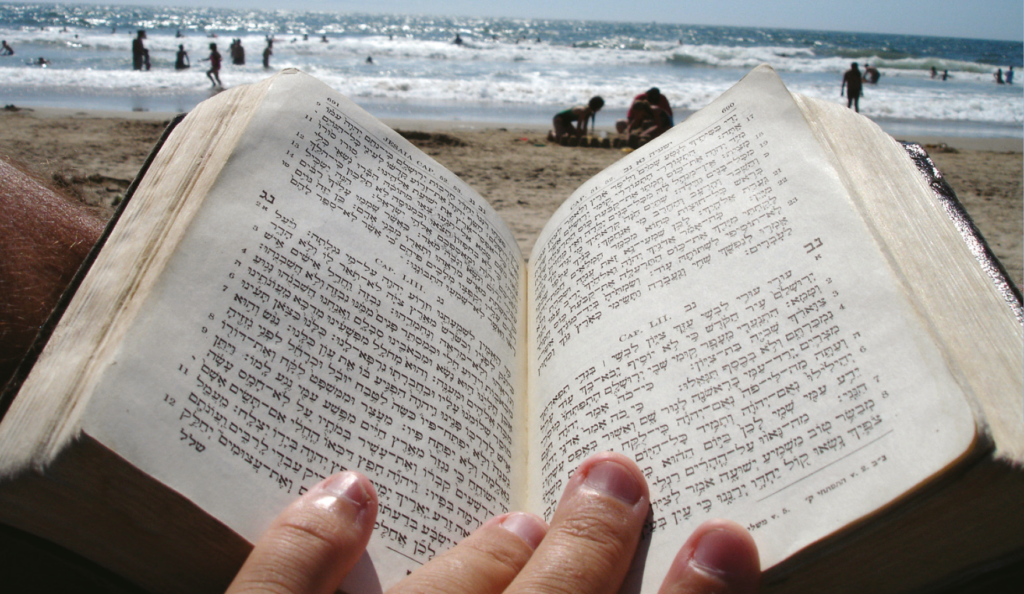
Summer is a time for getting away. Whether in the form of a family vacation, a weekend in the mountains, or just a day at the beach, it is a season of journeys. In addition to the souvenirs and excitement of being away (“Are we there yet?”), what uplifting spiritual messages can we bring home with us from our travels?
Every summer, we read of the journeys of the Jewish people, the masa’ot. In Parshat Masei, we find the list of the 42 stops the Children of Israel made over 40 years in the desert. “Va-yis’u…va-yachanu – They traveled, and they camped.” (Bamidbar 33:5) What exactly is the travelogue needed for?
Rabbi Moshe Ha-Darshan explains that recounting the travels in the desert is meant to evoke gratitude towards G-d for His many kindnesses throughout the journey. Maimonides sees the masa’ot as an opportunity to reinforce faith. The miracles of the desert can be verified and evaluated since we know the locations in which they happened. Nachmanides views the matter more mystically. For him, the stops represent various elements of the human spiritual condition and religious development.
Enumerating the masa’ot teaches that a trip is more than a trip. Our travels, like those of our ancestors, should be viewed as meaningful journeys as we travel down the road of life while hitting the road over the summer. Here are a few lessons to keep in mind.
TAKE IT ALL IN. CREATE LASTING MEMORIES.
From the time I was a child last year, I visited my grandmother’s home every summer. I even had the chance to bring my own children to see what I experienced. (She just moved after 65 years on the same block!) As soon as the door opened, I would be overwhelmed by memories. The combination of memorable sights and smells transported me back to family vacations of the past, when I was the kid, instead of the parent.
Researchers at Loyola University have confirmed what many of us have found to be true for ourselves: a stroll down Memory Lane can give our spirits a significant lift. According to psychologist Fred Bryant, most people spontaneously reminisce when they’re alone or feeling down—or both—which suggests that we reach for pleasant memories as an antidote to feeling blue. Thinking of good memories for just 20 minutes a day can make people more cheerful than they were the week before, and happier than if they think of their current lives. Since memories often include important people in our lives, they may give us a comforting sense of belonging.
Vayis’u…va’yachanu – The Torah provides a gateway to Memory Lane. By appreciating the powerful and complex role of nostalgia, we can tap into our memories and recall the past to assist us in effectively stepping into the future.
WATCH THE ROAD. YOU DON’T WANT TO MISS ANYTHING.
The Torah is most certainly not succinct in its presentation of the masa’ot. Each location is mentioned twice. For example:
Vayis’u mi’yam suf, va-yachanu b’midbar tzin. Vayis’u mi’midbar tzin, va’yachanu b’dafkah. (33:11-12)
Why the repetition? It is important to appreciate the specifics of the journey as much as the destination. These days, we are very destination focused. We rely on Google Maps, GPS, and Waze, and we tend to follow the directions without paying attention to the places we pass.
We do this at our own peril…at our own peril. A few years ago, the Daily Mail reported on a British driver being found guilty of what they call in the U .K. “driving without due care and attention.” The driver followed the orders of the soothing voice of his GPS…as he dro ve down a narrow, unpaved, cliffside lane and became stuck a t the edge of a 100-foot drop. As the prosecutor noted, “[The driver] slavishly continued to follow the GPS system…to such a degree he was not exercising proper control of the vehicle.” This would NEVER, of course, happen to any of us, but it is a real-life example of the dangers of overly focusing on the destination.
Vayis’u…va’yachanu – The Torah provides a very detailed record of the journey. Each stop along our journey is significant just as each stage in our lives is important in helping us reach our destination, our goal, and our purpose. Be sure to stop and smell the roses, pose for a picture or two, pay close attention–you never know when something significant may take place.
GET OUT THERE AND ENJOY YOURSELF.
The only way to create a travelogue in the first place is to actually go somewhere. The journeys of the Jews were essential as we developed as a nation. Our trips today may not have such historic repercussions, but they can be quite meaningful for us and those around us.
Vayis’u…va’yachanu – The lesson of the masa’ot is, in effect, to create and seek out meaningful opportunities that will form the travelogue of our life’s experience. The 42 stages of the journey delineated in great detail in the Torah afford us an opportunity to reminisce about the past, to focus on where exactly we are in the present, and to seek out opportunities that will have a formative impact on our lives.
It is not by accident that we read Parshat Masei in the summer, a time for journeys, road trips, and family vacations. These provide perfect opportunities to relive cherished memories, step back to focus and recharge, and create new, meaningful experiences. That vacation you take may be more important than you think.
Travel safe!
Rabbi Elie Weinstock is Associate Rabbi of Congregation Kehilath Jeshurun (KJ) in Manhattan. A veteran of both formal and informal educational programs and a Yeshiva University graduate, he received his Rabbinic ordination from the Rabbi Isaac Elchanan Theological Seminary and a Masters in Jewish Philosophy from the Bernard Revel Graduate school. Rabbi Weinstock leads the highly developed KJ Beginners Program and is member of the Talmud faculty at the Ramaz Middle School.