
By Dr .Micha’el Moshe Tanchum
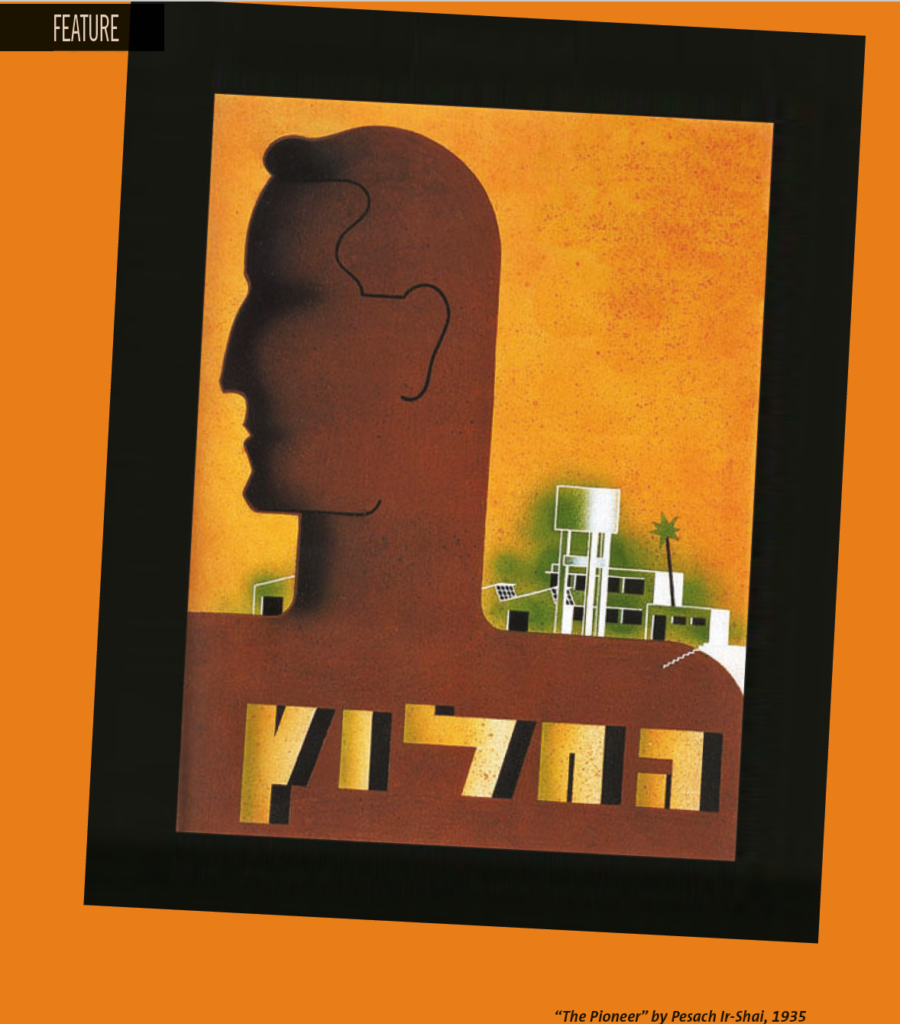
Berl Katznelson, who arrived in Eretz Yisrael at the age of twenty-two was typical of the many young halutzim (pioneers) who worked on the fledgling Jewish farms in the Galil. Like many of them, Katznelson was inspired by the venerated philosopher/farmer Aharon David Gordon. Gordon initiated the development of a unique Zionist ethos of mentoring and youth education. Katznelson took up the challenge: “a world of virtue must be created within our spirit,” and emerged from among the halutzim to become the cherished theoretical and moral guide to Labor Zionism. Like the educators who followed in his footsteps Katznelson instilled the national character of the reborn State of Israel in countless young men and women. That national character would come from a blending of religious tradition with modernity, a philosophy that integrated personal self-realization with community responsibility.
Katznelson followed Gordon’s view that the Zionist movement must seek to “awaken within the educated being a feeling of respect for himself, an awareness of the human value that is within himself.” The pioneers of the Second Aliyah expressed this ideal with the phrase hagshama azmit (self realization), espousing a concept of the individual that entailed a moral imperative for a public-spirited sense of responsibility. In his pedagogical discussions with educators and youth guides, Katznelson identified the goal of education as cultivating each individual toward this ideal. In his view, at the center of the Zionist movement was the individual, “who thinks and works, a person of culture and freedom and responsibility.” Moreover, this ideal of hagshama azmit could best be instilled by the personal example set by teachers. A lifelong learner himself, Berl adamantly enjoined the Zionist movement to continuously strive to improve its educators’ capabilities. “A movement that is concerned for its teachers,” remarked Katznelson, “is obligated to persevere in the education of its teachers.” Constantly inquiring into the conditions of schools and youth villages, Katznelson would listen to students’ accounts to ensure that their education genuinely facilitated their personal growth.
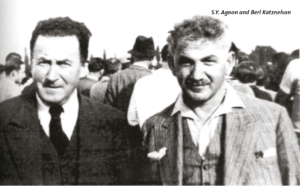
As the founder and editor of the influential newspaper Davar and as the eminent mentor of the next generation of Zionist activists, Berl Katznelson powerfully and persistently championed the cause of the individual in the Zionist movement. David Ben-Gurion referred to Katznelson, his friend and political partner, as “The teacher of the generation, one to enlighten all of the future generations; the mind, the conscience, and the voice of the movement.” Katznelson and Ben-Gurion collaborated closely in forming Ahdut HaAvoda (Unity of Labor), the general organization of the Labor Zionist movement from which emerged the major economic, political, and military institutions that would bring Israel to statehood and independence.
Katznelson worked to make sure that the fledgling institutions of Israeli society would honor the Jewish religious tradition and its cultural values. “We will not achieve our destiny except by both a great spiritual drive and the perseverance in the acquisition of worldly knowledge – by both efforts of mind and soul,” proclaimed Katznelson. When one of the Zionist youth organizations planned to open its summer camp on Tisha B’Av, Katznelson vehemently objected. He insisted that Jewish religious tradition was the anchor of the project of national restoration and advocated for its central role in Labor Zionism. “A generation that renews and creates things from scratch must under no circumstances reject the legacy of past generations,” cautioned Katznelson, who was known to respect the laws of kashrut and fast on Yom Kippur and Tisha B’Av. Katznelson was one of the few voices in non-religious labor circles to press for the observance of Shabbat and festivals, and kashrut in Histadrut kitchens. “What is needed is to restore the ancient tradition of life and use it to strengthen this progressive generation. If in the life of our people there is something very old and deep, which has the power to educate . . . would it not be a tragic mistake to reject it?”
Like Katznelson and his fellow pioneers of the Second Aliyah, AMIT founder Bessie Gotsfeld was a woman of purpose inspired by the Zionist vision. She arrived at the Yishuv with her husband in the late 1920s to supervise the establishment of a series of schools and youth villages. As one of the first powerful career women within Israeli Orthodox society, Gotsfeld was a model of the Zionist ideal of hagshama azmit. Like Katznelson and Gordon, Gotsfeld maintained an unshakable belief in the importance of Jewish spiritual guidance and Jewish values in cultivating inner strength among Israel’s youth. AMIT’s current network of 108 schools and programs evolved from the institutions she established. Implementing Bessie Gotsfeld’s vision and exemplifying the educational ethos of Israel’s founders, AMIT’s teachers and principals educate more than 25,000 students in 29 cities, towns, and communities across Israel.
One such educator is Yaffa Farjun, an alumna of AMIT Florin Taman Junior and Senior High School for Girls in Tzfat, who as a student was driven by her “desire to exert an influence within education and lead the system in a new way.” To fulfill her mission, Farjun became the principal of the school she had once attended. A recipient of the 2011-2012 Award for Outstanding Principal of the Northern Region, Farjun strives to promote values of excellence and personal responsibility. Echoing Israel’s founders, she sees her mission as enabling “the ability of each and every student to advance herself in bringing forth her talents and abilities.” The principal of AMIT being attuned to the needs of the newer generations in order to prepare young men for army service and professional accomplishment. After serving as a paratrooper and completing his graduate degree in education, he dedicated his career to bringing quality education to the Negev. Like Israel’s founders, Rav Hatuel believes that “we are a nation whose main asset is its people.”
A similar spirit can be seen in Dr. Tzachi Lev Ran, principal of AMIT Dvir Junior and Senior High School for Boys in Beit Shemesh. A Givati Brigade veteran, Bar Ran took on the battle to improve Israel’s public high schools, particularly in the religious sector. He earned a B.A. in education and a Ph.D. in Tanakh, but views his greatest accomplishment as providing quality education to all students regardless of their socioeconomic background.
Berl Katznelson and his fellow pioneers began their careers on the shores of the Kinneret making the barren wastelands bloom. Ultimately, they were driven by the knowledge that the future of Israel depended as much upon raising new generations of educated citizens as it did upon raising towering forests and bountiful fields. The Zionist ethos of mentoring and youth education that they developed is being carried forward by AMIT’s teachers and principals, providing Israel’s next generation with the skills and values to contribute to the building of Israel’s future and their own.
Dr. Micha’el Moshe Tanchum is a scholar of Zionist thought and the history of Israel’s founding period. He earned his doctorate at Harvard University and is a fellow at the Shalem Center in Jerusalem, Israel, where he is writing a book on the ideals of Israel’s leading founding father, David Ben-Gurion. Dr. Tanchum would like to express his gratitude to Meir Dardashti, and especially to Dara Marans, for their assistance.