
By Wendy Elliman
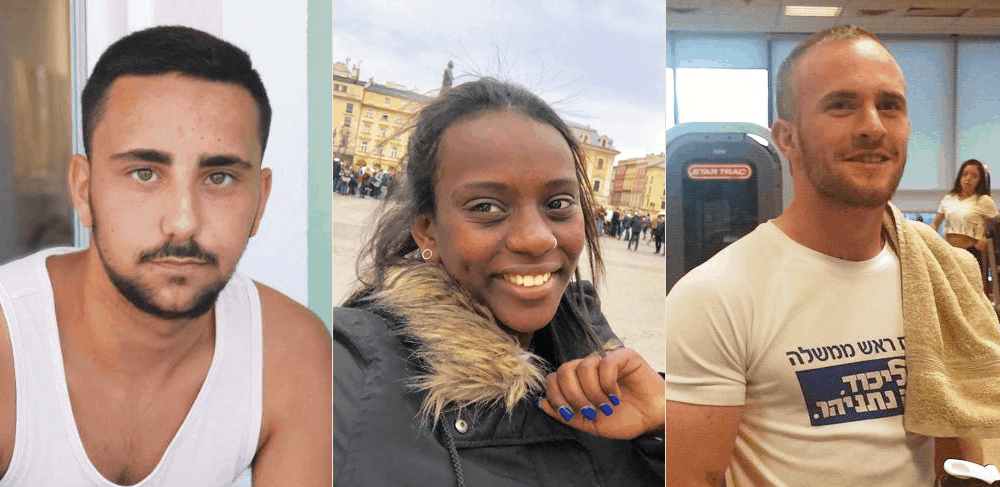
At 16, Naor G. believed he had no way forward. He was unhappy in his ultra-Orthodox yeshiva but lacked the secular education of a traditional school. Three years on, he has found his place: He is studying information technology at an AMIT vocational school, which will gain him entry into the IDF’s prestigious Computer & IT Directorate for his three years of military service, after which he plans to make this his lifetime profession.
Fifteen-year-old Malka R., too, felt she had run out of options. The eighth of 12 children in an Ethiopian-Israeli family, her deficient high school record had stripped her of every shred of self-confidence. Two years later, the once-despairing teen is an enthusiastic graphic design student, taught by an art therapist who builds self-esteem, communal responsibility, and a sense of purpose in her pupils. Malka plans to be an officer in the IDF and go on to study law.
Eviatar Levi’s story is similar, except that he is now 26 and realizing the plans he made as a teen. Transferred from a Beit Shemesh school where he was failing, he studied electronics at an AMIT vocational school, matriculated, and served in the IDF as a robotics engineer. Today, he is the founding CEO of Israsmart, an electrical-engineering company that manages electrical systems in schools and hotels, and he is soon to complete a BSc in math and computer science.
What turned life around for these three youngsters, and is doing so for thousands more, are the technological high schools and junior colleges within the AMIT network — named last August as the country’s highest achieving educational network by Israel’s Education Ministry.
AMIT’s technological education frameworks are changing not only individual lives, but also spearheading a growing national trend. Israel is one of the most educated nations in the world, but growing numbers of college graduates cannot find work, while industry faces a shortage of some 15,000 engineers. For 30 years, what was known as “vocational education” was solely for those from weak backgrounds. Only now are the country’s technological high schools receiving recognition and support. Today, around 40 percent of Israel’s high school students study one of 25 vocational-
technological trends—from engineering and robotics to hairstyling and cosmetics — most of them graduating with marketable skills.
“Being put in the technological high school in Jerusalem was the best thing that ever happened to me,” said Eviatar. “The school gave me the tools for life. It understood my needs and my problems, it knew how to develop my potential and my strengths, and it taught me how to learn and how to succeed. It supported me at every stage. I am where I am today because of what it gave me.”
Eviatar’s alma mater, the AMIT State Technological High School in Jerusalem, is one of six such schools among the network’s 110 educational frameworks countrywide, reaching out primarily to youngsters who are disadvantaged and at risk. It teaches 10th to 12th grades, with many of its 160 pupils among Jerusalem’s poorest and most vulnerable adolescents, well known to the welfare authorities, and often arriving at the school with undiagnosed learning disabilities or behavioral problems. Eviatar, born late in life to parents from Morocco, had been a difficult youngster, ejected from school after school.
“We offer our pupils a second chance,” said Deputy Principal Batsheva Segavi. “With us, they acquire workplace skills — auto-technology, electronics, graphic design or hairstyling — and are supported by our social worker and psychologist. Our dropout rate is negligible, over half our students graduate with a technological diploma or matriculation, and virtually all are accepted for IDF or national service.”
The school’s flagship program is its state-of-the-art Auto-Tech Tools for Success. “Its graduates are at the forefront of advanced automotive diagnostic and technological studies,” said Ilan Israelov, who teaches the three-year course. “Theoretical and hands-on instruction teaches students to solve mechanical and technological problems in high-tech cars, from hybrid to autonomous. The IDF takes our graduates to look after its tanks. From there, they earn engineering degrees or are snapped up by high-tech.”
The auto-tech tools program enables participants to defer IDF service and stay on for 13th and 14th grades—pre-army junior college—to study automotive systems engineering in the school. Rami B., 18, the son of an Armenian mother and an unknown father, is among the 17 boys and one girl in this class. “It’s right for me,” he said bluntly. “I like cars. I need to do well in my final exam, so I can help my mother.”
Malka and Naor come from southern Israel, and both study at AMIT’s Elaine Silver Technological School in Beersheva, where many students are recent immigrants, come from dysfunctional families, or from distressed socioeconomic backgrounds. Malka is one of 115 teens in its 10th-to-12th-grade high school, and Naor among 16 students in 13th grade in the junior college—where several ultra-Orthodox students are integrated with peers from observant, traditional, and secular backgrounds.
The school offers tracks in information technology, automotive electronics, and design, graduating students with skills and practical experience in these high-demand professions. Most complete school with either full matriculation or a technological diploma, opening doors to higher education and service in specialized IDF units.
“I really enjoy what I’m studying,” said Malka, “but more important is how everyone, from the principal onward, reached out to me and was there to help. They convinced me that I’m worth something and can succeed — and it turns out that they’re right!”
Naor is in the inaugural class of the school’s junior technological college, which opened last October. Approved by the Education Ministry and the IDF, it allows young men and women to defer IDF enlistment for two years while training as engineers and computer technicians who will maintain the IDF’s advanced computer systems during their military service.
“It’s a win-win,” said college director Dr. Yaron Naim. “The IDF gets soldiers qualified to fill specialist jobs, and the recruits have an interesting and meaningful military service, rather than three years as army cooks or drivers. And it’s a powerful social mobility tool.”
Prestigious IDF service and high-status career prospects impact not only the students, but also their families and communities. “The school took me in with love, put me back on my feet when I was failing, and made me strong,” said Naor. “I have five brothers and sisters, and very hardworking parents — mom’s a classroom assistant, and dad’s a car mechanic. I’ll soon be able to help them all.”
College is not for everyone, but in today’s highly technical specialized world almost every job needs some form of advanced training. The concept of AMIT’s schools is to create educational and vocational opportunities for Israeli students from all backgrounds, from everywhere in the country—in other words, to put technology in the pocket of every student.