
By Lisa Friedman
Successfully including students of all abilities in Jewish education can seem overwhelming for a school that has not previously made accommodations or offered opportunities for individuals with disabilities. My advice? Start small, but start somewhere. You don’t have to do everything all at once, but if you don’t take the leap, you may never get started. And while this may help to make the task seem somewhat less daunting, I suspect that for many, it begs the question, “Where’s the best place to start?”
- First and foremost, each of us is created b’tzelem elokim, in the image of G-d. As such, each of us has a right to belong and is worthy of living a meaningful Jewish life. Further, no one has the right to judge what is “meaningful” for anyone but themselves. When we embrace this as an underlying principle, we will be able to be inclusive by design as we demonstrate respect for every person as an individual with unique gifts to offer.
- Fair isn’t equal. Fairness is commonly misunderstood to mean that “everyone gets the same thing”; whereas in reality fairness means that “everyone gets what he or she needs.” When we extend this concept to education we ensure that each student has access to the tools and support he/she needs to be successful.
- Differentiated instruction (or different expectations) for individual students is absolutely fair. Students should not be compared to one another or to an arbitrary level of expectation. All students should be working toward progress from their current level of functioning.
- Special education is good education. The strategies, values, and goals that make special education successful are the same strategies, values, and goals that will enable all students to find success.
- Professional development for teachers is crucial. And while a one-shot, one-day training session can be helpful, teachers working with students who have a wide range of abilities and disabilities need ongoing support and opportunities to strengthen their own techniques.
- Partner with parents. Open and supportive communication with parents is essential for a successful school experience for any child, especially those with disabilities or unique learning needs.
- Inclusion is not a place. Inclusion is not a program. Inclusion is a mindset and set of values. It is a way of enabling students to reach their highest potential. It is fluid, flexible, and ever-changing.
- Inclusion is NOT social action or social justice or even a “favor.” We do not “do” inclusion “for” people with disabilities. Rather, it is incumbent upon us to figure out how everything we do can be inclusive. Again, it is a mindset.
- Model inclusion in every aspect of your life. Demonstrate that inclusion is not just “something we do in school,” but rather that it defines us and our behavior in all ways. Children learn through imitation, and they form habits and opinions by repeating what they see and hear. It is just as easy to teach children to be unwelcoming, wary, or even fearful of people with disabilities, so choose to be a positive example of inclusivity.
- Intentional planning is critical for success. In Judaism, intention (kavanah) is an essential component of meaningful action. Kavanah comes from the Hebrew root meaning to direct, intend, or focus. Rabbi Yaakov Yitzhak of Pshi’scha, taught, “Good intentions alone, if not accompanied by action, are without value, as it is the action which makes the intentions so profound.”
Inclusion isn’t always easy, but it is ALWAYS worth it. When we embrace that inclusion is who we are and who we want to be, we can always figure out how to make it happen.
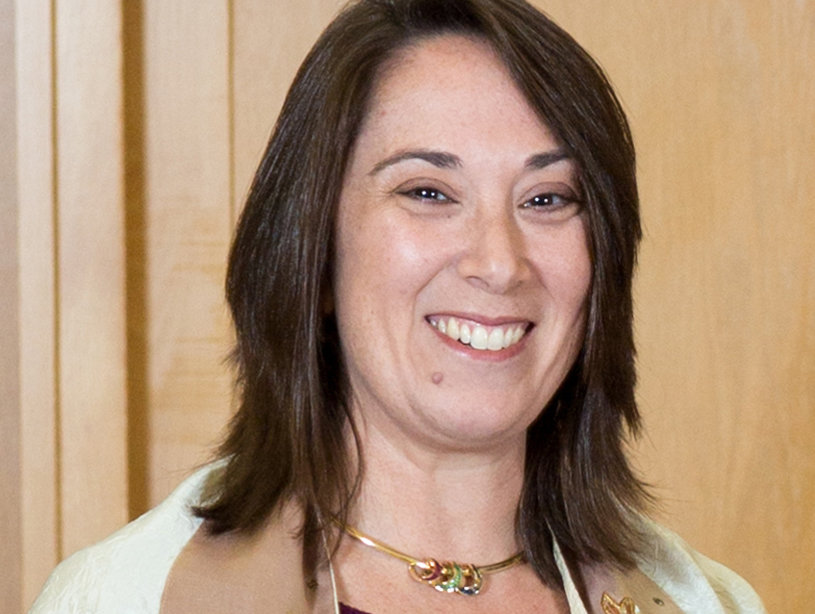
Lisa Friedman is widely recognized as a Jewish disability inclusion expert. She is an Education Director at Temple Beth-El in Central New Jersey, where she has developed and oversees an inclusive synagogue school. She is also the Project Manager for UJA-Federation of New York’s Synagogue Inclusion Project. Lisa consults with faith-based organizations to guide them in the development of inclusive practices for staff, clergy, and families through dialogue, interactive workshops, and awareness training. Lisa is a sought-after speaker on a wide variety of topics and blogs about disabilities and inclusion at Removing the Stumbling Block.